Author: Sebastian Cherry

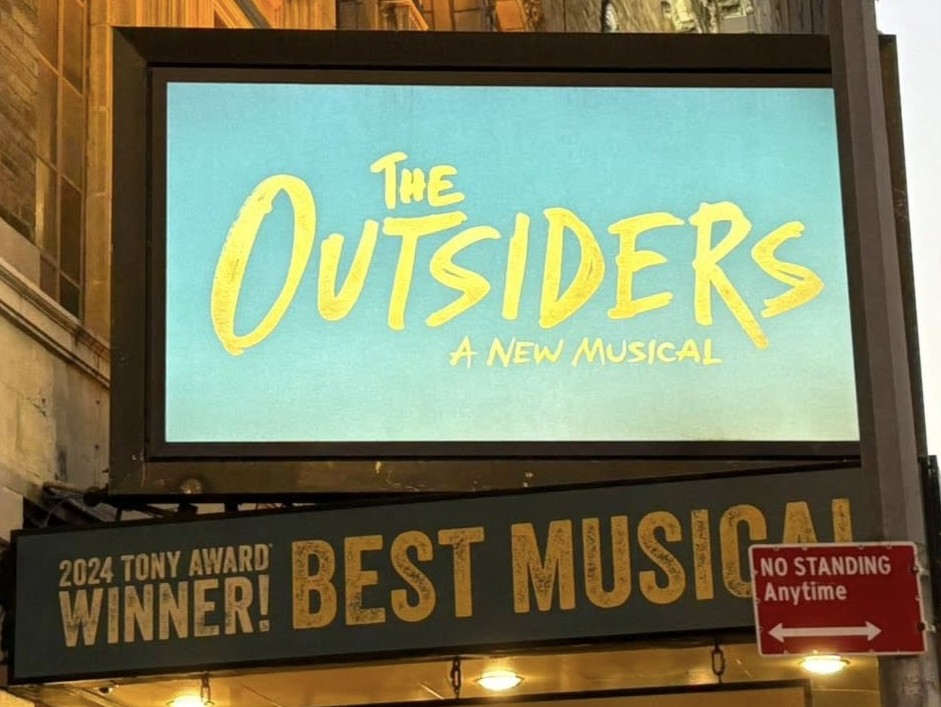
  • The Outsiders

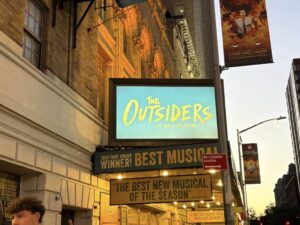
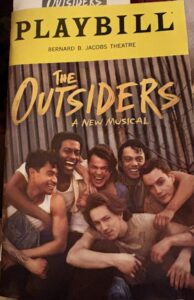
    The Outsiders

    Bernard B. Jacobs Theatre

    30 August 2025

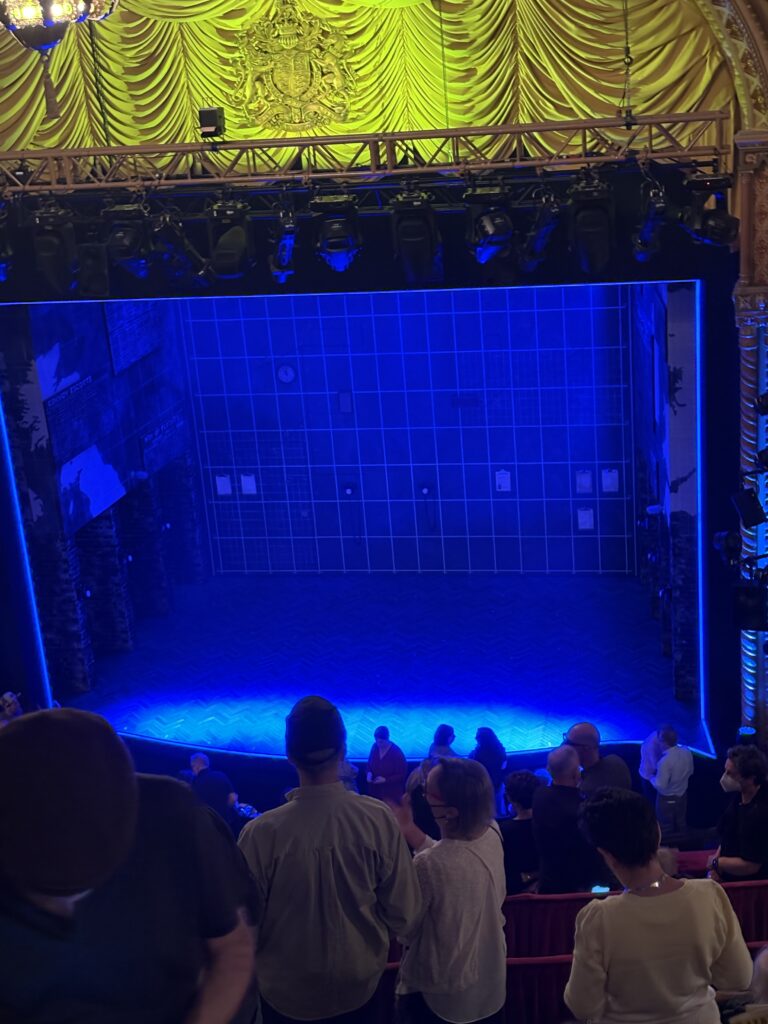
    I went into The Outsiders completely blind. I have never read the book that it is based off of nor have I watched the film adaptation. I went into this show completely unaware of the plot. And honestly, by intermission, my first thought was “how West Side Story”. Of course, anyone who has seen this show knows that beyond feuding gangs and an unapproved love interest — that is really where the comparison of the two shows end.

    This show follows the character of Ponyboy Curtis (played by Brody Grant), a 14 year old boy who’s parents recently died in a car crash, leaving him and his two older brothers — Darrel, the eldest brother who has assumed a fatherly role to his brothers, and Sodapop, the middle brother who is suffering from a broken heart (played by Brent Comer and Jason Schmidt, respectively). Taking on this fatherly role has taken a toll on Darrel, which has substantially strained the relationship between the three brothers.

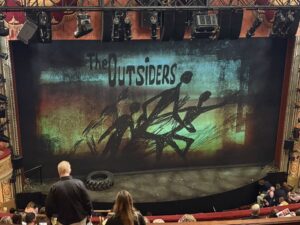
    The show begins with the lights not all the way down. This is because it isn’t until the first song begins that the lights fully go down and we, the audience, are introduced to all of the members of the first gang — The Greasers. This is done in a beautiful manner in which Ponyboy uses light to introduce each Greaser one by one. Before we are introduced to the characters, though, we can see them going about their daily business behind a scrim, which raises as the characters are introduced.

    The Greasers are not well off financially, they live on the wrong sides of the tracks, so to speak. But they respect their own. Ponyboy, specifically is not your typical Greaser. He is able to be rough and tumble, but he is a dreamer — he loves getting lost in books and movies and escaping the world through fiction.

    The rival gang is called The Socs — because they “live like socialites”. So they are wealthy, upper class, and tend to think of themselves as better than The Greasers.

    Ponyboy’s best friend and fellow Greaser is Johnny Cade (played by Sky Lakota-Lynch), who is a central character of this show. Johnny had recently been attacked by The Socs, which sets the scene for the rest of the action that happens. It is also notable that Johnny does not have a good home life, with parents who often fight. This leads to him being given a knife by Dallas.

    Another very important character is Dallas Winston (played by Alex Joseph Grayson) who is the head of The Greasers gang — the other members all look up to him (except perhaps Darrel who has attempted to move on from the gang lifestyle), who has a criminal record, and who also runs away from his problems.

    It is not long into the show that Ponyboy himself is jumped by The Socs, who attempt to cut his hair (their hair is very important to The Greasers) and he is knocked unconscious. The effects of being knocked unconscious are beyond belief — the use of scattered lighting, a high pitched ringing, and dampened audio all helped achieve the effect of Ponyboy being knocked out.

    Once Ponyboy wakes, he is informed that he is now officially a Greaser because he has gone through the “initiation” process (being beaten up by The Socs). And thus starts the adventure.

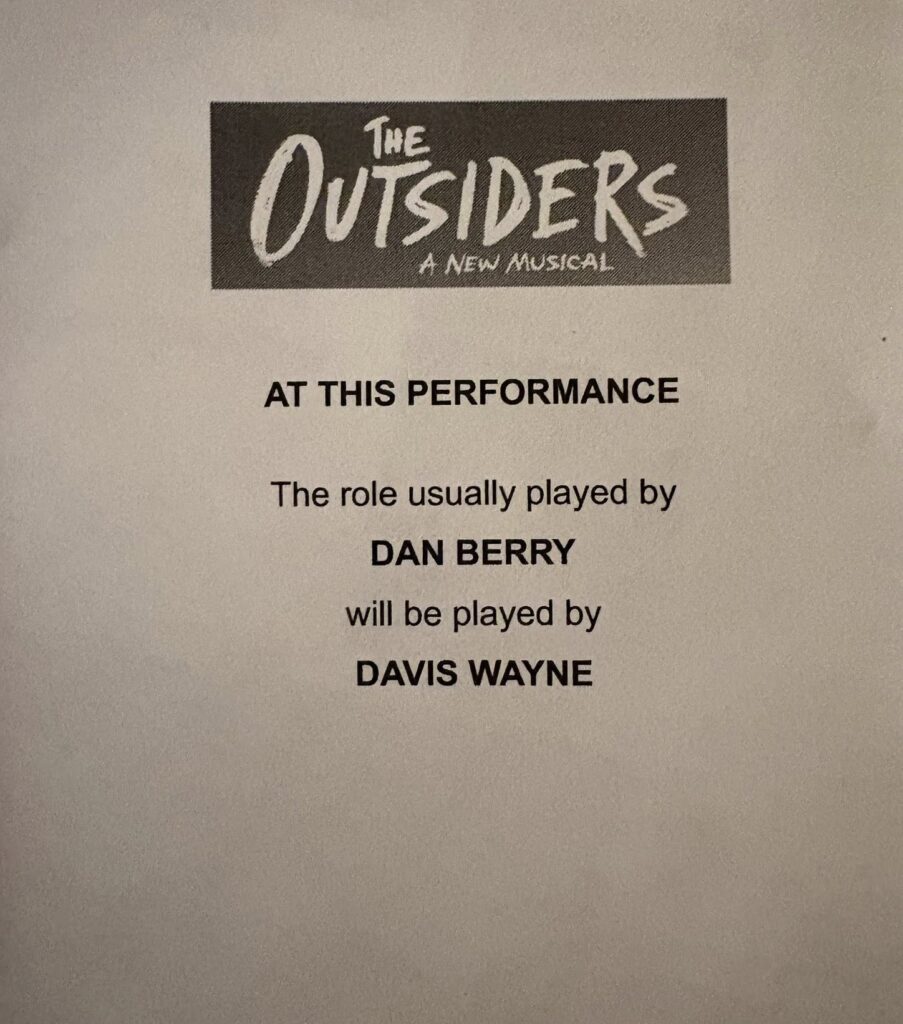
    Ponyboy loves going to the drive-in to see movies and it is here that he meets Cherry Valance (played by Emma Pittman) — the girlfriend of the leader of The Socs, Bob (played by Davis Wayne in this performance). Ponyboy and Cherry realise that neither is what the other expected them to be, which causes a confrontation between The Socs and The Greasers which eventually leads to the death of a character leading to the downfall of many.

    This show poses many questions to the audience — why do teenagers rebel? Why do we as a society believe stereotypes about any groups of people? Can you outrun your problems — both physically and metaphorically? Or will it always catch up to you in the end? And perhaps most importantly, will things turn out alright if we just learn from the actions of our past and the pasts of those around us? Can change really happen?

    This show is impressive — the sets are intricate — complete with a rain fall fight scene between the two gangs, but also fairly simplistic (for example: a car that The Greasers have is also turned into a bed for the Curtis brothers, so the set is also adaptable for the various scenes). The choreography is intense, precise, and still looks like a genuine fight is taking place. This is all enhanced by the use of lighting and sound effects, and of course, a cast filled with amazing singers.

    One thing that I absolutely loved about this show is the number of young actors that is in it. Many of whom are making their Broadway debut with their roles in this show. And it is wonderful to see young actors take on such heavy roles as the ones in this show which deal with very heavy subject matters such as abuse, grief, guilt, and the struggle to keep trudging even when things are at there worst.

    The one thing Ponyboy keeps coming back to is the phrase — “Stay Gold” which is used to mean to remind the characters to remember the good in the world. Perhaps that’s a lesson we all could use.

    Stay gold, everyone.

  • John Proctor Is The Villain

    John Proctor Is The Villain

    Booth Theatre

    30 August 2025

    Matinee

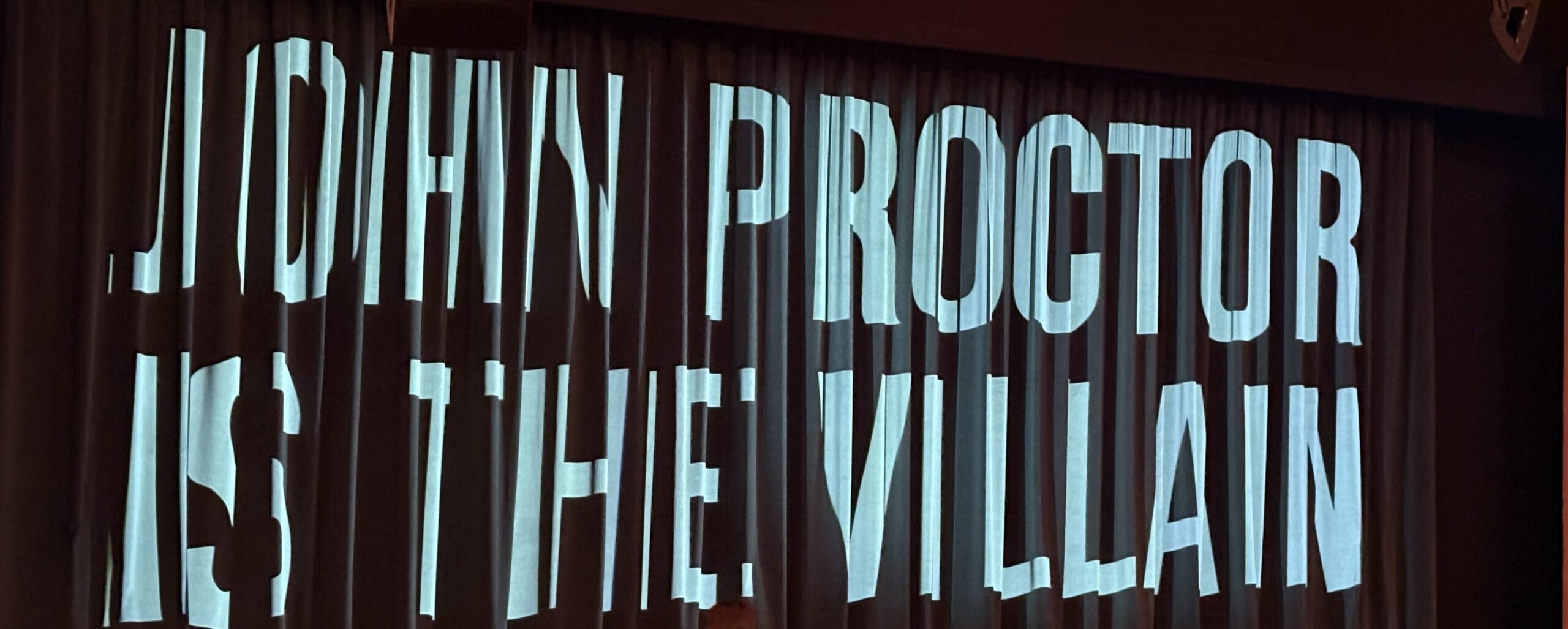
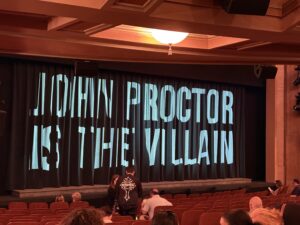
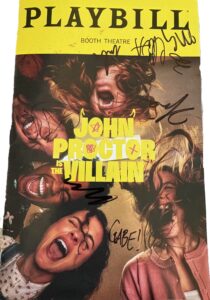
    John Proctor is the Villain isn’t just a show — it’s a lesson. And being a lesson, it is fitting that the show takes place in a high school located in a rural, small town in Georgia. It should be noted that the playwright (Kimberly Belflower — making her Broadway debut with this show — and what a debut it was!) is from a small town in Georgia, but more importantly is an educator herself. And her education background shows!

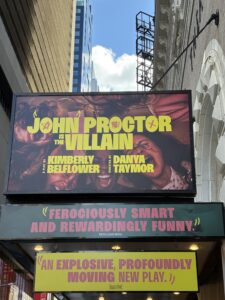
    The Billboard outside the
    Booth Theatre

    Many of us know the story of The Crucible and we were taught about how noble and heroic and honourable the character of John Proctor is… except realistically, he’s not. And this show exemplifies this not just by explaining it to the audience in the context of students learning about the play, but also within the characters themselves.

    This show centres around a few main characters: Shelby — a girl with a reputation of being promiscuous who has been away for roughly six months and no one knows exactly why. Carter Smith — a teacher at the school that the students attend. Mason — a boy in the class. Raelynn — a girl dating the character of Lee and is the main character of this story. She is best friends with Shelby, who has had sex with Lee. Lee — Raelynn’s aggressive and sex hungry boyfriend. Ivy — a student whose father is accused of having an affair on her mother. Beth — an innocent student who is rather religious and very trusting who only wants to see the good in people. Nell — a new girl who moved to this small rural town from Atlanta, Georgia and is therefore meeting and learning about many of the characters at the same time as the audience (and therefore is able to provide an outsider’s perspective to the other characters). And Bailey Gallagher — she used to be a student at the very school that these characters attend and she now works there. It must be noted that she also knew Carter when she was a student.

    This show takes place in 2018, with an emphasis on seeing the world through the eyes of high school girls, who are learning about the world — a world where the “Me Too” movement has started and the society is beginning to listen to the victims. It deals with very intense themes including, but certainly not limited too, power dynamics in relationships/abusing that power dynamic, engaging in sexual acts with minors, the internal struggle that many people feel when someone they personally know and trust is accused of something heinous and how hard it can be to accept those accusations as true, blaming the victim, and unfortunately, the likely outcome in far too many cases.

    The show opens with Carter Smith teaching a sex education lesson to the class. He is not a sex ed teacher, but rather he teaches literature. He has no choice but to teach sex ed due to budget cuts (a thing I am sure the playwright is very familiar with). The students are not particularly interested in the sex ed lesson — in part because they are old enough that they already know about sex and realistically should have been receiving this class for years. But also because in small town, rural Georgia sex education is not the most important thing and there is a heavy emphasis on abstinence only. Between the religious nature of many of the families in the town and being generally conservative on the political spectrum — anything that might be seen as even remotely controversial by the parents in the school district is a challenge for this school to actually do. And that means comprehensive sex education is just not a thing.

    But the students know better. Or at least, as the play progresses, the students learn better. And for an extra bonus — this show is very aware of the pop culture during the show’s time frame including quoting Taylor Swift and giving the audience (and the character of Nell) a recap of past events ending with the phrase, “And that’s what you missed on Glee”.

    John Proctor is the Villain does a wonderful job of paralleling the actual play of The Crucible with the students (especially the female students), the teachers, and even the parents in the town that are never actually seen on stage. Once the opening scene of the sex ed class ends, the teacher — Carter Smith, begins to teach the class about The Crucible and explains how John Proctor is the hero. This sparks Shelby, you has just returned from being on a “sabbatical” for six months to disagree with Mr. Smith. 

    It is at this point that the show really takes off because for most of the audience — we have only ever known John Proctor as the hero. But Shelby points out numerous things: Abigail was John Proctor’s employee, she was a virgin with a crush on her boss, he never apologises to her, nor does he ever apologise to his wife, Elizabeth. In fact, John Proctor dies without ever even saying that he loves Elizabeth. Realistically, in the time period of The Crucible him dying damns his wife and his children to a life of poverty and hardship — and for what, really? To preserve his name. Just a name. Not a person, not the many lives he destroyed along the way, but the concept of a name. And honestly, I don’t know how many people in the audience had ever thought of John Proctor and The Crucible like that before.

    John Proctor is the Villain also takes care explain some potential reasonings that the characters in The Crucible do things that we would think of as odd like dancing in the woods even though it is illegal and lying about why. And then we see our lead female characters reach their breaking points and just need to scream and yell and dance. And it puts it all into perspective.

    Towards the beginning of the show, some of the female students decide that they would like to start a feminism club as an extracurricular activity at the school. However, this is denied because it would be too controversial for the town. This is when Mr. Smith steps in and offers to be the faculty advisor for the club and even offers to frame the club with works of literature so that it wouldn’t be seen as just as feminist club and therefore would be acceptable for the parents in the town.

    In order to delve into this show further — I need to put a SPOILER WARNING:

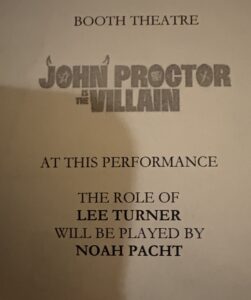
    The character of Shelby (played by Chiara Aurelia) is a very intricate one. Shelby has a promiscuous reputation in part because she had sex with Lee (played by Noah Pacht in this performance) who is Raelynn’s (played by Amalia Yoo) boyfriend. This, of course, causes tension and awkwardness between the characters of Shelby and Raelynn. However, with the help of Nell (played by Morgan Scott) Shelby and Raelynn are able to rekindle their friendship. A lot is revealed about Shelby — her reason for leaving, her past sexual partners, and why she even feels the need to be “promiscuous” (realistically, she is not a promiscuous character — she was groomed). It makes for a character that is by no means perfect, but also not at fault either. I imagine this is a difficult role to play — the actor has to be able to be liked enough for people to not instantly judge her character from the limited information we start with and then transform the character into essentially a hero.

    The character of Ivy Watkins was played by Maggie Kuntz and I found her performance fascinating. The character of Ivy has to be conflicted. There is a rumour going around town that Ivy’s father had sex with one of his employees — which means he cheated on Ivy’s mother and again, this town is very religious. This leaves the character of Ivy very confused and unsure what to do — should she be angry at her dad? Should she feel better that the cheating was supposedly consensual? Can she love her father and hate him at the same time? And worst, as the show moves on, the rumour begins that her dad also had sex with Shelby and that’s why Shelby was away for so long. The character has to learn the kind of man her dad really is and it’s heartbreaking to watch. 

    Bailey Gallagher is another conflicted character (played by Molly Griggs) because she grew up knowing Carter Smith the teacher. She trusted him as a kid, even developed a little crush on him, and now she works with him at the school. But Bailey had heard rumours about Carter before… and she always dismissed them because she knows Carter and he’s a good guy. Which makes it even more important and powerful when she finally realises that’s she’s been dismissing the wrong people.

    Perhaps the most interesting character, in my opinion at least, is that of the teacher — Mr. Carter Smith. Carter is played by Gabriel Ebert (who was absolutely amazing). What makes this character so difficult to play, I think, is that he isn’t a straight forward character. The audience and many of the characters believe he is, but he has dark secrets that are not revealed until we are well into the show. These secrets have to come as a surprise to the audience in order for the message of this show to be loud and clear — so when the audience gasped when everything came to light — I was thrilled. 

    The character of Carter starts off as incredibly likeable, charming, progressive even for someone in Georgia. He’s for feminism, he wants to help… but does he? Carter is the John Proctor of the show and the fact that it takes the audience by such surprise is beautiful. It is revealed that Carter has a habit of not only cheating on his wife, but doing so with girls that are not only minors, but who are less powerful than him. Often, he goes after his own students to groom them. And as this becomes evident throughout the show, the audience has to turn on Carter. We have to hate him. And there is just something so amazing about watching a likeable character becoming so detestable by the shows end. It takes a special kind of acting ability to sway an entire audience’s perspective eight times per week.

    I was able to ask Gabriel Ebert after the show, how it felt to play someone who has to become so hated by the time the curtain falls. He simply smiled and stated, “it’s necessary”. And he’s absolutely correct. 

    Once it is revealed that Carter had seduced Shelby (and that she was not his first victim nor will likely be his last), the audience gets to learn the fates of Carter, Shelby, and Raelynn (among others, but these are the most important). Carter is forced to take a short leave of absence. He is allowed back into the classroom to teach. Shelby is forced to take classes from another teacher. The town, as a whole, the school, as a whole — does not believe Shelby (even if many of the characters do by the shows end). In fact, Shelby gets punished as if she were the problem. 

    And finally, the show ends by cutting to black at a pivotal moment — the character of Beth (played by Fina Strazza) has a decision to make. Beth is a very conflicted character who very much trusts Carter. She doesn’t want to see the bad in Carter. But she is also likely to be Carter’s next (at least attempted) victim. Throughout the entire show she cannot wrap her mind around the idea that someone she trusts so much could be a bad person. At the show’s end, most of the students have come around to believe Shelby and take a stand against Carter — even Bailey. But Beth, right at the end, runs towards center stage before the lights cut to black. It must be stated that it is very much up to interpretation if Beth has run to join Raelynn and Shelby and the other students against Carter… or if she was rushing to stand by Carter’s side. I like to think she joined the other students. But I cannot say for certain. 

    I really wish this show was running longer because it is an excellent work of theatre that is really able to flip a very well known play on its head and make it relevant for a modern audience.

    Very well done.

  • The Boys From Kingsbridge

    Theater For The New City

    Dream Up 2025 Festival

    30 August 2025

    I was not exactly sure what to expect from The Boys From Kingsbridge — I knew it was a “gritty police drama” framed against the success of the Yankees baseball team and their success in winning the American League Championship Series and thus earning the team a spot in the World Series. 

    I was honestly, a bit concerned that this may be a very pro‐police show — which could be a rather hard thing to pull off in today’s society where the police officers themselves are often the ones taking the criticism when a cop does something wrong. And I am not saying that the individual police officers who do morally wrong things (and especially the police officers that do take it way farther than a situation needs to be taken) should not be held accountable — they absolutely should. But this show points out that while yes, bad cops should absolutely be punished, but also the people in the charge, the politicians making the laws, need to be held accountable, too. Because, as this play states, most of the police are trying to uphold the law, whether they agree with that law or not. They are given quotas to meet and sent to impoverished areas to enforce crimes that are often not really important just so that the police force can keep bringing in money. This is a system, it is argued, that the good cops, the average cops, are essentially stuck in the cycle set up by the higher ups.

    There is of course, some truth in the fact that the police forces, as a whole, are systemically broken and racist. And for a lot of police officers, just like people in any other job, they comply with the orders they are given — not because they necessarily agree with the orders or the policy, but because if they refused it would be career suicide, at best, and perhaps even criminal at worst. That being said, the system being broken doesn’t absolve the individual police officers who do go too far. In fact, it should inspire the police officers to work to make change, but I fear for most, it’s just about keeping their jobs and not making waves. I imagine that at least for some, the endless cycle of being forced to do things that you don’t believe in morally would hopefully inspire change and not just beat the person down into submission. But I’ve always been hopeful. The show does take special care to point out the high suicide rate among members of law enforcement and takes care to explain that it is often due to being overworked, having broken or faulty equipment, and having no choice but to do things that they feel are wrong.

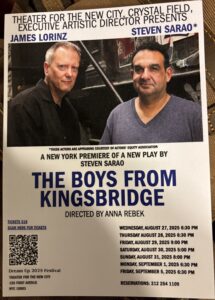
    The show includes two actors — Steven Sarao, who is also the writer, playing the character named Steve. And opposite him, as his police partner and best friend, is James Lorinz portraying Mike. 

    Steve is a book smart man (having attended Harvard), driven to make a positive change in the world, wants to see reform in law enforcement, but struggles in feeling that he is nothing but a work horse, a lackey, for the more powerful who do not have the best interest of the innocent members of society in mind, but rather they are interested in cutting corners and lining their own pockets.

    Mike is much more of a streets smart type of guy. He knows he has little ability to change the system that he works within. Mike (and Steve) have both been studying for the Sergeant’s exam — to see if they could be promoted. Mike has failed this exam multiple times, but Steve consistently passes it. However, Steve never takes the promotion and instead works with Mike in hopes of Mike being able to pass it too.

    Mike and Steve go way back, having known each other their entire lives and really only ever parting ways when Steve attended Harvard University. Their friendship is truly a  codependent relationship and as the play unfolds, it is revealed that it has been this way for a long time. The two friends have had a hard life growing up complete with abusive parents, rough neighbourhoods, and fist fights having to be a way of life.

    The show opens with Steve telling the audience about his friend Mike and how they will never see each other again. He continues to monologue about growing up in Kingsbridge, and his love for the Yankees, and most importantly about Mike.

    Then it is Mike’s turn to give his opening monologue in which he gives his point of view on the same things that Steve spoke about. And finally, the audience see the two characters interact — they do act like long time friends, giving each other a hard time, cursing each other out, and just chatting like close friends do. 

    As I mentioned before, this show only had the two actors. Therefore all of the other characters — a police sergeant, a couple being arrested, etc. were either not present on stage at all or the two actors mimed moving the other people around (an example would be placing their hands on the arrested couples heads and leading them into the police cruiser). While this worked for the majority of the show, there was at least once where it was not made clear that two people were being arrested and not just one until a good minute or two after the event happened and it was the dialogue that gave it away. 

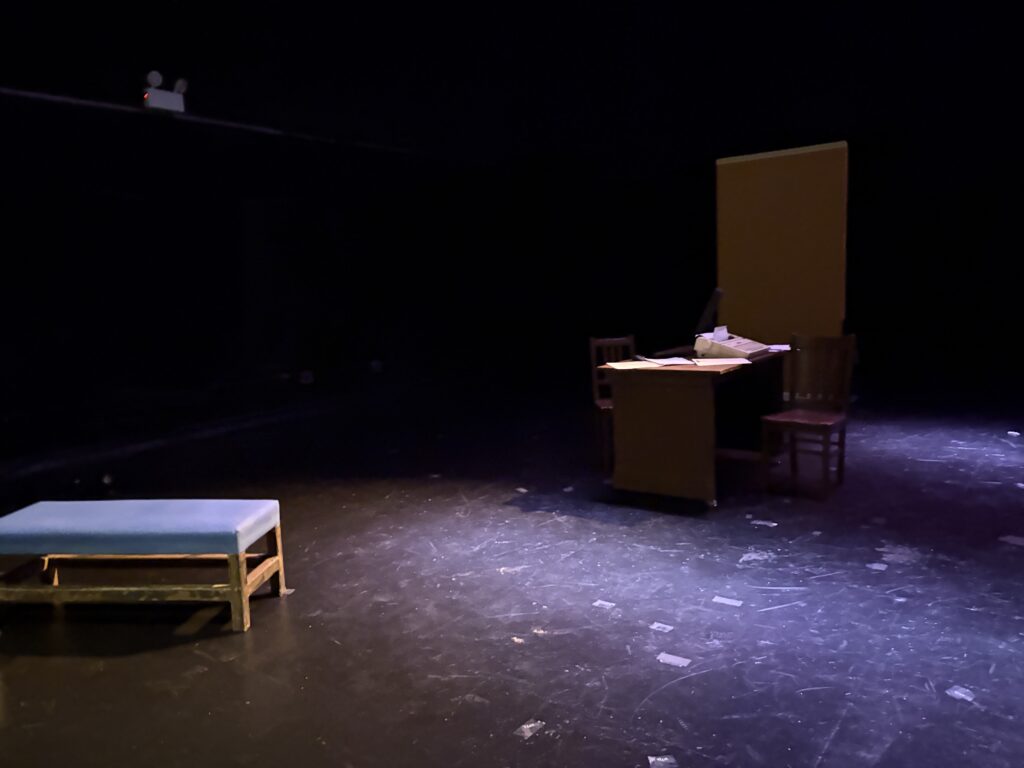
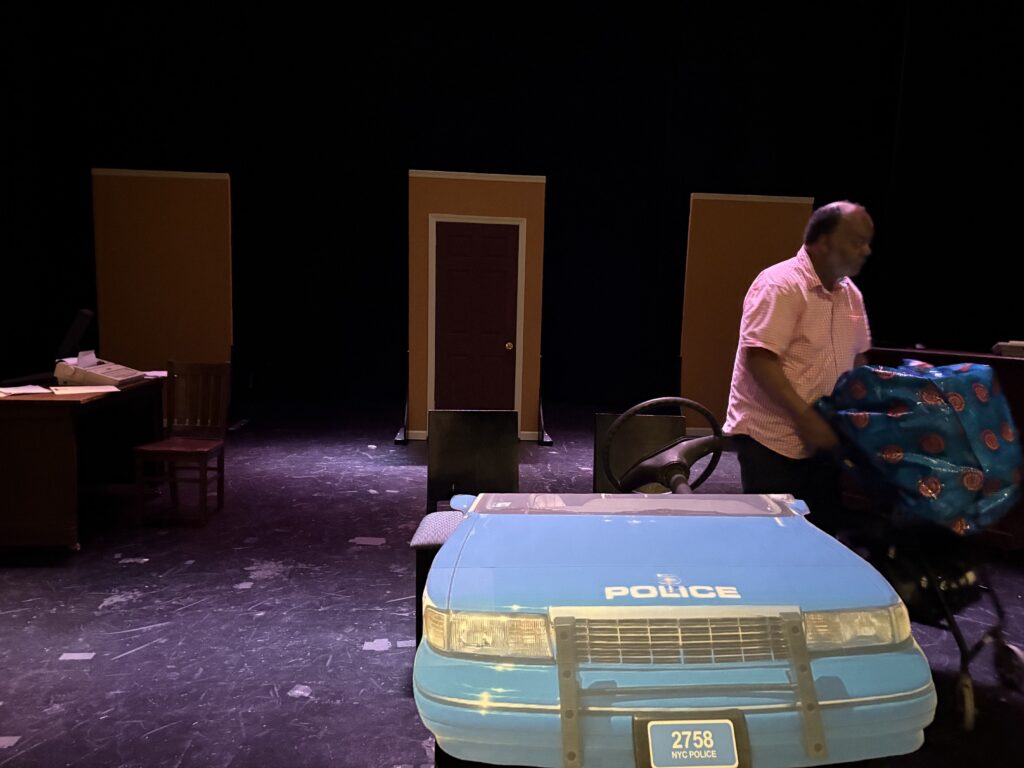
    The sets were simplistic; the front of a police car, a podium, a bench, a radio, a desk… nothing elaborate, but the show simply did not call for extravagance, in fact, it called for simple and worn down. 

    The costuming was also pretty minimal, really only consisting of the two actors wearing their police uniforms. I did find it odd that neither of the uniforms had any sort of badge on it anywhere and the guns that the officers carried having bright red tips was a bit distracting. But I have to wonder if legalities of some sort prevented the usage of more realistic uniforms and firearms. 

    The show did have one glaring problem that is hard to overlook. At one point, the two characters are in their police cruisers, just chatting, but it’s during a “sacred time” where the characters get to enjoy their coffee and relax a little bit before the day really starts and they start receiving “jobs” (911 calls) that they have to respond to. It is during this scene that the audience see both the characters of Mike and Steve with open books in their hands. I thought that the characters were parked, reading books, enjoying the quiet part of their shift… until they mention the need to pull over. It was then that I realised that these character were not parked and enjoying a book during a slow part of their shift — the actors were reading their lines from the script. Unfortunately, this was not lost on other members of the audience because I was asked immediately upon exiting the theatre by another patron if the actors were still on book.

    There was one other thing that I found odd about this show…and WARNING: SPOILERS AHEAD:

    The show opens with a radio talking about the Yankees and immediately after is the opening monologue spoken by the character of Steve. This is the monologue in which Steve tells the audience about how hard it is to be a police officer. This is when the audience is informed of the high suicide rate among law enforcement and how the police officers also get the short end of the stick. And it is in this monologue that it is mentioned that Steve never sees Mike anymore. 

    It becomes apparent on this opening monologue that one of the two characters is not going to survive this tale. And since this show opens with Steve, I would have thought Mike would unfortunately lose his life. In fact, a major plot point throughout the show is that Mike is desperate to tell Steve something, but he struggles to actually say the words. I was sure that perhaps this secret that Mike must tell Steve was going to be along the lines of him being sick and terminal. So it was a huge surprise to me when Steve is the one killed in the line of duty. And then the show ended. With the choice of Steve being the one to die, I felt there needed to be an additional scene where, heartbreakingly, Mike cannot handle it anymore and takes his own life — harking back to the words that Steve spoke in the beginning.

  • The Life and Death of King John

    The Life and Death of King John

    The Smoking Mirror Theatre Company

    Off-Broadway

    29 August 2025

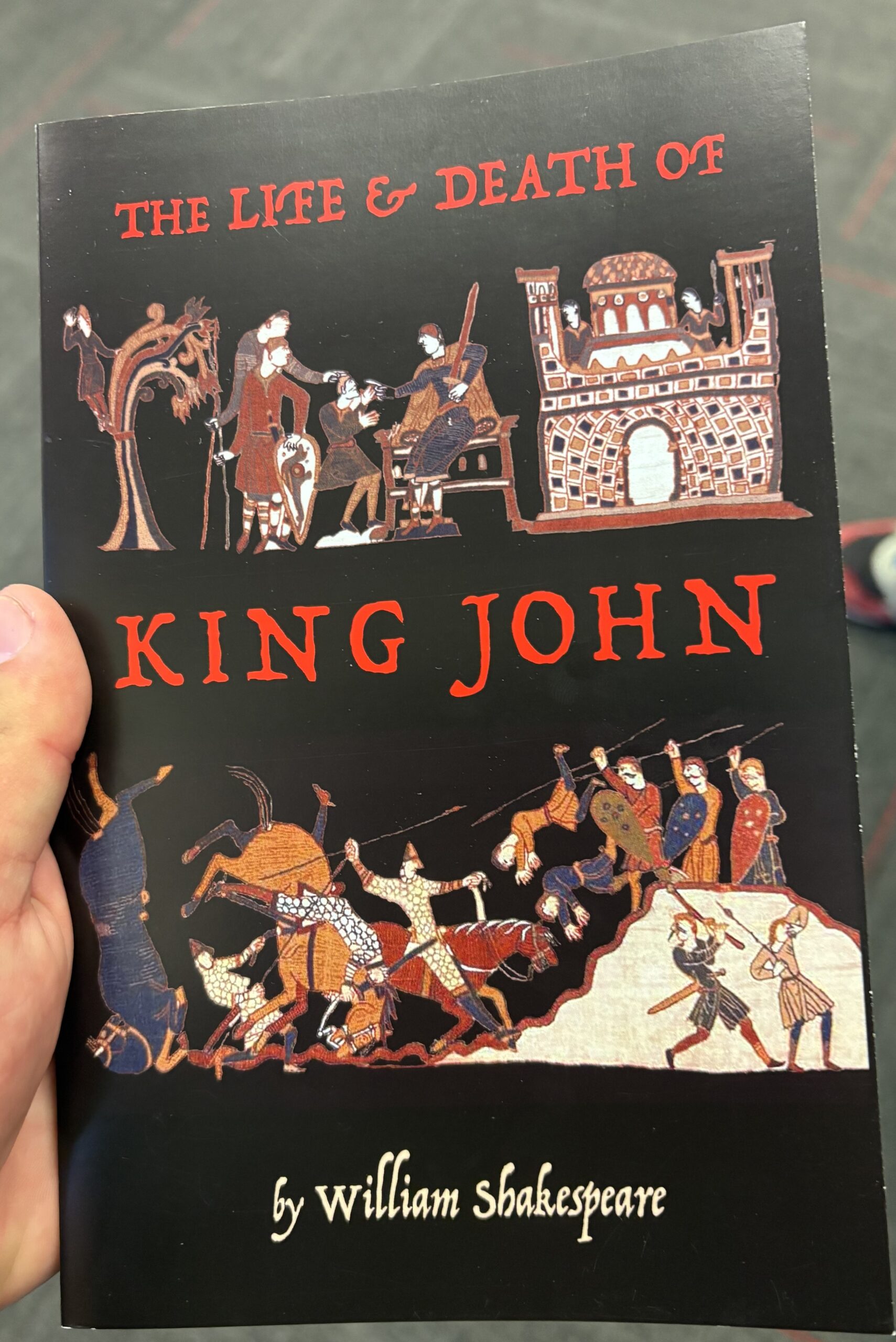
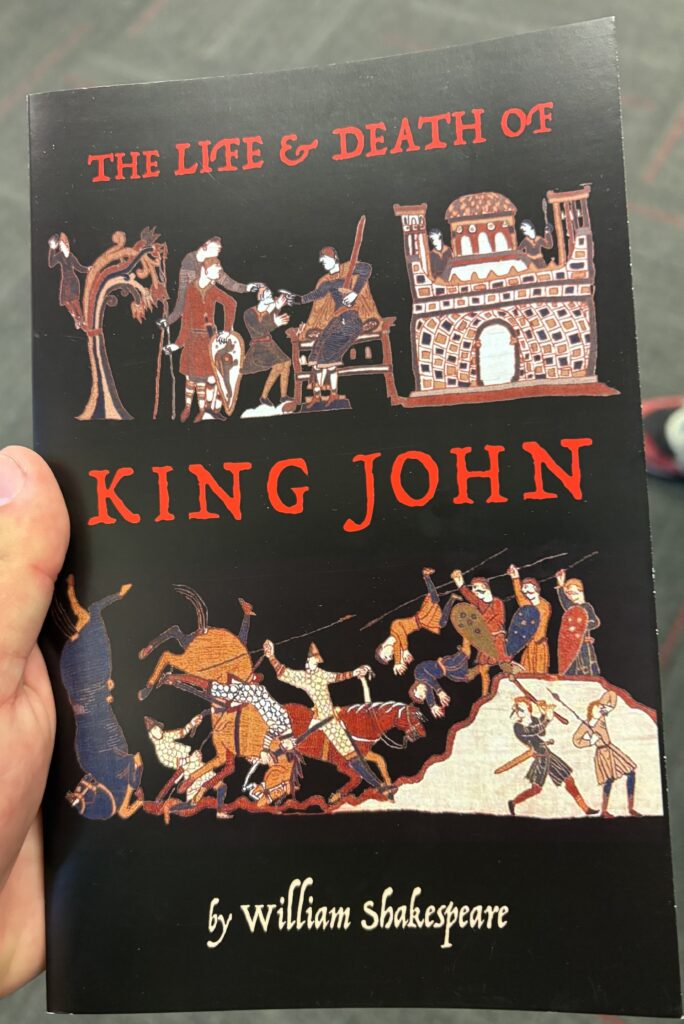
    There is a lot to be said about this very downplayed work of William Shakespeare. The entire show is incredibly political and there are certainly themes that can easily be seen as parallels to the modern day political regime in America… I’m just not sure if the show exemplifies that in the way that is necessarily intended by this production. 

    My first question — if this is a parallel to the current administration, who is the Trump‐like character in King John? Is it King John himself? The character who is seen in a positive light by his fellow Englishmen (eventually, at the end), but also as someone who flip flopped on their standards and killed at a whim for power. Or is the Trump‐like character supposed to be The Bastard, Philip Faulconbridge? A character who just kind of falls into place, in line for the throne. He rambles, he has asides to the audience, but he never really says much. However, he is violent, he is there to take the glory, and most importantly, he doesn’t actually do much — everything happens around him and he gets the benefit of it. In fact, his defining characteristic is his lust for power.

    The political nature of this show goes down even to the colouring of the costuming. The English wore red — mostly in the form of sashes and the French wore blue, also mostly in the form of sashes. Were these colours chosen specifically to match the colours typically associated with the Democratic and Republican parties in America? I can’t say for certain, but I’d suspect so.  It must be noted, however, if the French are intended to be representative of the democrats and the English representative of republicans — the political ideal of the show falls apart. Shakespeare, being an Englishman, who had to write a certain way to please the crown had no choice but to make the French be as violent or even more so than the English — which undermines the entire idea of the political nature because it was written with bias. This leaves me to wonder, perhaps the point is not one is better than the other. Perhaps the point is that they are both equally bad and that the influence of religion poisons power.

    I do find it interesting that the character who causes the most actual harm is that of Cardinal Pandulph. He is the mouthpiece from the Vatican and he pushes the war between Louis the Dauphin and King John forward with a slithering snakelike ability. Interestingly enough, he wears purple. Purple is of course, the colour of royalty in Ancient Rome, but it is also the colour that you get when blue and red are mixed.

    The colour scheme can of course be interpreted that the church or religion is the real issue behind politics as everything that happens in this show is a direct result of interference of the (in this case) Catholic Church. And this would resonate with modern politics as it is not uncommon to see religion become involved. 

    The rest of the costuming was simple — all black. This was particularly wonderful during scenes of battle, which was done with a bit of a choreographed fighting and dance. However, most notably, was the decision of the actors (minus a few main characters) being completely covered with only their eyes showing. The names of those covered characters are not important. They are nothing more than unnamed casualties in a meaningless battle. 

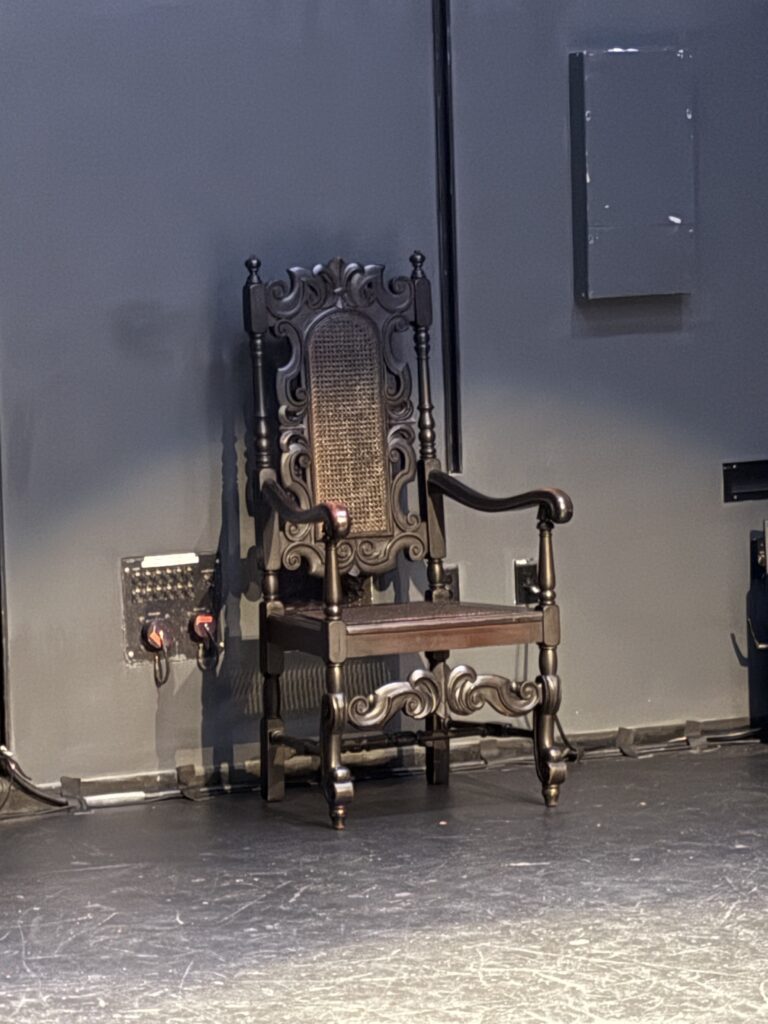
    The mostly black costuming went well with the black box theatre and minimal set pieces (mostly consisting of multiple black boxes that the actors could stand on and an all black throne). 

    The show used a nice mixture of what I can only describe as some sort of tribal/battle music and religious hymns which mirrored the war and religion beautifully throughout the entire show.

    I cannot even begin to discuss the talent of the cast. Some of the more notable cast members were Bellamy Woodside Ridinger who played King John and had an amazing death scene, among many emotionally powerful displays of both fear and success. Mateu Parallada who played The Bastard Philip Faulconbridge who is linguistically able to navigate the often complex language of Shakespeare with ease. Ruby Rich who played the character of Constance with such emotion — she really gave this performance her everything! But perhaps the actor who caught my eye the most was Martin Challinor who played both Cardinal Pandulph and the character of Hubert. 

    Martin Challinor was able to transform from the slimy, sinister Cardinal into the scared knight unable to bring himself to actual harm Arthur. And most impressively, he seems to do this with ease. 

    This show relies on a cast of eleven actors to play a variety of different characters. And this show nails that. 

    There certainly were parts of this show that could have been cut without having a major impact on the story and still maintaining the integrity of the story. That being said, I would personally love to see a live production of Shakespeare that has not been cut at all — bring on all five acts 

    This show does Shakespeare justice. Well done. 
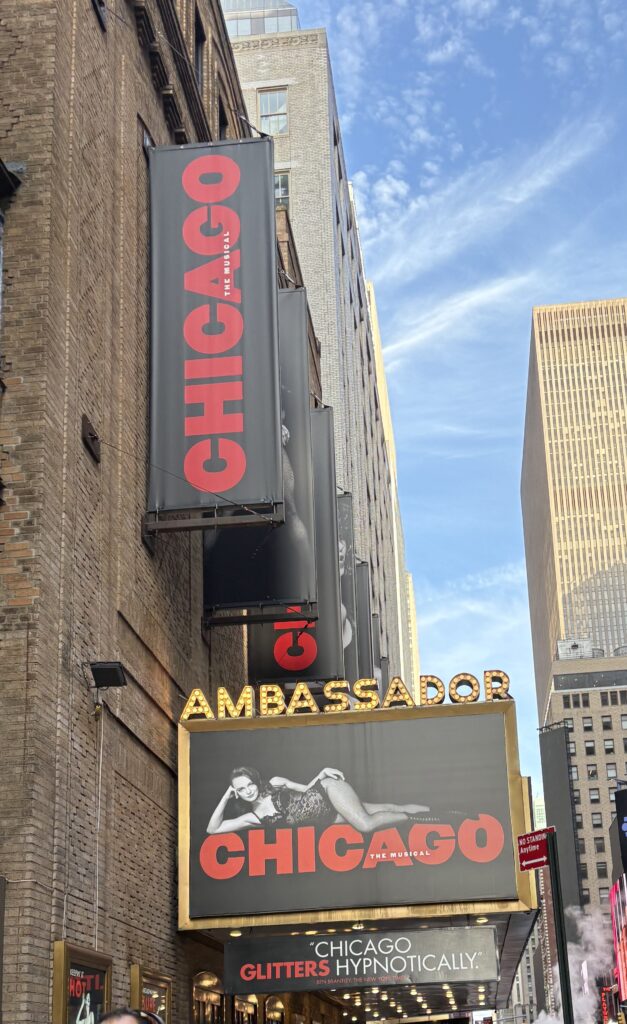
  • Chicago

    The Ambassador Theatre

    Broadway 

    24 August 2025

    I have no good excuse as to why it has taken me anywhere near this long to finally see a classic such as Chicago

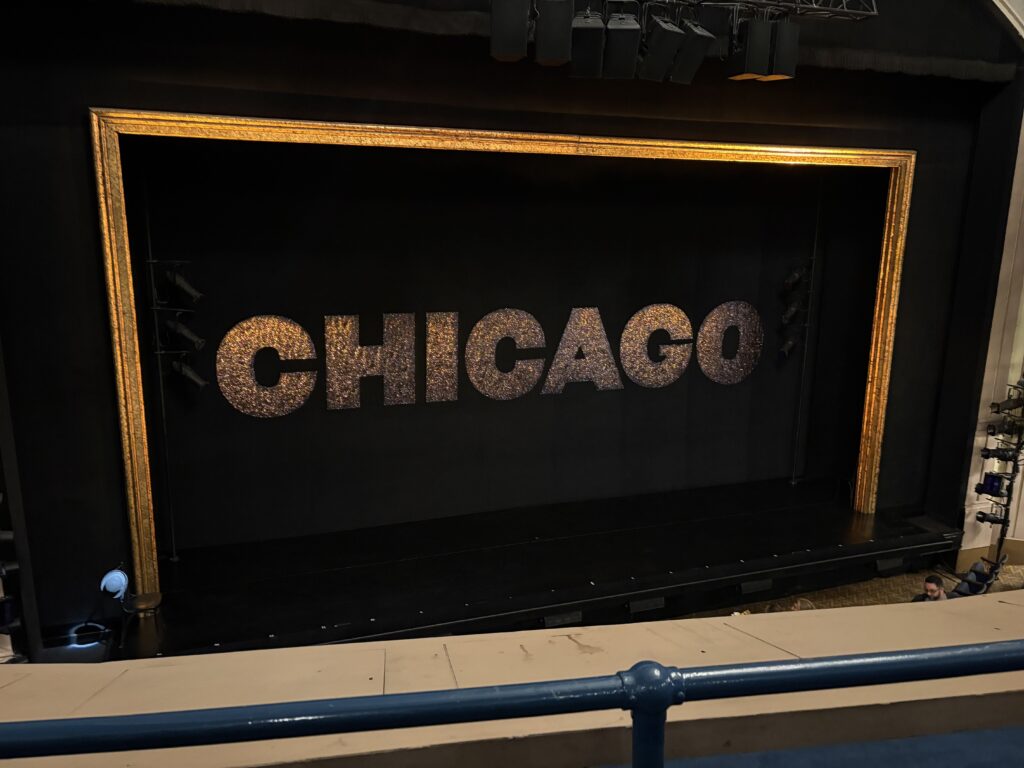
    I love how minimalistic this show is. Everything is so simple – the staging is only elaborate in its dance numbers, but at the same time it feels very reserved. I believe this is due to the ease that the actors do the choreography and staging. It is as if the actors (and therefore the characters) did each dance number with such ease that it really kept the show feeling flawless as the actors – who are all wearing various costumes that are black – play a large variety of different, often nameless, characters.

    Additionally, the sets were also minimalistic. The vast majority of the set consisted of the orchestra, wearing suits/formal clothing, sitting in front of the audience and playing their music, while the cast sits in unassuming black chairs during any scene in which that actor’s character is not one of the characters that happen to be centre stage. The orchestra even became part of the show at times, with the conductor’s baton being taken from her at one point so that a lead character could conduct the orchestra and the conductor even addressing the audience. 
    I found a very compelling moment of choreography happened while the vast majority of the actors were simply sitting in their chairs. During the song “Mister Cellophane” sung by the character of Amos (played by Raymond Bokhour), a song in which Amos laments about being invisible, the entire company turned in their chairs, putting their backs to him. It was very simple, but so powerful.

    I very much appreciated Raymond Bokhour’s performance. He is able to play Amos so meek, but also able to belt at just the right moments, only to slip back into being meek. It was beautifully achieved. 
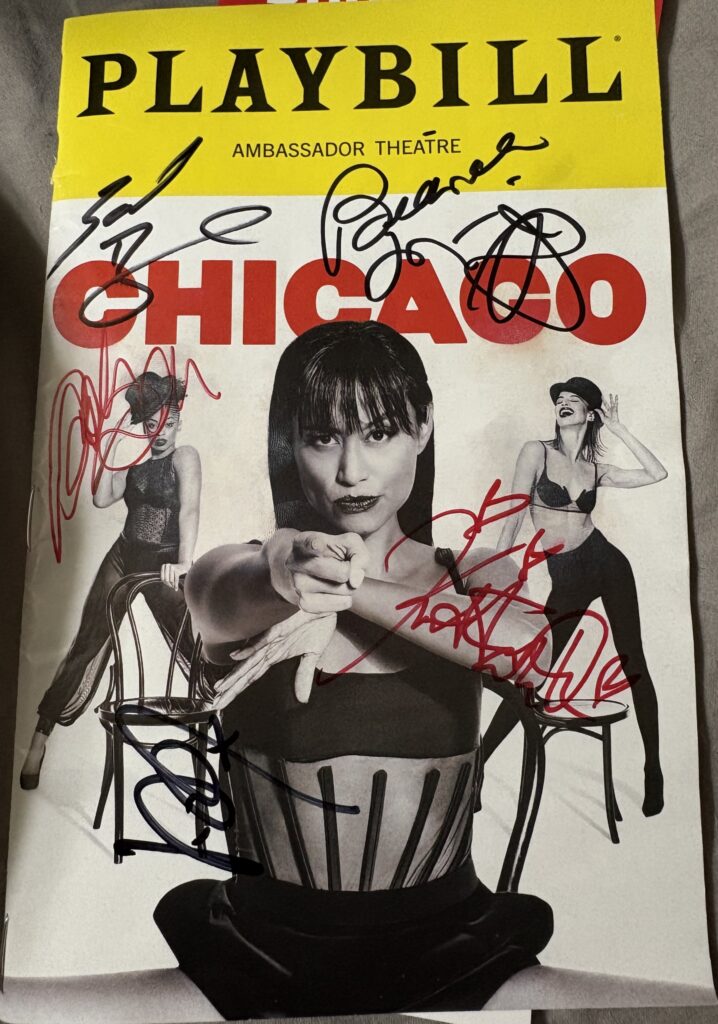
    Rachel Schur and Bianca Marroquín played the characters Roxie Hart and Velma Kelly, respectively. Both of these actors clearly love what they do and it shows through the fun in their performances.

    Jacqueline B. Arnold portrayed the character of Matron “Mama” Morton and is such a vocal powerhouse with one hell of an ability to belt. 

    This show has something that anyone can enjoy: great, catchy music, talented actors, fantastic dancers, glitz, glamour, but also fun and camp. I can absolutely understand why this show has been such a success.

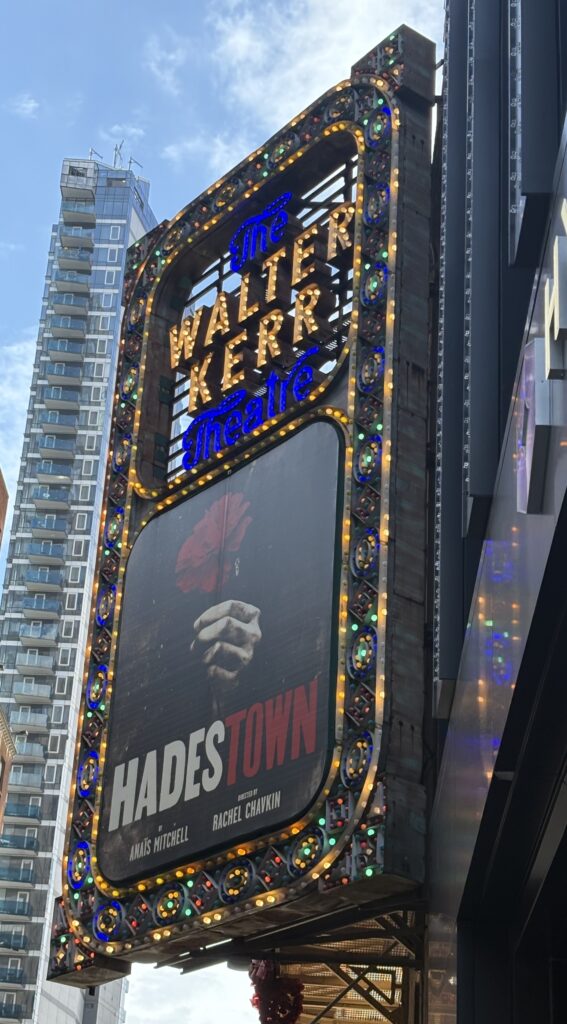
  • Hadestown

    Walter Kerr Theatre

    Broadway

    24 August 2025 

    Matinee 

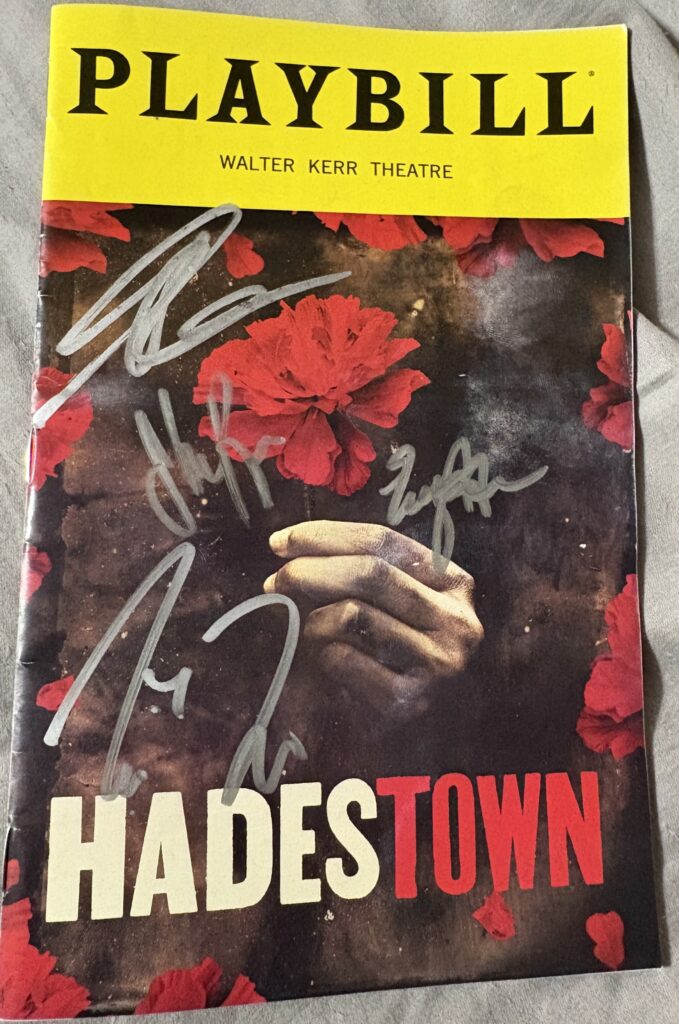
    I had honestly put off seeing Hadestown since the show opened on Broadway because I wasn’t sure that I would enjoy it. I had heard some of the music before, but always out of context and I knew the story from Greek mythology, so I never got around to seeing this show before. Clearly, the importance of retelling this story was lost on me until now.

    However, I kept hearing about people who have “seen the show 17 times” or who have decided to get a “Hadestown” tattoo and this began to sway my opinion, so I purchased tickets. Directly before the show, I had a moment to speak with my aunt and a friend of her’s and I am so glad that I did. My aunt’s friend very briefly compared Maybe Happy Ending to Hadestown and I had never heard that comparison before – I can absolutely see why she compared these two shows!

    Both shows are so full and complete in their storytelling. Both shows are deeply layered. Perhaps most notably though, both shows are very human.

    When I was in college, I took many creative writing courses and in doing so, I read a story written by a classmate that was about a woman who elected to let herself be hurt over and over again (in the classmate’s story, the main character perpetually chose to raise a child that would tragically pass away, and this would happen over and over again, essentially as a loop) and it baffled me as to why the character would continue to choose pain. My professor looked me in the eye and said, “Because she’s human. And to continue to feel the pain in order to have short lived parts of good, is innately human”. That stuck with me. And that is the essence of Hadestown.

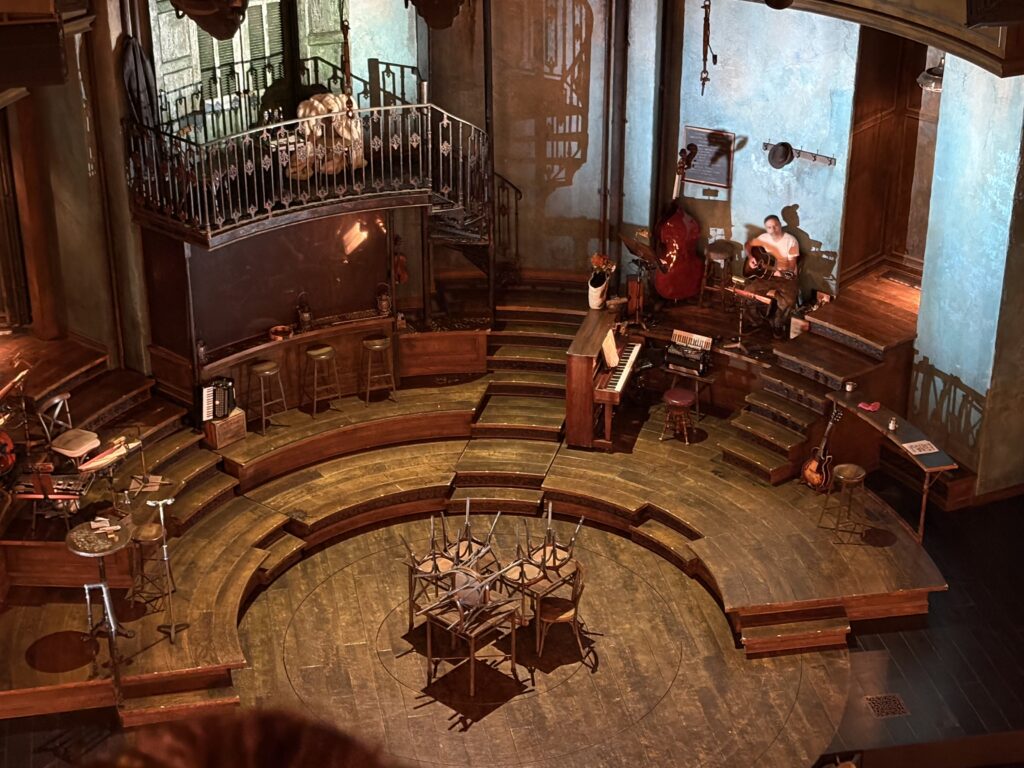
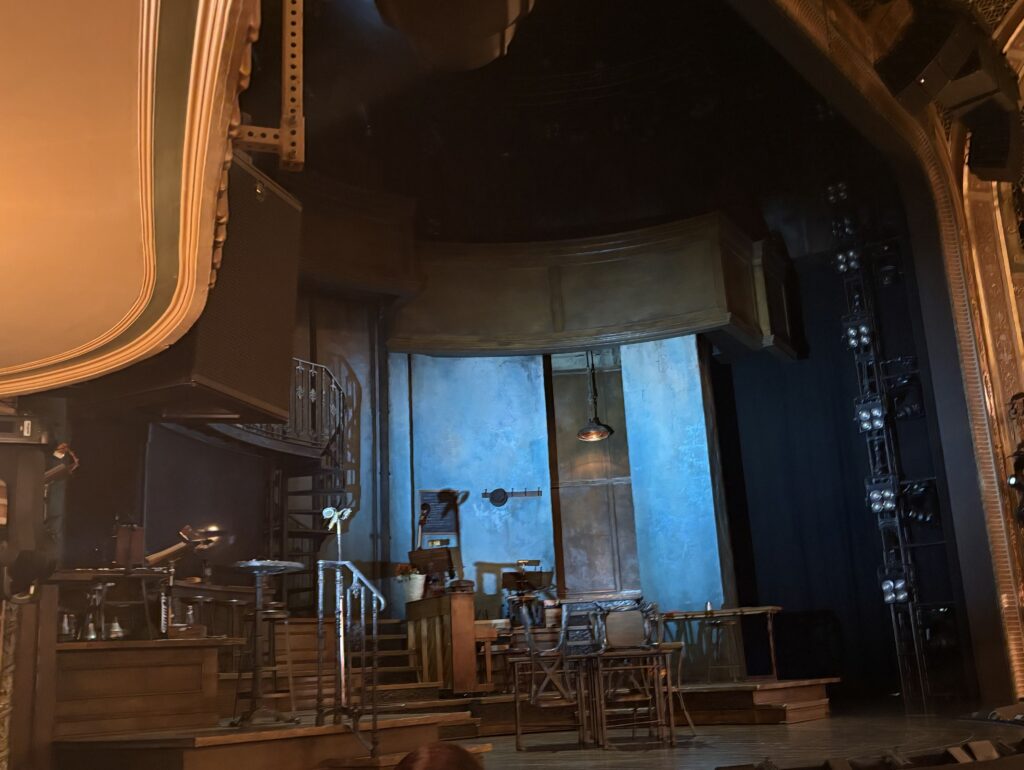
    The entire ensemble was flawless. Every movement of their choreography was clearly well rehearsed, but it did not feel like it was well rehearsed – it just felt flawless. This extended beyond the actors though, and into the set itself. The use of lighting in the choreography is incredibly impactful, perfectly illuminating the main characters when appropriate, but also able to show us the depth of the darkness in actual Hades. Even more so, is the effect of the turntable (made up of three sections, all three able to spin independently of the others, and with the middle piece being an elevator that both lowers below the stage and also elevate the actors higher than stage level) which is more than effective in both showing people going down to Hades and also works to show Orpheus making his long walk. In fact, in times of high destress to the main characters, the turntable would be utilised in a way to create confusion, tension, almost a dizziness with the movement on stage; which forces the audience to feel the emotions that the characters are feeling.

    Orpheus was played by Ali Louis Bourzgui who was phenomenal as a young boy in love. Vocally, at the beginning of the show, it did feel like he was perhaps struggling to hit those (insanely) high notes. That feeling was short lived, however, as within a song or two, he was able to sing it rather angelically. So perhaps, he wasn’t struggling at all. Maybe the character of Orpheus just did not know how to fully sing the song yet.

    Eurydice was played by Myra Molloy and honestly it is hard to believe this is a Broadway debut for her. She has amazing command of the stage, is undoubtably a talented singer, and most importantly, was very believable in her portrayal.

    Phillip Boykin portrayed the character of Hades and he most definitely did not disappoint. His booming voice is certainly one that is well suited for the role! So big, so powerful, but also the ability to turn that around and to be soft and sweet. This ability gives the character of Hades such depth.

    Daniel Breaker played Hermes and Lana Gordon portrayed Persephone. Both of these actors are amazing vocal performers who’s characters both lead the audience (and other characters) through the story, but also who reveal the softer side of Hades (and why that softer side is even there). 

    This show was very obviously well thought out, with nothing seeming to be have been left up to chance. Every single thing in this show, no matter how small, feels intentional. And it is beautiful. This show is a masterpiece.   

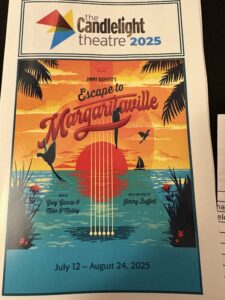
  • Escape to Margaritaville

    Escape to Margaritaville

    The Candlelight Theatre

    Wilmington, DE

    10 August 2025

    Matinee 

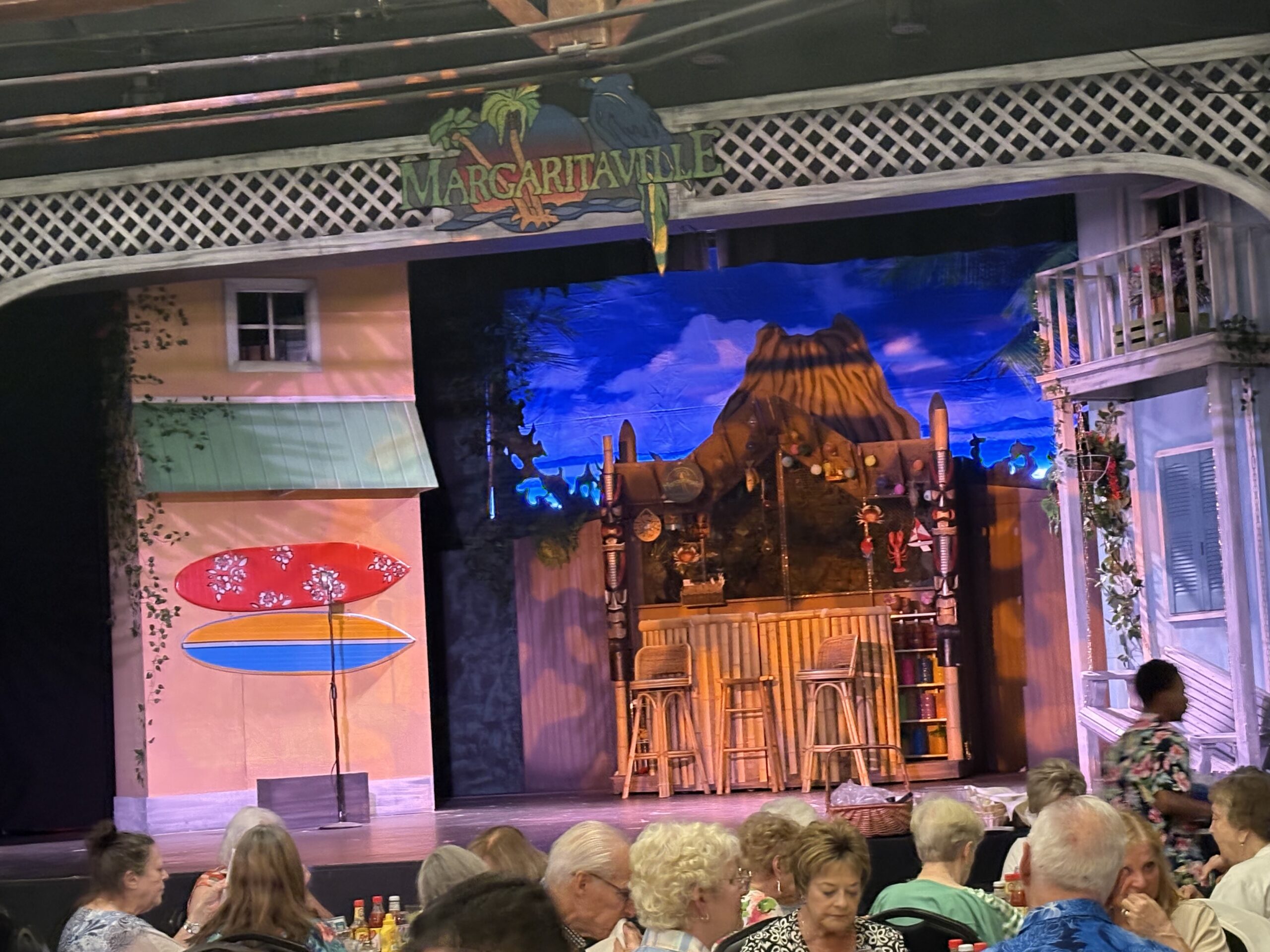
    I honestly was not sure what to expect from Escape to Margaritaville. I am not a big Jimmy Buffet fan and I did not expect there to be much of a plot. I honestly thought this show would be one that people tend to like because of the music. I was pleasantly surprised that there was a much more in depth plot filled with environmentalism and even the concept of not getting everything you want (especially when it comes to love).

    The show follows the characters of Tammy (played by Gabrielle Hines) and Rachel (played by Molly Hofstaedter) as they go to the island of Margaritaville to celebrate Tammy’s engagement to her horrible fiancé named Chadd (played by Nathan Fitch). Once on the island, they meet a number of crazy characters, but most notably the characters of Tully (played by Giacomo Fizzano) and his best friend Brick (played by Aaron Shown) who serve as the romantic love interests for the main female leads.

    I was especially impressed with the handling of the characters of Rachel and Tammy. Rachel is a good girl who hates her best friend’s loser fiancé and is essentially married to her work. So it was nice to see that the character did not throw away her dreams of making a clean and sustainable energy source for a roughly six day old relationship. 

    As for the character of Tammy, she is a woman who has been dragged down by her controlling fiancé and doesn’t see her own self worth and beauty. So while it was nice to see her realise how beautiful she is and that she is worthy of a better partner, it was nicer to see her do this while also not compromising her morals and cheating on her fiancé. Tammy’s love interest on the island is the character of Brick. 

    Brick is the bartender at the hotel that they stay at and despite there being an attraction between the two characters, neither character acts on that attraction until Tammy has ended her relationship with her fiancé.  Brick is also a decently innocent character. He does everything with good intentions and he’s instantly trusting. This makes his tap dancing number (a very tongue in cheek song in which everyone else tap dances and he sings about being the star in a tap dance number) seem so pure and adorable. It was heartwarming. 

    The entire cast was compromised of excellent singers and great dancers. All in all, the show was fun, surprisingly deep, and very enjoyable. It’s clear that the actors are enjoying themselves just as much as the audience is and that is always very nice to see. 

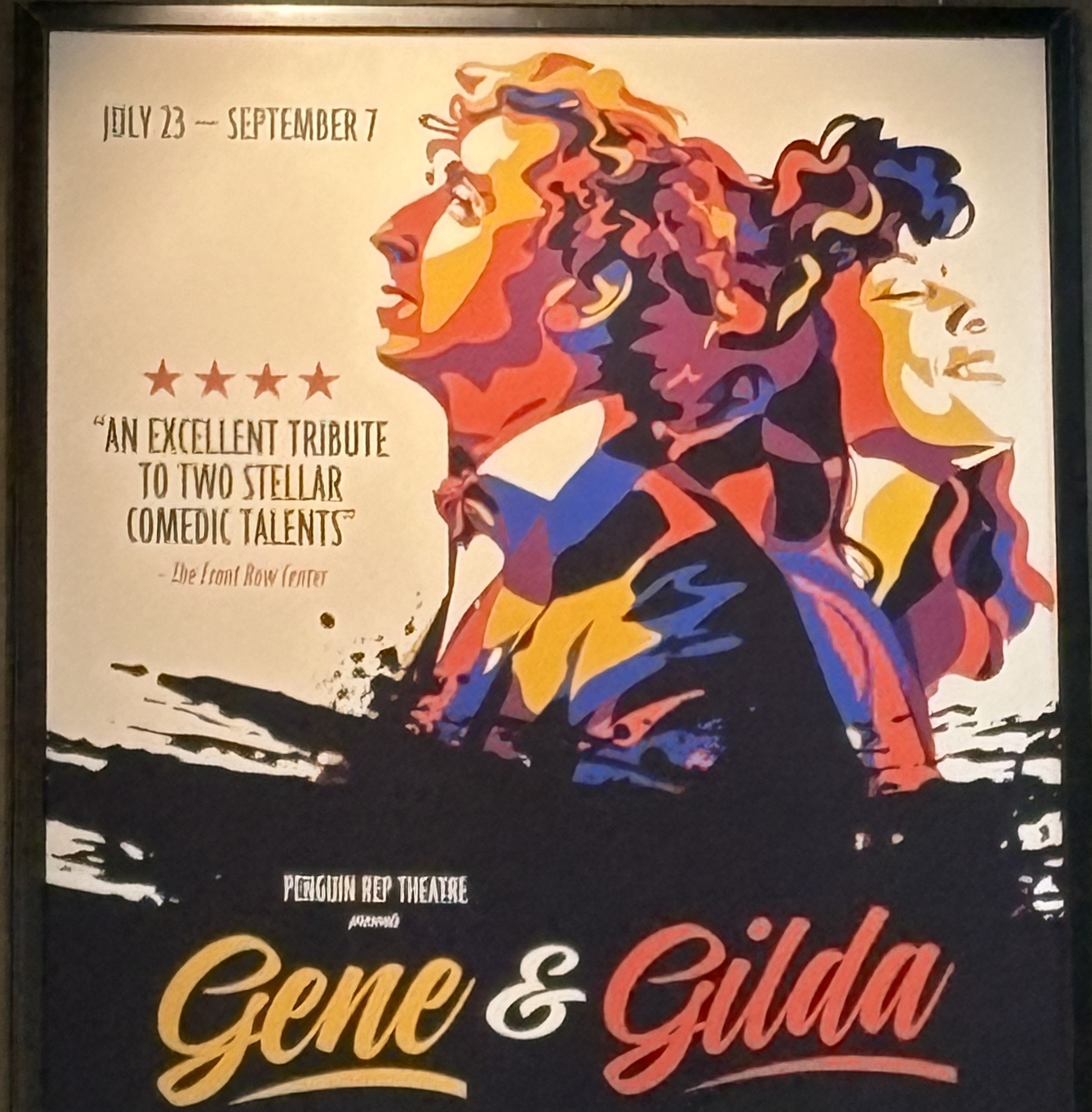
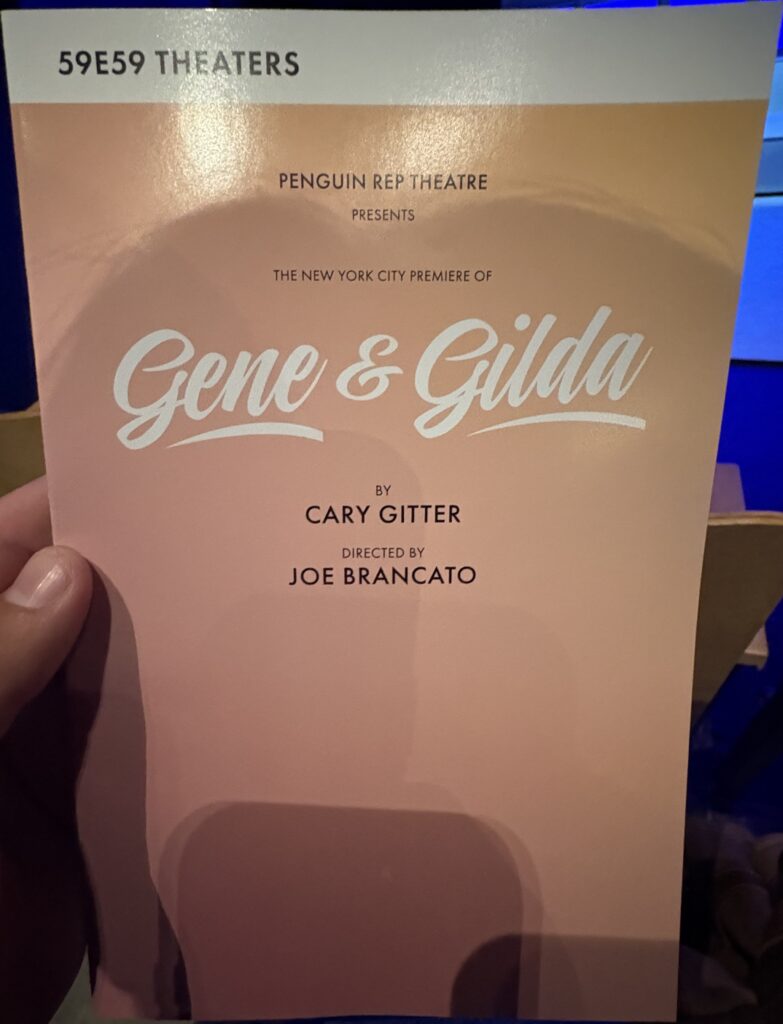
  • Gene and Gilda

    Gene and Gilda

    59E59 Theaters

    5 August 2025 Evening Performance

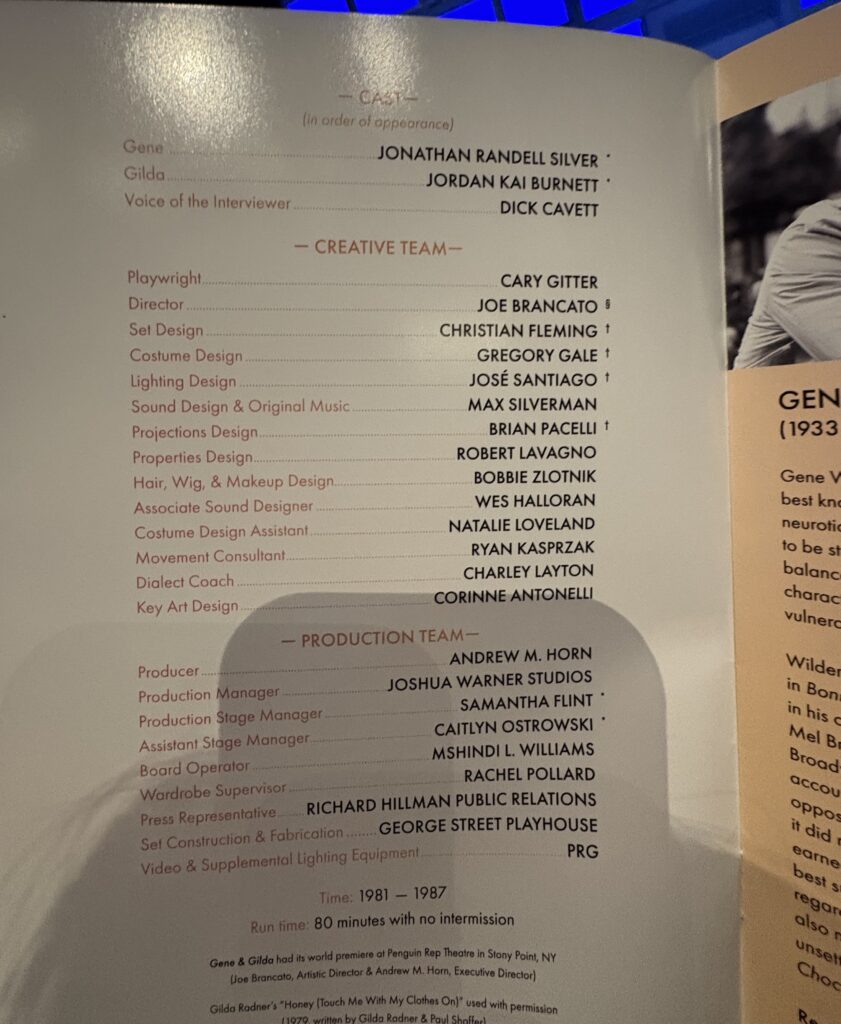
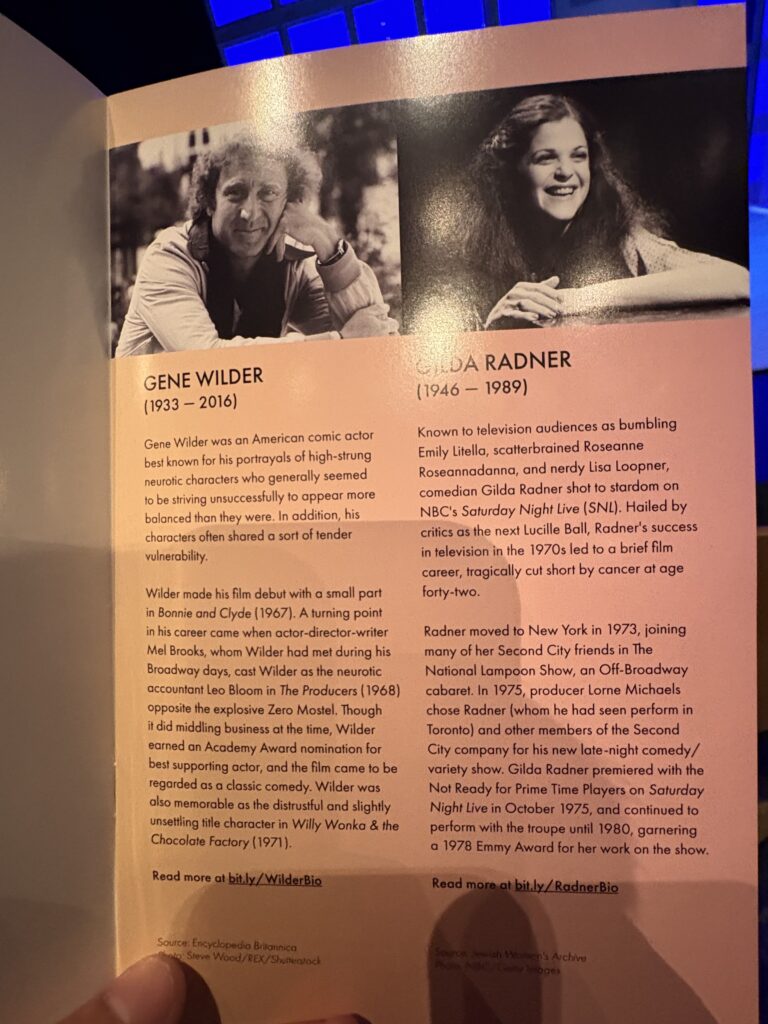
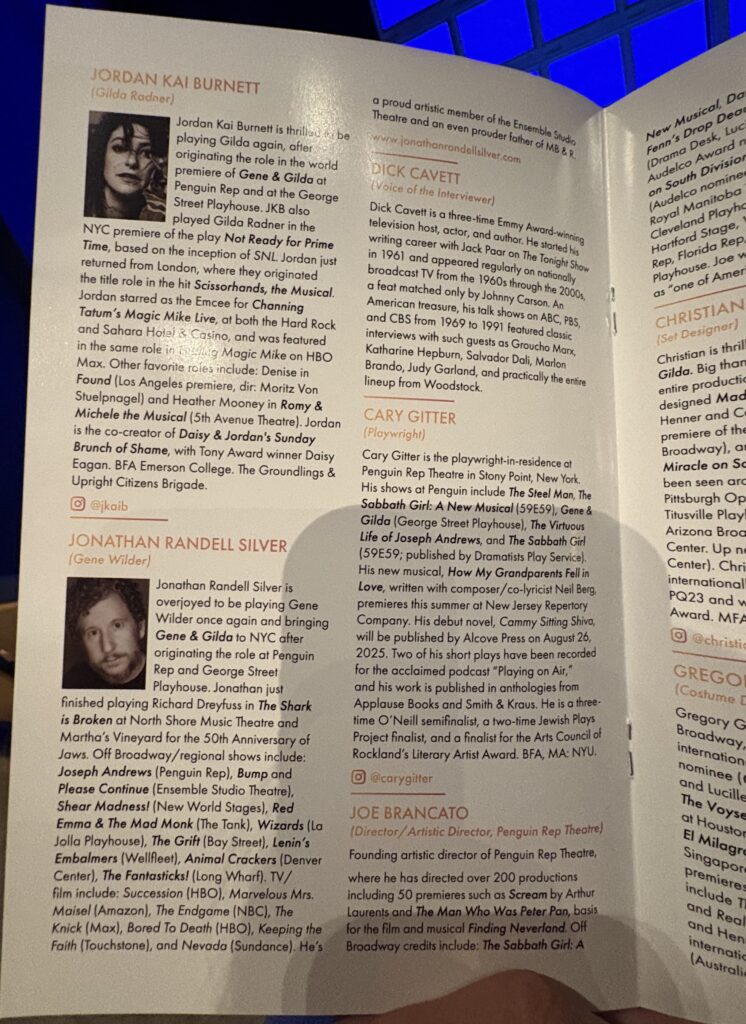
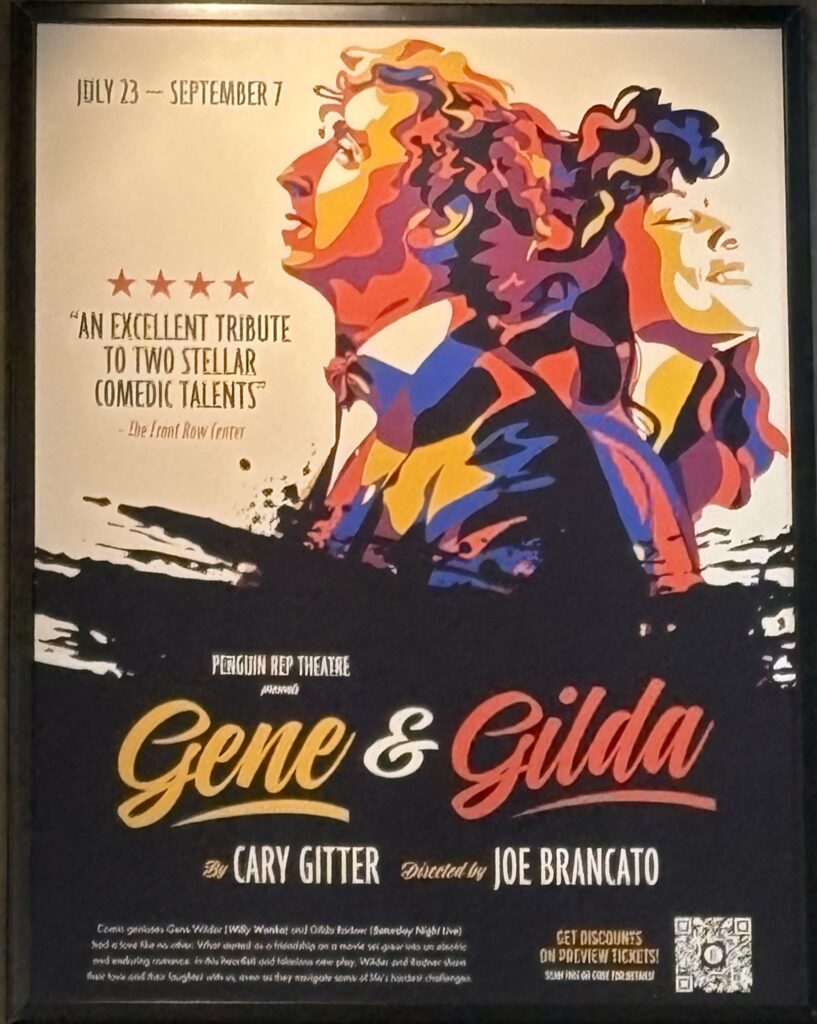
    This show is very cute. It tells the real life romance of Gene Wilder and Gilda Radner, actors known best for their comedy performances – one for his movies including Willy Wonka and the Chocolate Factory, Young Frankenstein, and See No Evil, Hear No Evil and the other most notable for her numerous Saturday Night Live characters and sketches. The show is framed by being an intimate interview between an unnamed interviewer, voiced by Dick Cavett (this character is never seen, only ever heard), and Gene Wilder (played by Jonathan Randell Silver). The interviewer asks Gene Wilder to discuss his romance with his late wife, Gilda Radner (played by Jordan Kai Burnett). Gene is initially reluctant to discuss this because it is a “private” matter, but Gilda appears and urges him to tell their story. From then on, the show alternates between Gene Wilder talking to the interviewer and seamlessly drifting back in time through his memories bringing the audience with him to relive the experiences.

    The chemistry between Burnett and Silver is hard to deny. The budding romance feels genuine and the witty dialogue between the two characters felt almost as if you were watching two people actually fall for each other for the first time. And that was absolutely delightful. Silver, especially grabbed my attention (for the record, I am much more familiar with Gene Wilder’s career than I am with Gilda Radner’s) with just how much he sounded like the late Gene Wilder.

    The part of the show that just felt off to me was the parts where comedy was supposed to be the main focus… whether it was Gene Wilder being so neurotic that it felt like we were watching someone doing their best “Leo Bloom” impersonation or a monologue that cycled through all of the characters that Gilda Radner played on Saturday Night Live — it felt forced. Those moments felt like I was supposed to be watching someone who was supposed to be acting silly. It just didn’t feel genuine.

    I also found this happened whenever the show would start to get too serious. When the characters of Gene and Gilda were intimate with each other, for example, the show would go into a dance motif. It was clearly meant to be a lighthearted way to say that the characters were making love, but it felt as if the show was simply trying too hard to be funny.

    This shows best moments come when the characters of Gene and Gilda bounce off of each other and the comedy stays focused on the developing relationship. The story is a romance — I just wish it didn’t try so hard to be a comedy. The romance, the grief, the loss, the wisdom learnt is enough… everything else began to feel like an imitation of the titular characters. Love and loss are emotions that almost all humans have felt at some point in their lives. Whether it’s losing a person, a pet, or even an opportunity — the grief of losing someone or something can be beautiful. This show has the chance to really show the audience the beauty of humanity through the eyes of a man who has loved and has lost that love, which is something everyone can relate to.

  • Operation Mincemeat — 2nd Viewing

    Operation Mincemeat — 2nd Viewing

    23 July 2025 Evening Performance

    Golden Theatre

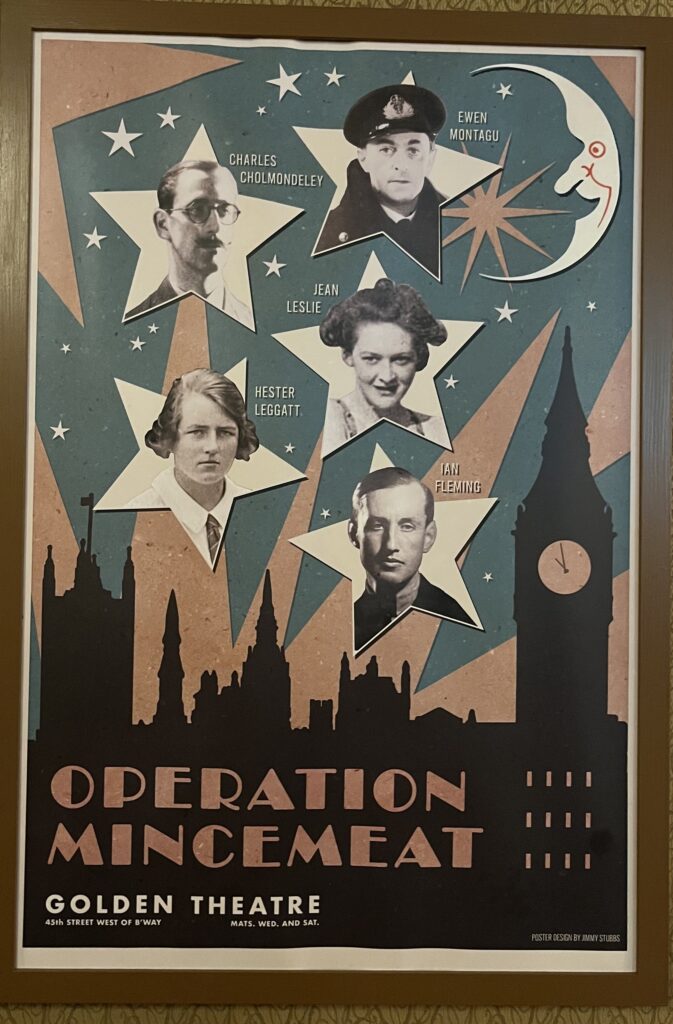
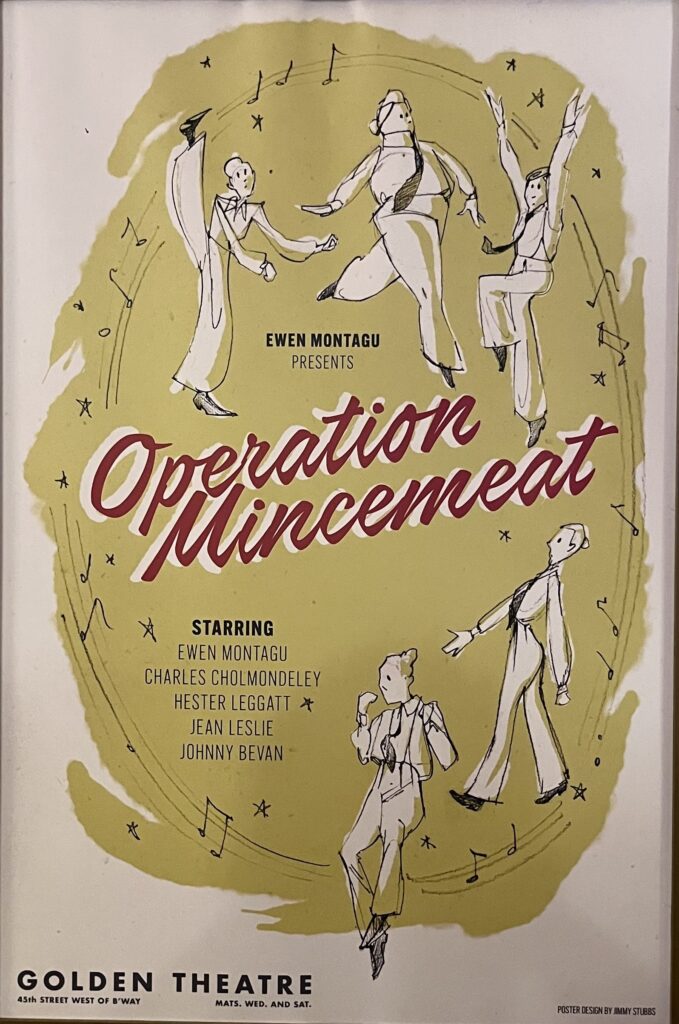
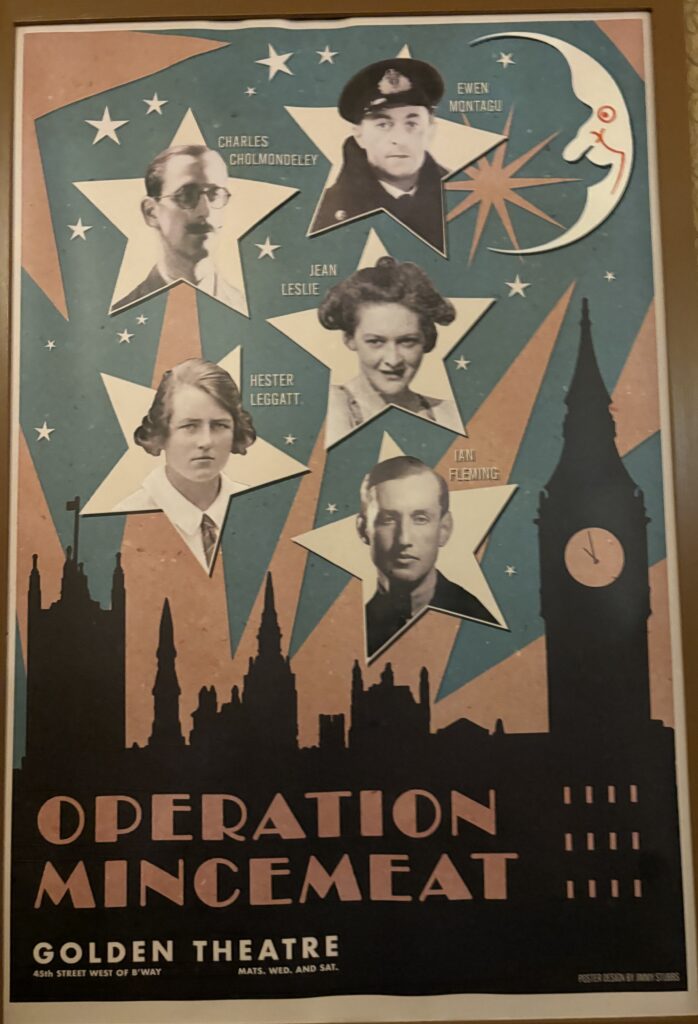
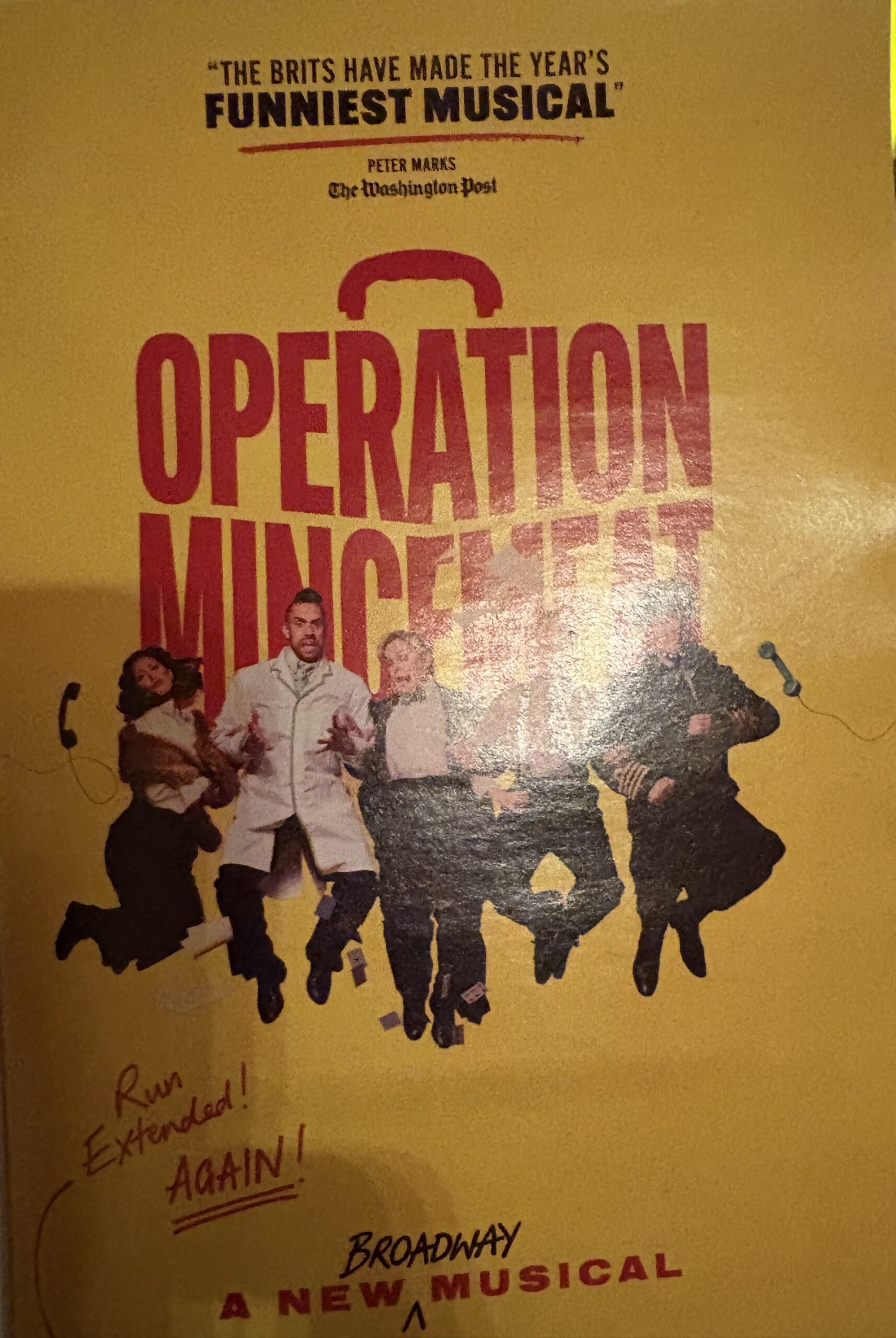
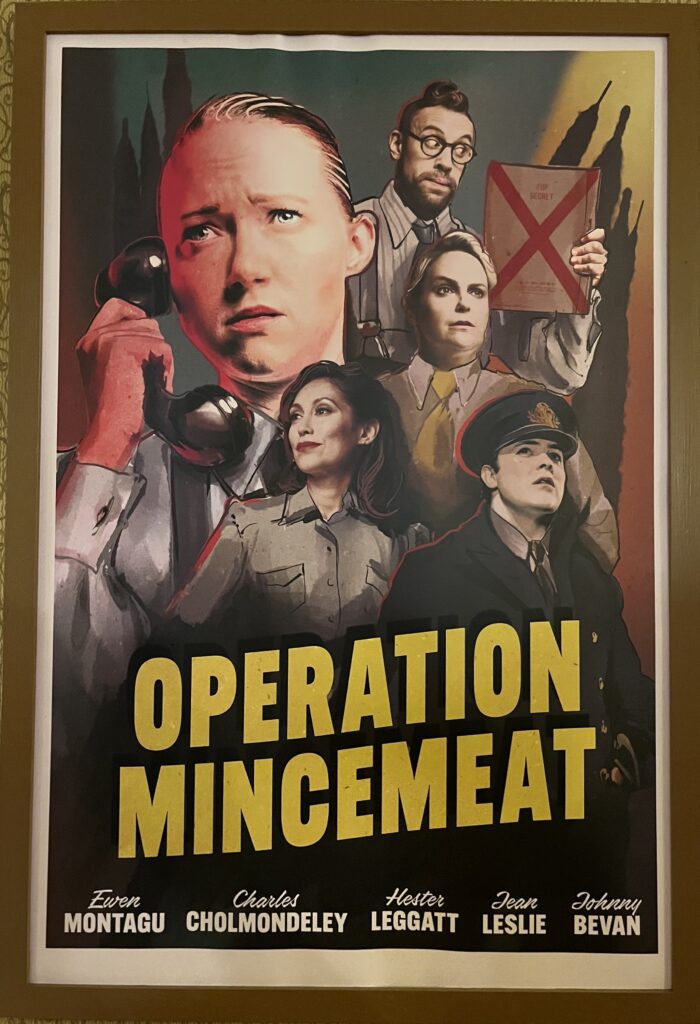
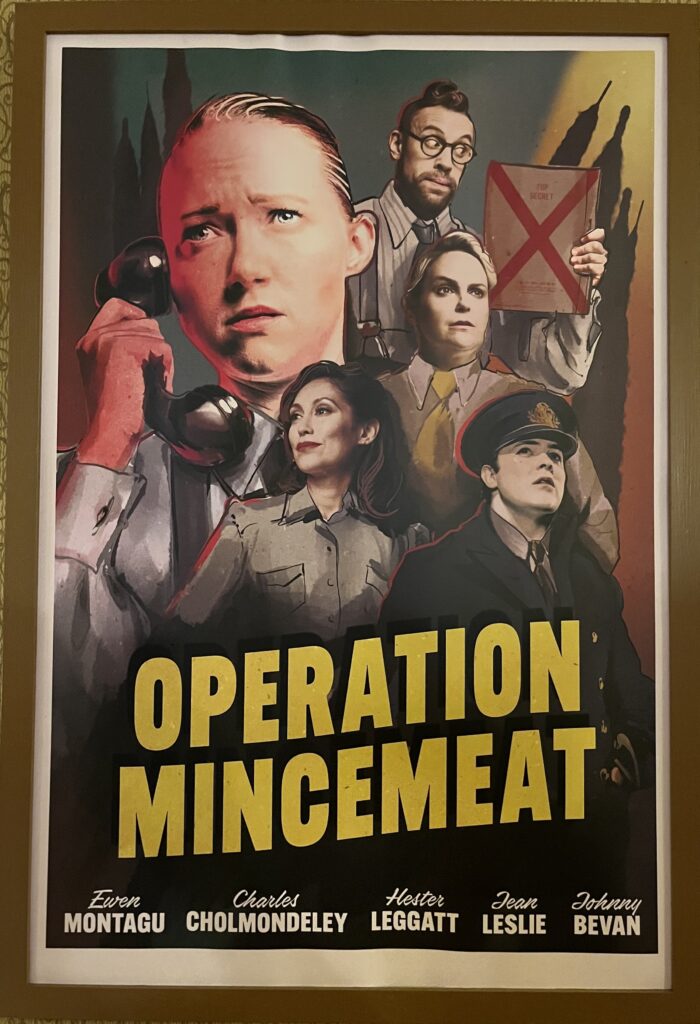
    Operation Mincemeat is a musical comedy  based on the real events during WWII which  lead the British military to use a corpse to trick Hitler into moving the German troops out of Sicily and into Sardinia, which was an essential part of why Germany lost the war. This show is chocked full of British humour, filled with small details (an example being a prison uniform labelled “24602”), relies heavily on perfect timing, and is all done by a cast of five actors playing close to 50 or more different characters in total. 

    This was my second time seeing this show (Read my prior review), so I was actually quite happy to see one of the understudies stepping into the role for the performance. I love being able to compare and contrast how the different actors played the same character. In this case, Jak Malone (who usually plays the character of Hester, among others) was out for this performance and Sam Hartley filled those shoes. Anyone who has read my last review of the show knows that I found Jak’s performance to be absolutely phenomenal – layered, deep, and beautiful (and that’s just for the character of Hester; never-mind the roles of Spilsbury, Ivor Montague, Lieutenant Bill Jewell, Willie Watkins, and more).

    Sam Hartley played the character of Hester differently than Jak did. Sam’s version of Hester felt more timid. Whereas Jak’s portrayal made Hester come off as more confident – even in the song “Dear Bill”, when Jak sings that song, he hits every note cleanly and clearly, as if the notes and memories just come to Hester from her lived experience and she confidently and (mostly) happily relives the memories needed to write the letter that is being planted on the corpse. When Sam sang “Dear Bill”, it didn’t feel so much as if Hester had actually healed from her past. It came off more as if she was still truly struggling with the heartache that those memories bring her. It was almost as if the memories haven’t reached the point of being happy memories yet, like she is still in the part of the grieving process where even saying the words out loud is challenging and she still is perhaps bitter at not being able to make more of those (formerly) happy memories.

    Another example of how the two actors played the character differently had to do with Hester’s interactions with the character of Johnny Bevan (played by Zoe Roberts). In Jak’s portrayal, with the character of Hester having more perceived confidence, she acts very professionally when around Bevan. It feels as if Hester would not dream of acting on any potential romantic feelings towards Bevan not because she may fear being hurt, but rather because Bevan is her boss and that could definitely be seen as inappropriate due to the power dynamic of a boss/subordinate relationship and/or it simply wouldn’t be the proper lady like thing to do for a proper British woman of that time period. When the character is perceived like this, is makes the mentorship-like relationship between Hester and the character of Jean Leslie (played by Claire-Marie Hall) not just wholesome, but also perhaps gives the two characters a more meaningful connection because it implies that Hester has learnt from Jean as well.

    In the same interactions between the characters of Hester and Bevan, but with Sam’s portrayal of Hester, it felt as if Hester was simply too afraid to act on any potential romantic feelings. Not because it would be inappropriate, though, but rather because the thought of loving and losing again is just too much for Hester to realistically consider. Hester still does come off as if she learned from Jean, just not to such an obvious degree — it’s still there, just more subtle.

    Honestly, I think it says a lot about Sam Hartley as an actor to be able to step into the shoes of the person who originated the role and then give a performance that is not just a replication of the originator. Sam was able to bring the character of Hester to life in an equally as good way, but also a very different way. And that is always nice to see.

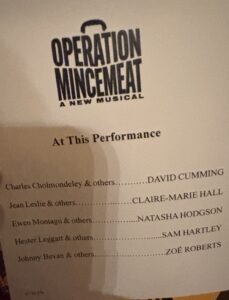
    The main cast: David Cumming (as Charles Cholmondeley and others), Claire-Marie Hall (as Jean Leslie and others), Natasha Hodgson (as Ewen Montagu and others), Jak Malone (as Hester Leggatt and others), and Zoe Roberts (as Johnny Bevan and others) have been playing these roles together for about six years and (I believe) they are the originators of each role. Which is why I find it so impressive that Sam’s presence on stage did not change the chemistry between the characters. In fact, even with the slight changes in the character of Hester that really made the character his own, Sam was able to keep the feel of the show and chemistry between characters the same. At no point did he feel like the odd man out. Brilliantly done.

    The large range of characters that the actors play really is impressively done. Throughout the show, the various actors change characters on stage, right before the audiences’ eyes and it is done flawlessly. The actors change not only their physical demeanour, but also the dialect and accent they are using, the clothing they are wearing, they literally drop one character and seamlessly go on to another before just as seamlessly going back to the first character. Just one, out of many, prime examples of this comes in the shows final scene, appropriately titled “A Glitzy Finale”. In this scene we see David Cumming portray both his main character of Charlie Cholmondeley and as an actor portraying the character of Charlie, as seen through the eyes of the character of Ewen Montagu. On top of the that, when portraying the role of the actor who is portraying the character of Charlie, we seen the actor‐character both in and out of the character of Charlie. And all this is done by stepping forwards, putting on glasses, changing his posture, and changing his voice, only to reverse the entire change just as easily to return as the original portrayal of the actor.

    There did appear to be some small changes to particular lines of dialogue since I saw the show last, but nothing major was changed. What definitely did not change was the impressive vocals from Natasha Hodgson. She largely plays male characters in this show and I have been impressed each and every time as just how deep her voice can get because conversely, she can also hit a damn good high note.

    David Cumming is probably the actor that plays the most physically demanding role in the show. The character of Charles is a very anxiety ridden, high energy one. On stage, David looks very tall and lanky. By the end of the song “Dead in the Water” (which comes early in the first act), I am always left thinking “this guy could really do justice to Monty Python’s ‘Ministry of Silly Walks’”, so it is always a bit of a surprise when he comes out at the stage door and is not a particularly tall man. A lot can be said for the costuming of this show, which is both simple (often coming down to a change of a hat or jacket) and effective — both in being able to be done very quickly, but also at just easily getting the feel of the character across to the audience right away.

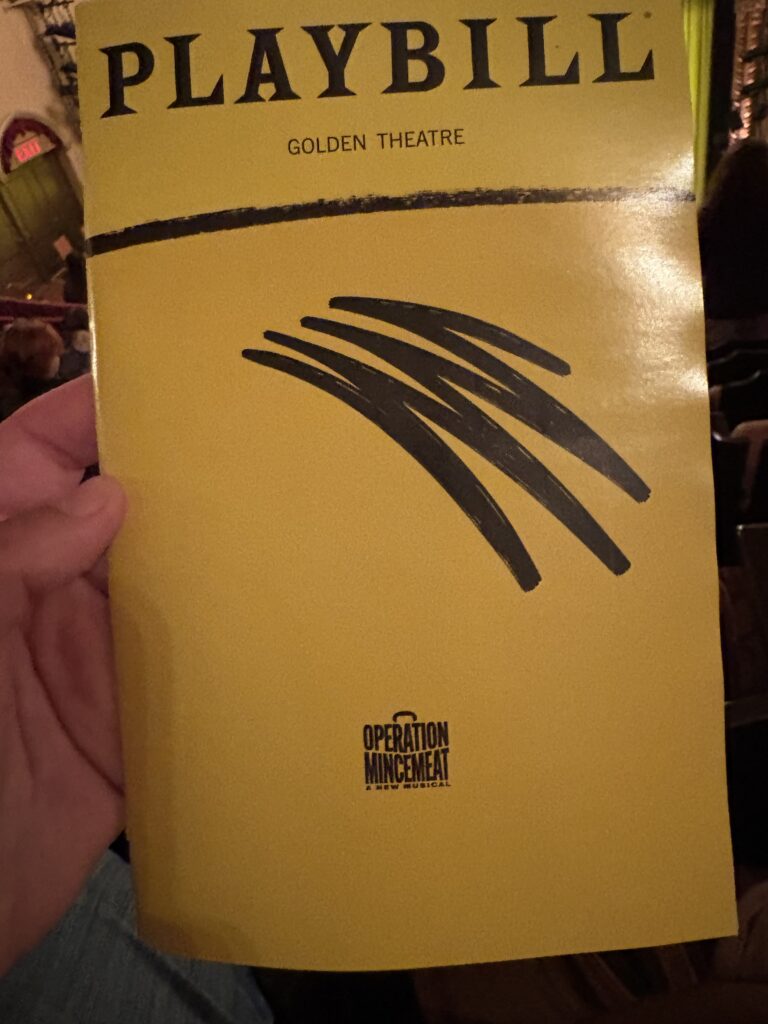
    This is a show that I could easily watch time and time again because I’ll notice something new each and every time. There is so much nuance that goes into this production that I know there is always something I’ve missed. And I love when shows are that brilliantly detailed. One detail that I absolutely missed the first time is a simple one: the logo on the playbill. The words “Operation Mincemeat” are not only outlined to make it look like the briefcase that is prefixed to the wrist of the corpse that was used by the British, but it also doubles as Hitler’s moustache. The scribble, is Hitler’s hair. I want to give a special shoutout to the fan that pointed this detail out to me because once you see it, you can’t unsee it and it is just such a brilliant detail. I also appreciate how very self aware this show is both in the sense of acknowledging that it itself is a show, but also socially and politically. I also happen to be a sucker for a show breaking the fourth wall, which this show does at times, and unapologetically so.

    All of these actors are stars. They all give it their all in each and every performance. But perhaps the most enjoyable aspect of this show is simply how much fun the cast has performing it. I hope to see this show stick around for a very long time because it honestly is a masterpiece.

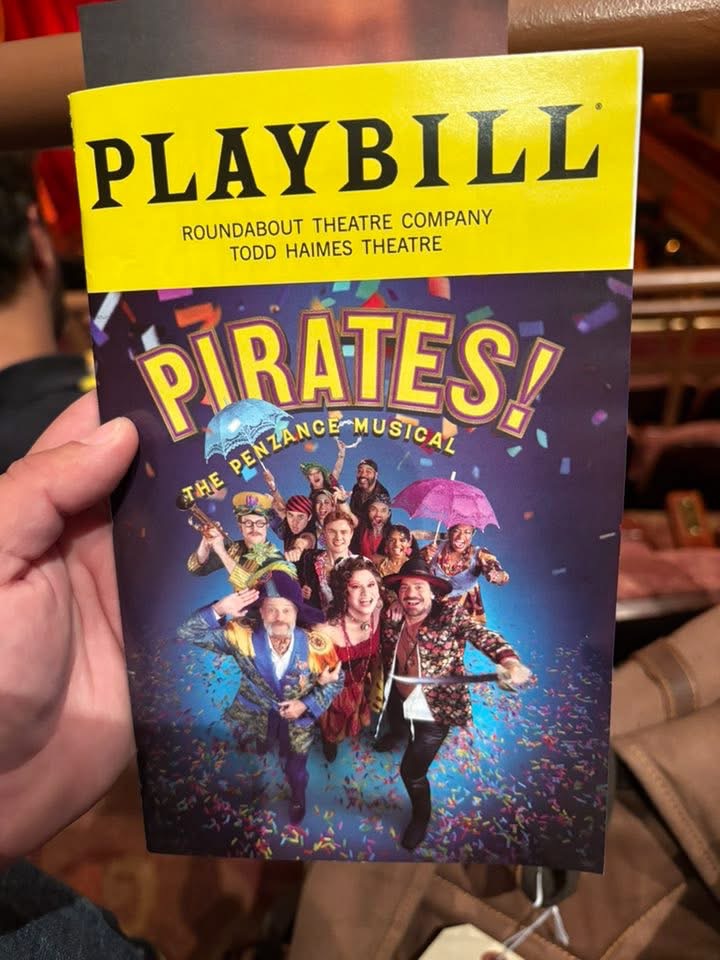
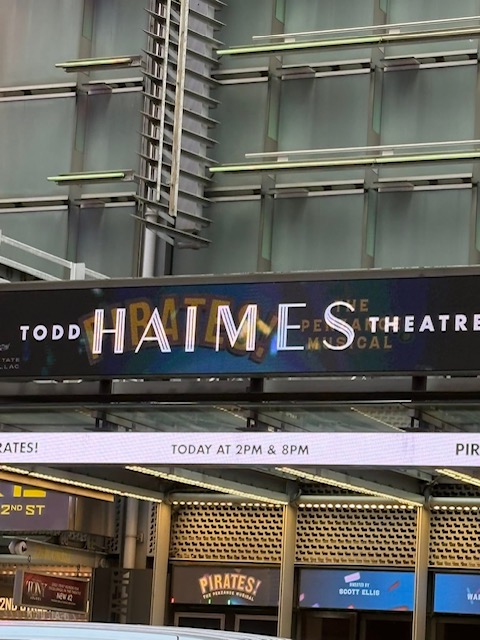
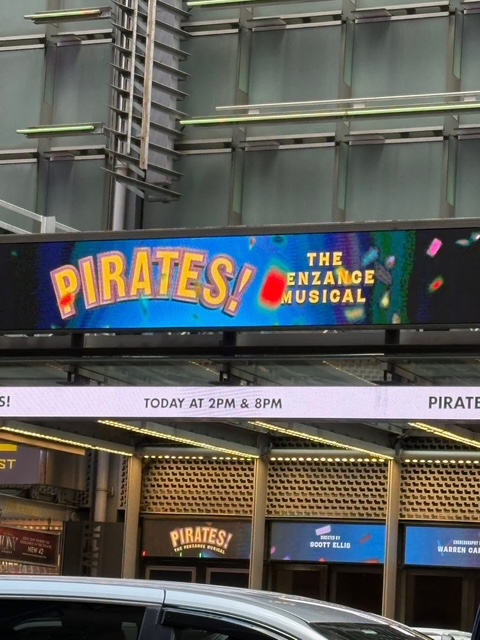
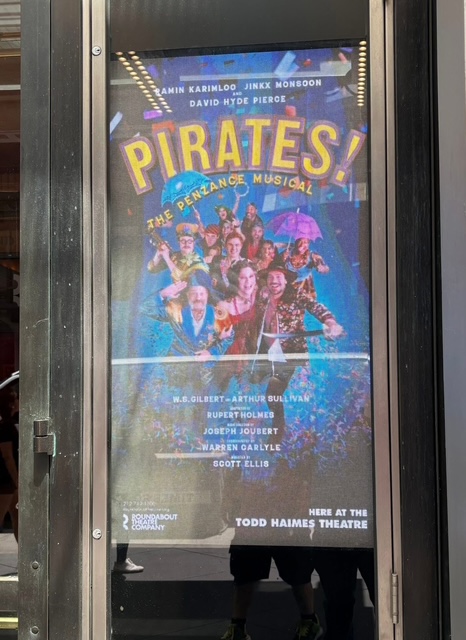
  • Pirates! The Penzance Musical

    Pirates! The Penzance Musical

    Todd Haimes Theatre

    23 July 2025 Matinee

    Pirates of Penzance is a show that I adore, so I was honestly not sure that I would enjoy a new adaption. I was especially concerned I would not fully appreciate the show since the new adaption is set in New Orleans, Louisiana and I simply don’t connect to that culture (I have never even been to New Orleans, so the only things I know about the culture, music, etc. comes from other sources of media, often fictional stories), so I was pleasantly surprised to find myself roaring with laughter and genuinely enjoying the different musical styles. And honestly, Pirates! The Penzance Musical does not stick to stereotypical New Orleans inspired music. It actually included a large variety of musical styles, which helps make the entire point of this show – we are all from somewhere else (except for Penzance) — have a larger impact, which is probably something America needs right now.

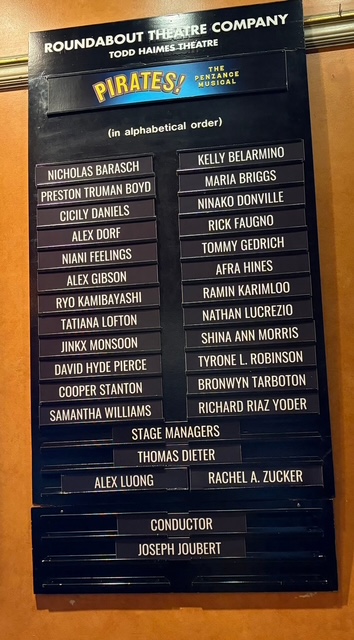
    The show opens with the characters of Arthur Sullivan (played by Preston Truman Boyd — he also plays the character of The Sergeant of Police) and William S. Gilbert (played by David Hyde Pierce who is also playing Major-General Stanley) explaining to the audience how and why this new adaption came to be located in New Orleans and how they themselves are indulging in some kind of piracy themselves in simply making this adaption (this is a lovely in joke for anyone who is aware that “Pirates of Penzance” is in the public domain and therefore not subject to copyright. This means that anyone can put on productions of the show, but more than that, they can change and adapt the script however they please). This is a very self-aware moment in the show and personally, I very much appreciate when a show is self-aware.

    To say the choreography in this show is impressive would be a massive understatement. It is quick, it is intense, and it is silly. Even early on, upon meeting the Pirate King (played by Ramin Karimloo) we are treated to a high intensity dance number that sees the character jumping on barrels that are laying on the ground sideways, being held by two of his Pirates. Every single time that the Pirate King jumped, the Pirates would spin the barrel around, and the Pirate King would have to land the jump on the barrels side.

    This high intensity dancing did not stop as the show continued. In fact, by the end of the first act, the entire company had managed to turn an elaborate dance number into every single person being able to play the washboard as a musical instrument. During intermission I actually remarked “having the entire company being able to play the washboard is almost as impressive as the entire company being able to tap dance.” Little did I know that during act II, at least half the company would be tap dancing.

    David Hyde Pierce was excellent as the Major-General. I have honestly never heard the song “I Am the Very Model of a Modern Major-General” sung so cleanly. Each and every single word of that song was enunciated and crystal clear. And he made it look easy. I appreciated the character, while still being highly inebriated, was still fairly cunning.

    It was also nice to see that David Hyde Pierce is a genuinely nice man who took the time to great every single fan at the stage door and even had short conversations with people. He seemed genuinely surprised and happy to be complimented on the horror film he starred in called The Perfect Host and I even heard him discussing the process of the make-up design for his character with a different audience member.

    David Hyde Pierce signing my Playbill at
    stage door

    Jinkx Monsoon played the character of Ruth and she was wonderful! I can absolutely understand why her career on Broadway is booming — she is a vocal powerhouse with the ability to belt and even wail! And let’s be honest, she has wonderful comedic timing. With a show that has such a silly plot line (the entire show is based around mishearing the word “pilot” as “pirate”), her ability to do camp is absolutely perfect for the role.

    Pirates! The Penzance Musical is a silly show and it should be. With a ridiculous plot, over the top acting, self-awareness, breaking of the fourth wall, and high intensity dancing, this show brings a bit of everything culminating in something that can only be described as pure fun.

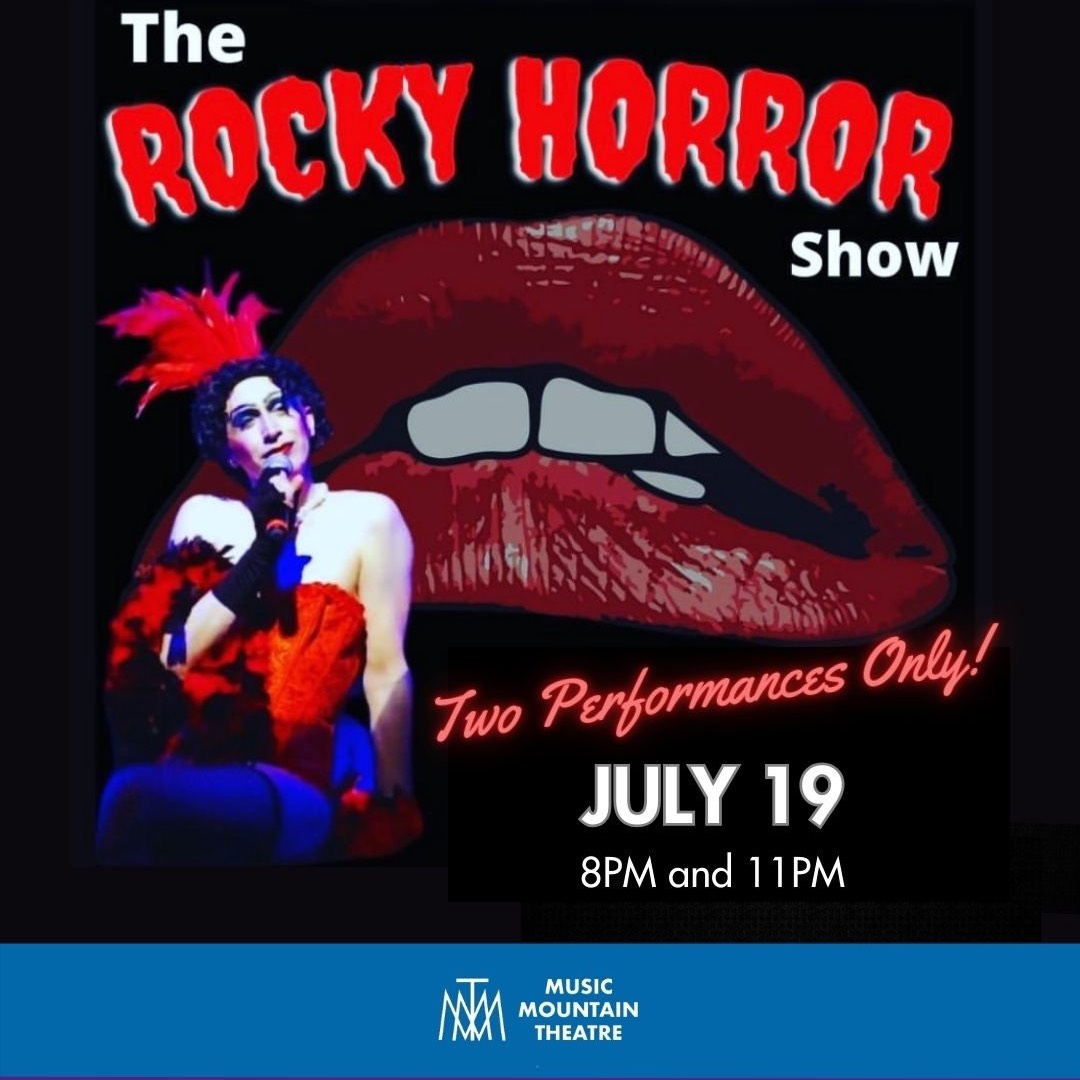
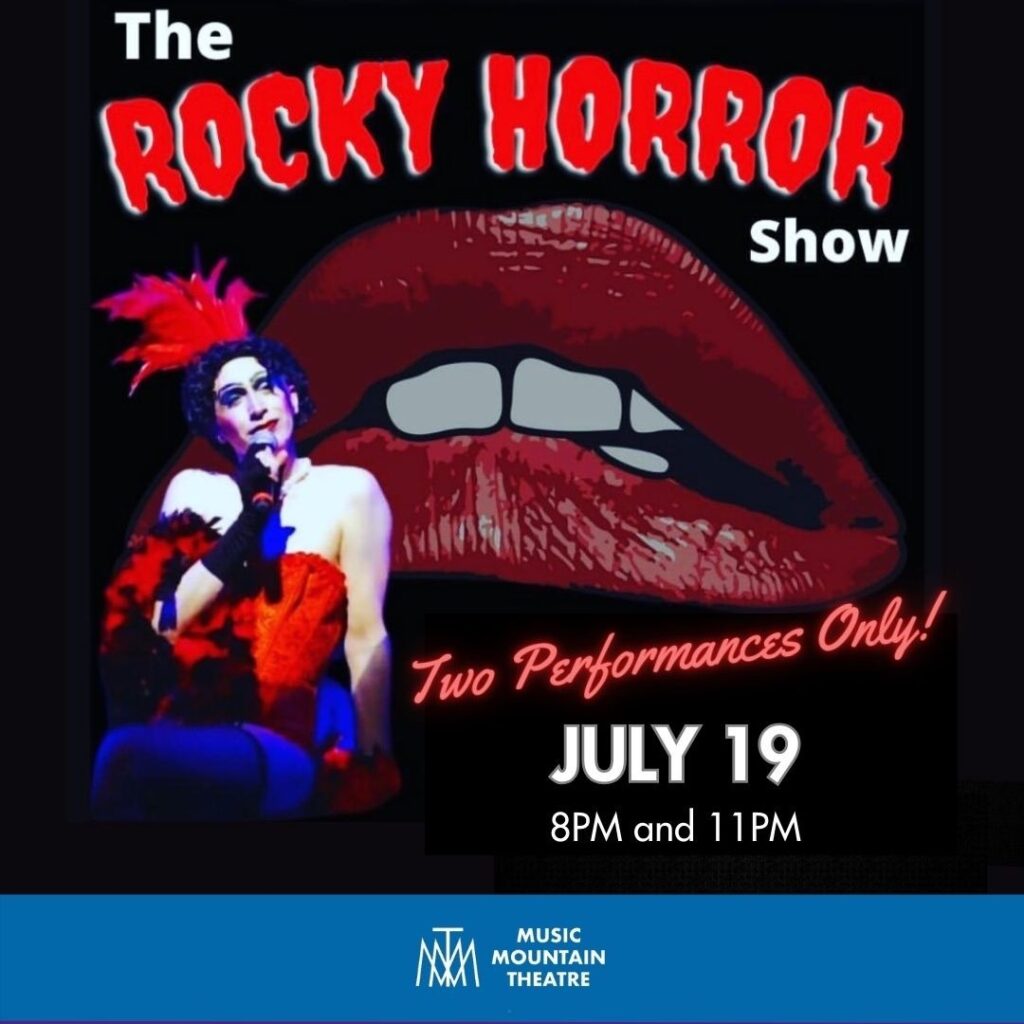
  • The Rocky Horror Show

    The Rocky Horror Show

    Special One Night Engagement

    19 July 2025 11PM Performance

    Music Mountain Theatre, Lambertville, NJ

    One of my favourite things about Music Mountain Theatre is how good this theatre is at nailing any and all things camp. The Rocky Horror Show was no exception.

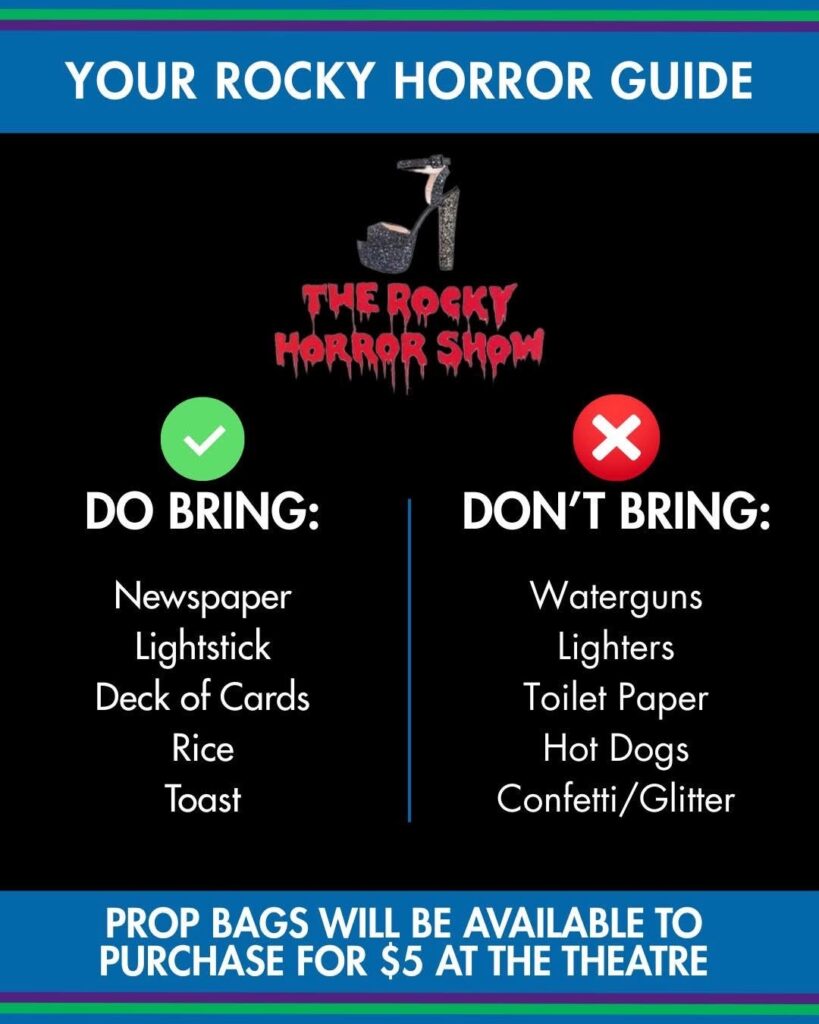
    The Rocky Horror Show is an unapologetic show in many ways — the use of call back lines, the audience dressing up in character, prop bags being sold with the full knowledge that the theatre will be completely trashed by the shows end… I would even go so far as to say it is the closest thing we have in America to a pantomime (at least that is widely available for audiences). And Music Mountain Theatre keeps this show unapologetic, which is done through the highly sexualised staging (I’m looking at you, giant human penis complete with ejaculation), the use of humans being props (some notable instances being an Usher running across the stage yelling, “I’m an [expletive deleted] motorcycle!” and two ushers acting as the cars windshield wipers, while constantly giving the middle finger to the audience, and of course, sweeping all of the rice that was on stage back into the audience with a push broom), and improvisation from the cast and the audience (some examples being the actor playing Brad who has an obvious tattoo on his leg remarking “it’s a birth mark” when asked “do you have any tattoos, Brad?” and Rocky and Janet making the visual gag of the CEO who was caught having an affair while at a Coldplay concert when found by Dr. Frank-n-Furter).

    Being that this show is done as a special one night engagement (it is a rather special night, after all, one of the master’s affairs, so to be a one night engagement makes sense), the theatre itself is still set for the current main stage production (which happens to be The SpongeBob Musical currently). This was not an issue however and instead lead to some great improvised lines including Brad commenting on the castle seeming to be in “some weird underwater aquarium”.

    As stated above, the sets were minimal, with humans taking the place of many set pieces. This only made the show funnier because the sets that they did have included a giant (hairy) penis for things like the Sonic Transducer — complete with a smaller (again hairy) penis to act as the switch itself.

    Ultimately I think this production of The Rocky Horror Show does what The Rocky Horror Show does best — brings people together. Despite this being a highly sexualised show, with lewd and crude comedy, and audience participation that is as equally crass; Rocky Horror is a safe place for people of all backgrounds and even of all ages (for the record, I am not advocating for bringing young children to see this show, I am referring to a young teenagers age range). 

    One thing I love about seeing productions of Rocky Horror whether it’s the staged show or the movie, is the diversity of the audience it attracts. Even at this performance, I saw kids (young teenagers) who were experiencing the show for the first time sitting next to people well into their 80’s who have been seeing the show since they themselves were young teenagers. And they were learning call back lines from each other and congratulating each other when one of them yelled a particularly funny one.

    Rocky Horror is a show with no real hard message or meaning behind it. At its bare bones, it’s the story of Frankenstein, but really it’s about having a good time. It’s about meeting new people and laughing. It’s about accepting everyone for who they are, regardless of age, or social status, or gender, or gender expression (in fact, it’s a really safe place for a person to explore their own gender expression without judgement), or anything really. Because for a show without any real meaning the message that the audience takes away is “that was a really fun time” and sometimes that’s all you need from a show.

    Well done.

    *Note: if I am able to get a cast list from the theatre, I will update this review to include more details on the performances of each of the specific actors.

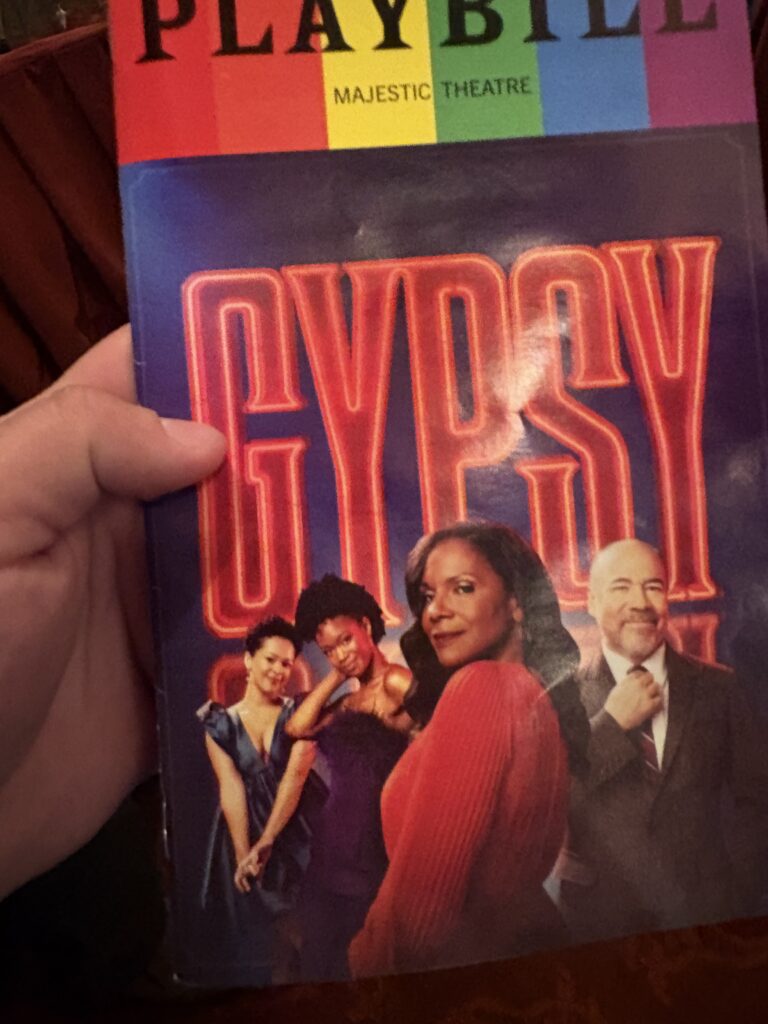
  • Gypsy

    Gypsy

    Broadway

    Starring Audra McDonald

    22 June 2025 – Matinee

    Gypsy is a show that I have seen before and have had trouble connecting to as a whole. I couldn’t relate to the complexity of the emotions that are expressed in this show: grief, sorrow, being defeated, refusing to give up, jumping through hoops to rationalise your own behaviour because the thought of never reaching the top is soul crushing, and even ultimately, giving in to the delusion of someone else to save your relationship with them… resulting in you being trapped for life and that just being an accepted fact.

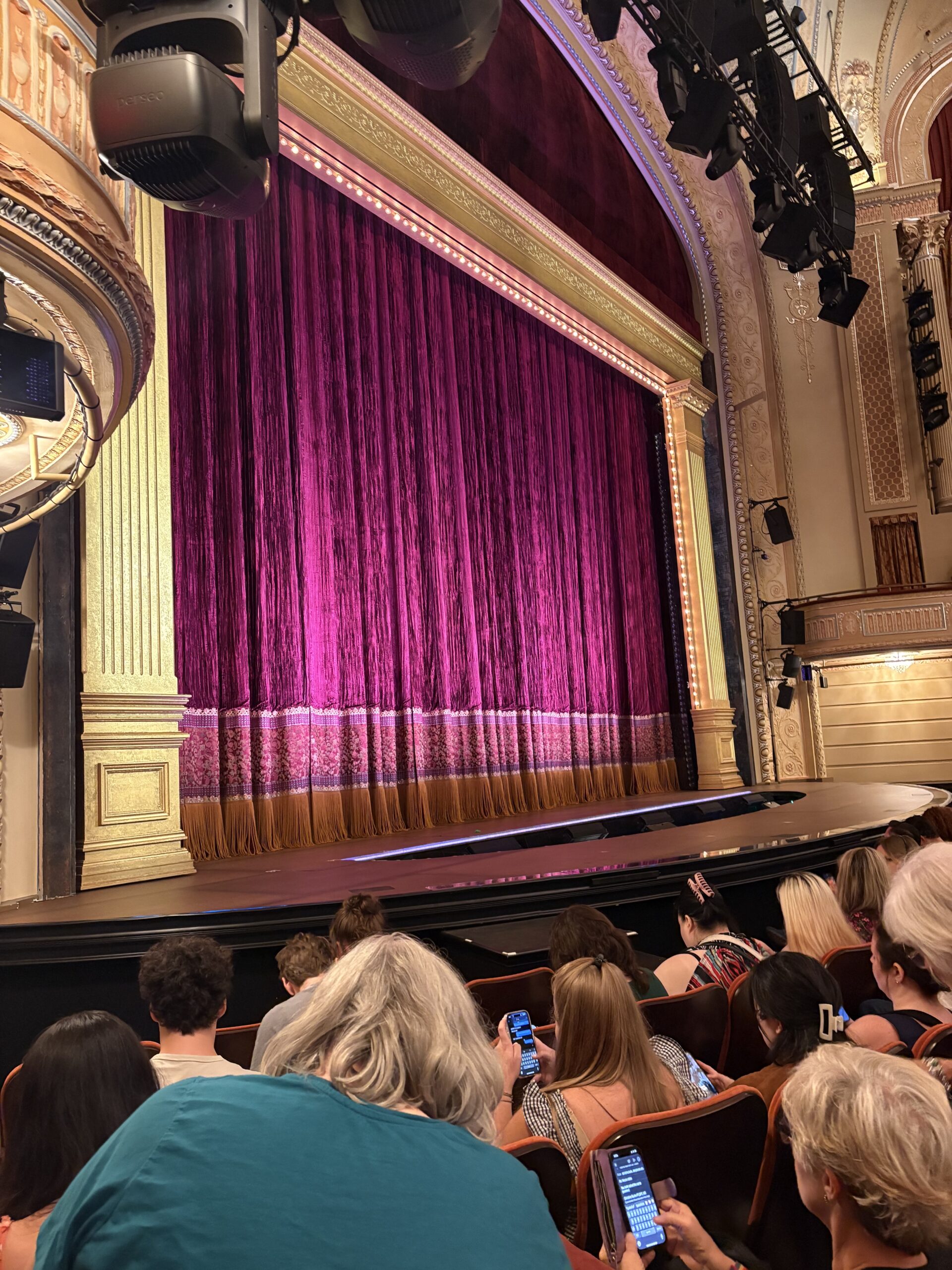
    The stage of Gypsy. The purple of the curtain and gold pillars of the Majestic Theatre give a decadent over the top feeling.

    Oh how a few long years can change a person.

    With this cast, most notably led by Audra McDonald as Mama Rose, every single, heartfelt emotion was radiated from the stage. And it wasn’t just Audra McDonald that deserves the credit. The entire cast were vocal powerhouses – able to go from a meek, quiet, timid character and slowly transforming into powerful, loud, confident belting in a way that not many can do.

    A special shout out has to go Joy Woods as the character of Louise. That character as a whole made a full transformation from being so tiny in the background, to standing up for herself in full confidence, and then to see her know she has that confidence, that ability, and to choose to keep a toxic person around out of…what, really? Pity? Perhaps a sense of duty?

    Danny Burstein as Herbie also gave an amazing performance! To watch his character go from someone who was able to be sweet talked with the promise of marrying the woman he loves and then transform into a character who still loves the woman, but knows it will never work and that he cannot accept the toxicity that comes with her love, even if it emotionally destroys him to leave….even if it means never achieving his own goal.

    Audra McDonald’s performance of Mama Rose is powerful! Beyond her insane belting ability, she exudes the raw emotions that her character feels throughout her entire body. At intermission, I turned to my friend who I had joined to see this show (he wanted to see it and I cannot thank him enough for that) and pondered how physically and emotionally taxing this role just might be on any performer who has to do it eight times per week with this level of intensity.

    It is not easy to change the emotion of written words, but this cast manages to do just that through simple changes in demeanour: a half smile, a sigh – through tiny, little gestures that manages to speak volumes without actually saying anything at all. This show forces the audience to feel every difficult emotion that each character has to go through. And it is powerful. It is effective. And it can be felt throughout the entire theatre.

  • Broadway Bares 2025

    Broadway Bares 2025

    22 June 2025 — Midnight Show

    “Come out. Come out” indeed. What a fun way to raise money for Broadway Cares/Equity Fights AIDS! I attended the midnight showing of this production (there was a 9:30pm and a midnight performance). Once again, I was encouraged to go to this show by a dear friend of mine and I am so glad I listened!

    Broadway Bares is an unapologetically gay old time in all of the best ways. It’s wonderful to see these Broadway stars raise so much money to help those in need. And let’s be honest, when you have to dance your heart out eight times per week, no one is going to be upset at seeing your (almost) naked body.

    The show this year was based on The Wizard of Oz, but with some more added…fun. Plus, a nice “Happy Pride” wished upon everyone by Nicole Scherzinger was a wonderful shout out.

    Good company, good friends, good show — it makes for a good time. And I am so grateful for my friend, Ray, who encouraged me to come see this show (and the other two I saw when I was in New York).

  • Hair

    Hair

    Music Mountain Theatre

    Lambertville, NJ

    30 May 2025

    Opening Night

    This production nailed it.

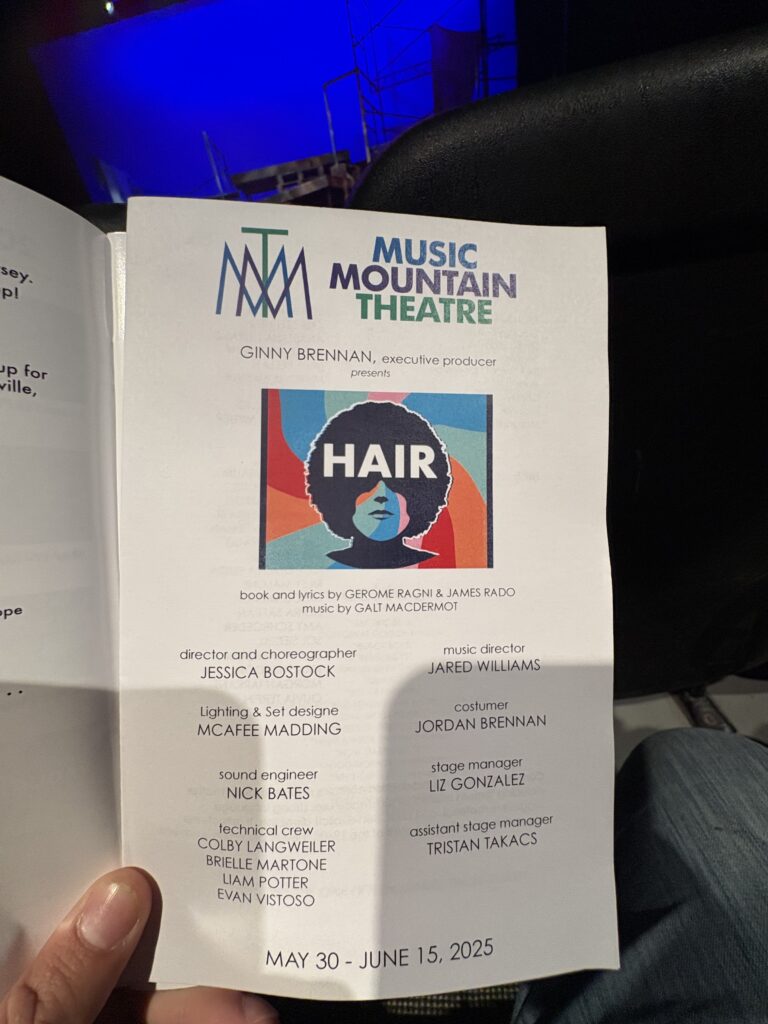
    The cast was made up of almost entirely young actors; the youngest seemingly having just graduated high school. However, they are an impressive bunch and vocally, these actors are a powerhouse. Special shoutout to Trinity Anjelic (playing Dionne), Sarah Harrison (playing Jeanie), Anastasia Durand (playing Sheila Franklin), Matt Keelan (playing Woof), Alexander Minter (playing Margaret Mead), and Sol Siedell (playing a member of the Tribe) for their stand out vocal abilities. In a show where all of the actors are good singers, those listed above took it an extra notch up.

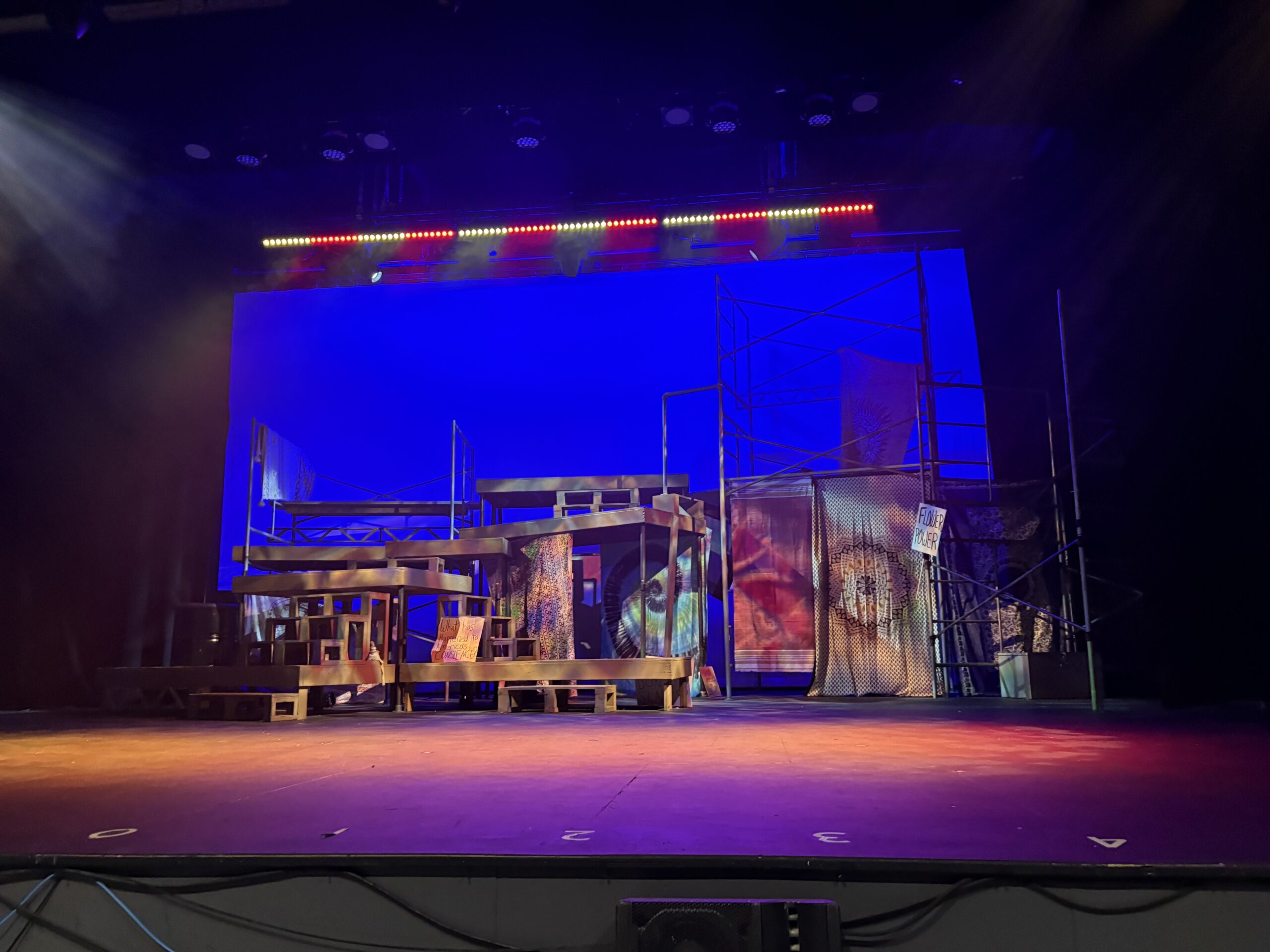
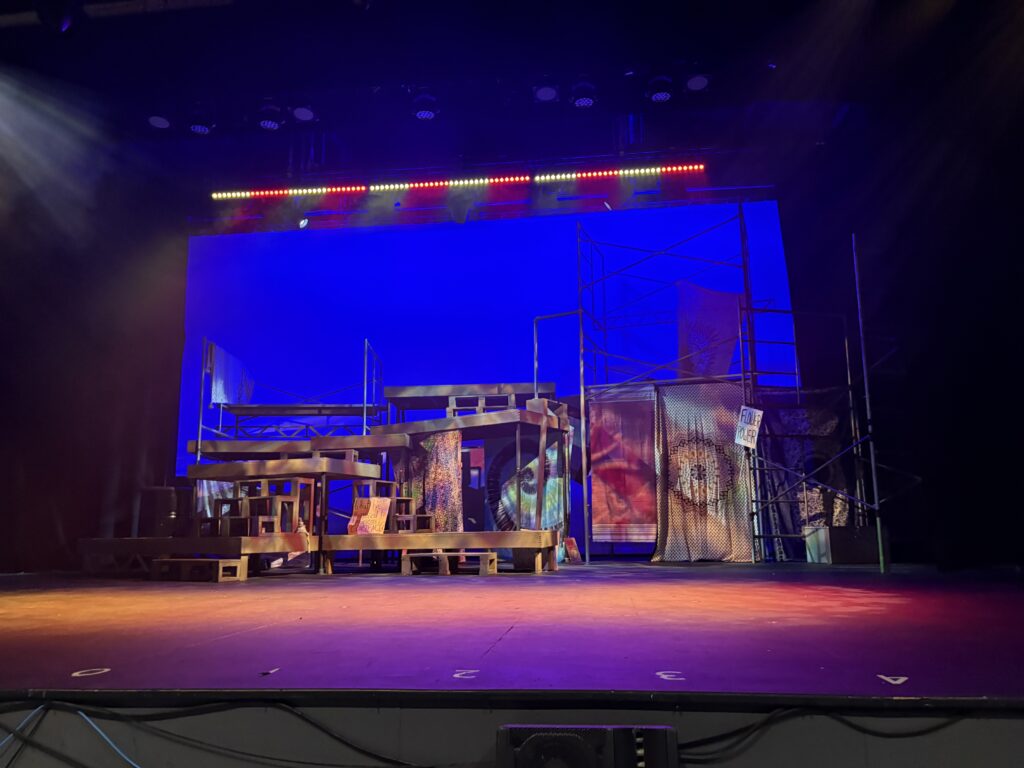
    The stage of Hair. Wood pallets and metal scaffolding contrasting with the softness of blankets and picketing signs

    The script of Hair has gone through numerous rewrites and revisions, so it was not a huge surprise to hear a few songs that I wasn’t familiar with. Most notably these were the songs “The Stone Age”, “Oh Great God of Power”, and “Eyes Look Your Last”. Most notably missing from the score I am used to was the song “The Bed”. The addition of these songs did not take away anything from the show. In fact, it added an element that I had never seen before — they stress that the character of Claude (played by Soren Madsen) is the Aquarius bringing on the Age of Aquarius. This added religious element to the show: Claude is representative of Jesus and his story line makes him a martyr for his ideals and beliefs. I have to conclude that all of the choreography in which Claude was standing with his arms stretched out to his sides, reminiscent of Jesus on the cross, was intentional.

    I very much appreciated the staging for the song “What a Piece of Work is Man”. This is the first time that I have seen this song sung quite literally overtop the actors that just seconds ago were writhing with agony while singing about being blown apart from metal explosions and shrapnel and then lying deadly still on the stage. Cue “What a Piece of Work is Man” and you can feel the utter disgust and disdain as the actors sing out Hamlet’s famous soliloquy that their characters feel at seeing such death and destruction at the hands of their fellow men.

    As for the famous “naked scene”. People blow this out of proportion all the time. In this production, the actors begin to undress under dim light, and within seconds really, the actors on stage are in an almost complete blackout. I actually would have liked to have seen the actors back lit for an additional beat or two before the blackout. This is simply to make the effect of the characters appearing in a silhouette last just a bit longer. Right before the blackout, the actors all appeared as nameless, featureless, human bodies. The actors being in various stage of undress made no difference. It was seeing them all be nothing more than bodies and unfortunately I think that effect would have had a greater impact if just held for slightly longer. Let the audience really soak up the vulnerability that nakedness represents before making it clear that those soldiers aren’t going to come back.

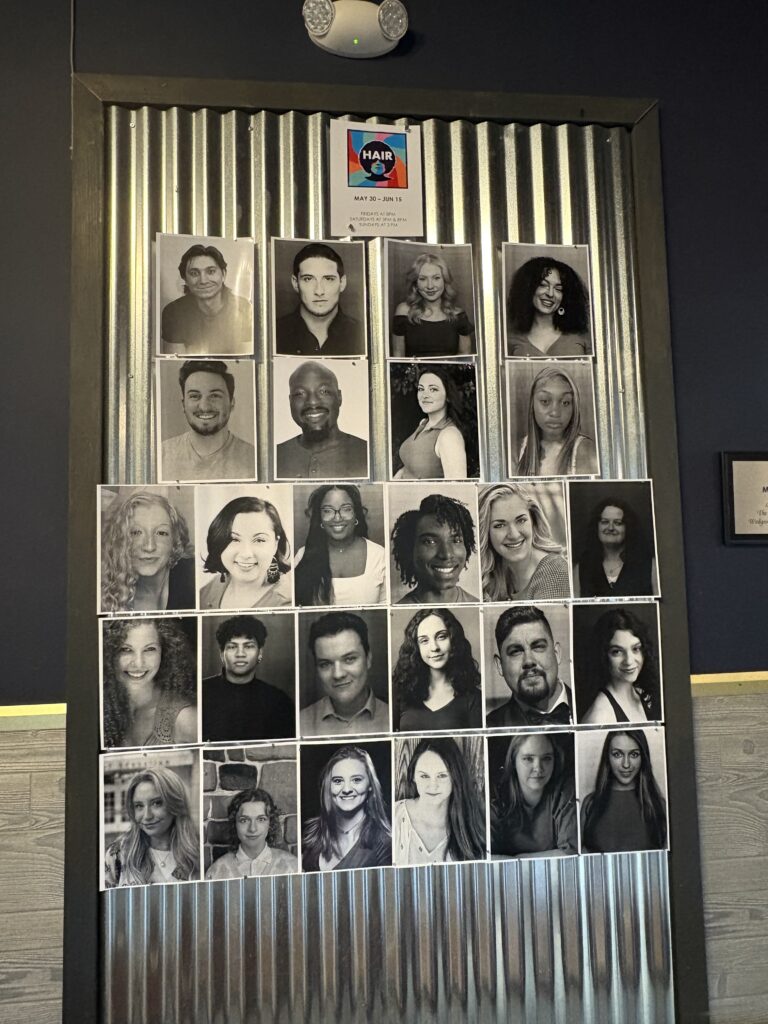
    A display outside the theater of the cast's portraits.

    This theatre does not use a live orchestra and instead rely on a track that the actors sing to. This is typically not a problem at all, however, it does run the risk of the audience reacting to a song or a scene for longer than is anticipated by the production team. This happened a time or two during this show where the audience continued cheer or laugh and an actor attempted to wait for the noise to die down before saying their line. However, that would cause the next actor to rush their line so that the singing cues were hit on time.

    This production felt fairly seamless in its transitions between scenes. I appreciate that the entire theatre was used for this show considering how often the fourth wall is able to be broken throughout. But more importantly, I was able to feel the emotions of the various characters. Whether it be Jeanie wordlessly realising what was happening when Claude says goodbye at the “Be-In” or Claude lamenting on his common, regular existence and his dreams of greatness. 

    I really appreciated the character of Claude attempting to find strength in his invisibility. Claude is a dreamer, full of hope, who wants to make change in the world. For the majority of the show, he is a nobody and he goes so far as to describe himself as “invisible” early on. So it was interesting to see him take that negative and attempt to use it as a positive.

    Of course, fans of the show know how that ultimately works out for him. And then the  audience is left with a long lasting gut punch and we are left to ponder “why can’t we just love”?

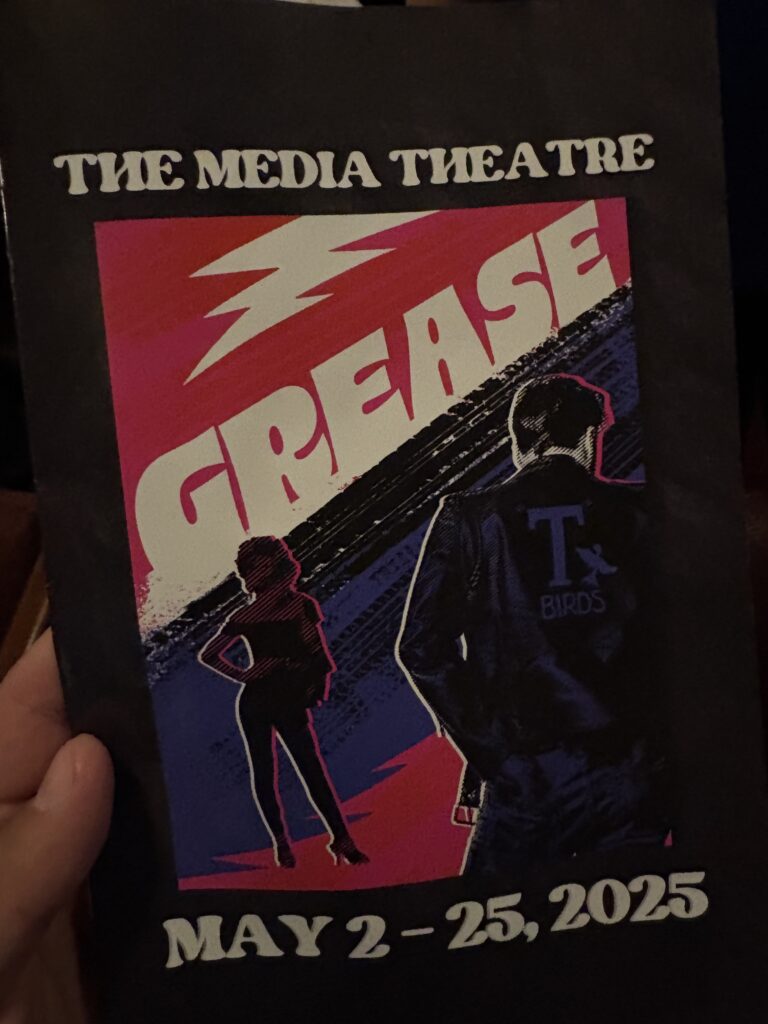
  • Grease

    Media Theatre – Media, PA

    This production is filled with fantastic singers – both equity actors and non. Special shout out to Tom Geiger (playing Roger and Teen Angel) whose vocal ability went above and beyond what was required for his characters. 

    The only big downside of this theatre is the sound system/acoustics. However, that did not appear to be much of an issue for this particular show because the singers were really able to shine without getting lost behind the music (which has happened in other productions here).

    Jenna Kuetzi (playing Rizzo) delivered a heartfelt rendition of “There Are Worse Things I Could Do” where the audience could really feel how much pain the character harbours inside of herself. Kohl Pilgram and Tiara Whaley played Danny and Sandy, respectfully, and both were spectacular. It certainly felt that the two actors had chemistry between them.

    The show felt genuine in its delivery of awkward teenagers attempting to figure out life and love, which is always very nice when it is a show about high schoolers. I always appreciate whenever a show that is cast largely by adults and takes place in high school manages to come off as if they are actually doing things like dancing, romancing, and just going about their daily lives for the first time. This production manages to capture the essence of being a teenager with ease. 

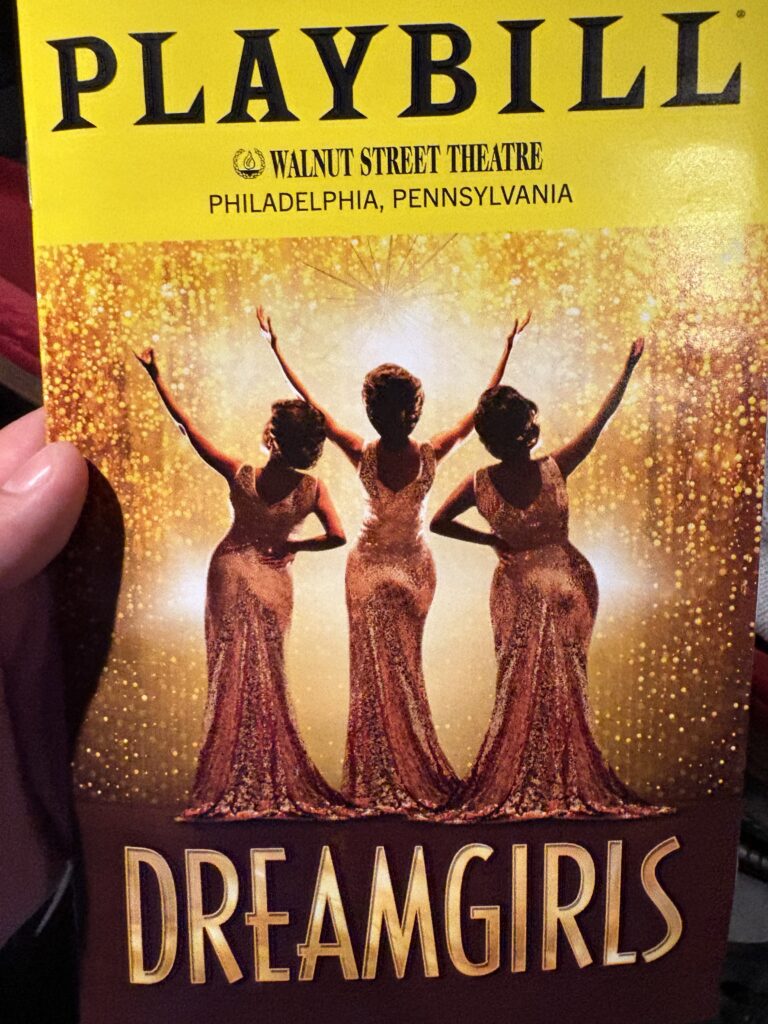
  • Dreamgirls

    Dreamgirls

    Walnut Street Theatre – Philadelphia, PA

    This was the first time I saw “Dreamgirls” and I am honestly quite ignorant on the subject of The Dreams (and on a lot of music in general), so I went into this show expecting to know a minimal number of the songs.

    By intermission, I realised that I am only familiar with one song (“(And I’m Telling You) I’m Not Going”) and I could not be more blown away with the performance of that song. Effie White (played by Aveena Saywer) was obviously a stand out singer from the start of the show, but the passion, the anger, the desperation to prove herself shined through so much more than her physical voice alone. Her ability to throw herself into and onto the table as she belted her way through that song ended with her getting a (well deserved) standing ovation despite the scene not having ended yet.

    By the curtain call, I realised that was the only song I already knew in the entire show.

    This show has it all: high intensity dance numbers, a fabulous musical score, a cast that can belt to their hearts content with remarkable control of their vocal abilities, and the raw emotion needed for these characters. “Dreamgirls”, it would seem, is extraordinary at showcasing each actors’ singing, dancing, and acting abilities. However, this cast took it one step further; they made it look like it was done with ease.

    Well done.

  • Operation Mincemeat

    Operation Mincemeat

    Everything I had heard and read about this show was “Monty Python meets Mel Brooks with a dash of Hamilton.” I, as a huge fan of Monty Python and Mel Brooks, came into this show figuring I would either love it or loath it. Personally, I hope that Monty Python and Mel Brooks would be proud to have their names linked to this musical.

    I appreciate the small cast, only five actors are in this production (not including the understudies) and they work as a number of different characters as well as changing the sets throughout. A very notable moment of these seamless transitions was the ending number of the first act (“Just For Tonight”) which blended a high intensity, dance infused pub crawl with the solemn duties tasked to the crew of the submarine carrying a corpse.

    The cast consists of David Cumming (playing Charles Cholmondeley and others), Claire-Marie Hall (playing Jean Leslie and others), Natasha Hodgson (playing Ewen Montagu and others), Jak Malone (playing Hester Leggatt and others), and Zoë Roberts (playing Johnny Bevan and others).

    This is a show where the gender of the cast played no importance towards the gender of the characters they portrayed. Jak Malone blew me away with his singing ability and his rendition of “Dear Bill” brought me to tears. Both Malone and Natasha Hodgson played gender swapped characters for their main roles and they both nailed it. Natasha was a convincing man, even dropping her voice to an impressively low tone quite frequently. Malone, on the other hand, nailed the daintiness expected from a woman of that time with both grace and dignity.

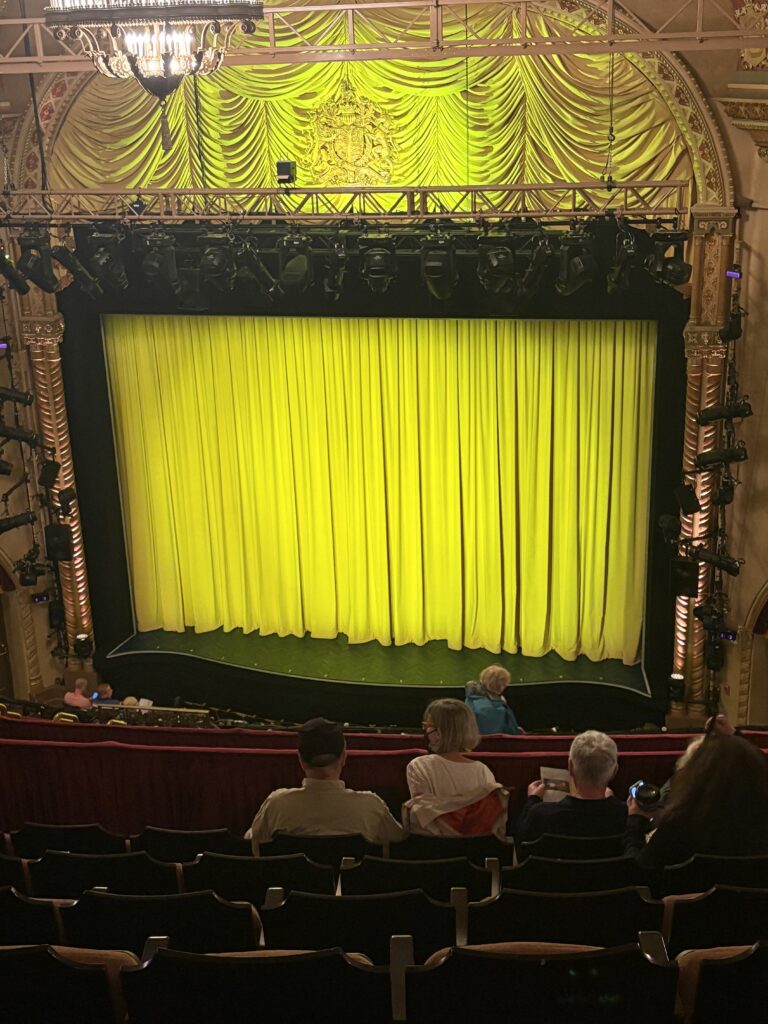
    Waiting for the curtain to rise at the Golden Theatre

    In fact, this was Jak Malone’s Broadway debut. I can describe his performance in one word: Phenomenal. I hope to see a lot more Malone in the future.

    The Stage

    The entire show was very well put together. The scene transitions and movements were very simple, allowing each of the actors to shine, while keeping the show flowing in both times of light hearted laughter and when dealing with the harsh realities of life. I can see why this show keeps getting extended and why it excelled in London’s West End. All in all, the show really was “Monty Python meets Mel Brooks with a dash of Hamilton” and I mean it that in the very best of ways.

    Bravo! Well done. The standing ovation at the end of this show was absolutely earned.

  • Ride The Cyclone: The Musical

    (Performed at Music Mountain Theatre. Lambertville, NJ)

    This is the very first time that I have ever seen this show. The only thing I knew about this show was that it was about teenagers dying in a roller coaster accident and had gained a cult following. Going into this show, I wondered if this was just going to essentially be Final Destination: The Musical. I was very glad to see that it was not.

    The set was beautifully done; mimicking a carnival, including a series of tv screens with an accurate countdown of your “wait time” in line before you take your ride on the Cyclone begins.
    In fact, the whole show keeps the carnival motif, even making the afterlife into a carnival like game of its own.

    The cast was small, consisting of seven actors, most of whom are currently either college students or recent graduates. The first actor that I found myself drawn to was Roger Madding (playing The Amazing Karnak). I found myself watching him when the other actors were supposed to be the main focus of the show. This is because, while he did stumble over a line or two, his robot movements – or rather lack of movements – was amazing. Madding managed to stay almost perfectly still, down to barely blinking, regardless of if the spotlight was on or even
    near him. Bravo, sir, that looked quite difficult.

    Elizabeth Axler (playing Jane Doe) definitely stood out for her vocal ability. There was not a single note that she did not hit perfectly. Elisa Carey (playing Ocean) did a wonderful job playing
    the girl that we all love to hate. After all, who has not encountered that person who thinks they are always the main character of the story and that they more important than others? Surely, every high school has had at least one person like that. This ability to be relatable to everyone makes the character a lot of fun. Sarah Harrison (playing Constance) managed to bring me to tears with her acting ability by the end of the show. Constance is a much deeper character than I expected her to be, but I am glad that she was because Harrison was able to nail it. Nicholas La Russa (playing Noel) did a phenomenal job. I saw in the Playbill that he has previously played Angel in RENT and I can definitely believe it because his dancing was absolutely top notch. Connor Riley (playing Mischa) can certainly play the bad boy well. It was
    interesting to see an actor who can clearly dance and sing play a character that is almost always half-assing his way through life. It makes me wonder if it is harder to play a character that is more reserved, a deep thinker perhaps, than it is to play a character that is more “in your face”. Riley managed to make Mischa both too cool to care, but also a tortured soul. It was a beautiful
    combination. And finally, Shawn Ritzheimer (playing Ricky) brought such life to a character that is initially silent. By the end of the show, the audience is happy to see the outcast character,
    with an amazing imagination, come into his own.

    While this show points out that not every show has a moral, this is one show that does. Enjoy life – it is not a game, but it is a ride. Appreciate what you have already because you never know when that ride will come to an end. Take the time to appreciate the beauty of the things around you and don’t feel shame for doing so.

  • Maybe Happy Ending (Rewatch)

    Maybe Happy Ending (Rewatch)

    Maybe Happy Ending is a show that I could see over and over again (This is my second visit read my first review here) because it gives me faith in humanity. The very basic premise of this show is following two Helper Bots (robots designed to be human helpers) as they decide what makes an ending happy. And while it is robots that this story follows, “what makes an ending happy” is something that is very human in nature and thought. It poses the question of what would you prefer: no sorrow, but no memory of the good or embracing the sorrow and hurt that comes with life, but keeping the happy memories, even if they bring you sadness?

    The Show's Playbill Cover

    Getting hurt, feeling pain, is very human and as this show points out “everything must end eventually”; whether that is a life or a battery or a relationship or anything, everything does end eventually. So, what’s better? No memory and a blissful existence or feeling the pain, but keeping all the good that came with it, too?

    There is no easy answer to that question and, I believe, that the answer will change from person to person because both answers are correct. For some, no memory is the better option, but for others, keeping the good memories outweigh the hurt that accompanies those memories.

    And hearing the audience sniffle and cry during various points in this show gives me some faith in humanity because it means we, the audience, are having empathy and feeling real emotions for a robot – a thing that literally cannot feel these emotions – and yet, we feel their pain. Empathy is a beautiful thing.

    I stand by this show being near perfection. Darren Criss is not only a wonderful actor and singer, but his ability to be so…animatronic throughout the entire show is impeccable. And for Helen J. Shen, who is so petite off of the stage, feels so big with her command of the stage throughout the show.

    The empty stage before the show begins. The title “Maybe Happy Ending” in English and Korean glow in a neon light on a  curtain resembling a dark computer monitor

    This show blends technology and big band/crooner style music to perfectly frame the events of this show in both a literal and figurative way. The set itself moves, providing a physical frame for each scene. But also the entire show is encased within the music of Gil Brentley, a fictionalised Frank Sinatra type singer, which allows the scenes to flow flawlessly as well as frame the themes of the show.

    This show has a lot of attention to detail (the technology aspect of this show really exemplifies this), but my favourite tiny piece of detail came inside the playbill. The “character” (I put character in quotes because Hwaboon is a plant ) of “Hwaboon” received its own spot and bio. I adore that the plant, who is very much treated as a character and is in almost every scene of this show, has previous acting credits. What a wonderful wink and nod to the theatre fans in the audience who actually take the time to read the playbill.

    HwaBoon's Playbill Entry.

  • Cabaret (I had to return)

    This was my second time visiting the Kit Kat Club. Read my earlier review here. This is a show that I wish were required viewing for everyone in America, if not the world.

    Cabaret is a show that takes place in Berlin, Germany, as the Nazi’s rise to power. Before the Nazi’s, Germany (especially the city of Berlin) was a hotspot for the LGBTQ+ community. It was where people were able to be themselves. And this is shown by the Kit Kat Club itself. Inside the club, everyone and everything is care free. Everyone and everything is beautiful. Life is beautiful. The show itself goes back and forth between the room rented by the American protagonist, Clifford, and the club, hosted by the Emcee.

    This show, on the surface is about Nazi’s coming to power and how the people react. It then delves deeper: The show is about compliance. The show is about not knowing what to do. The show is about not believing that it could happen. The show is about not believing it can happen to you. The show is about not believing it can be that bad. The show is about fleeing. The show is about standing your ground. This show is about rationalising the horrors that are around you in order to deny that they are occurring. This show is about being so certain that you are right that you either ignore what’s happening around you or you do not even realise that it is getting as bad as it is.

    I love this production. I love how immersive it is. I was seated on the opposite side as I was the first time that I saw this show. This allowed me to be closer to the actors during the main show. This allowed me to see more detail. This allowed me to appreciate the small movements of the dancers that I had not noticed before. This includes Herman covering his eyes as he dances to avoid looking at the overly sexual men and women and the fist placement of the gorilla (played by Karl Syler Urban, for this performance). Even being able to see the small glances that the actors gave each other while on stage put even more depth into a show that’s already very deep.

    In this show, we see how Nazi Germany slowly creeps its way into every aspect of the characters lives, even inside of the Kit Kat Club itself. And we watch as everyone’s lives are changed.

    This was the second time that I’ve seen the show with Adam Lambert as the Emcee. And he is phenomenal. The first time that I saw this show was before the election. It was before, when we still had hope for the next four years. But now it is after the election. The side of progress and freedom lost and executive orders have been signed. We are in a country where we can clearly see the fascists regime coming in and actively deciding who is or is not American enough. We have people, both legal immigrants and undocumented immigrants, being rounded up and sent away. ICE is infiltrating schools and places of employment. There is a push to deny the existence of transgender, non binary, and intersex individuals. Guantanamo Bay is being set up to be an interment camp (a labour camp). There is already talk of taking away the legal protections granted by marriage to those who are already married, but happen to be in a same sex marriage. And all of this information may be taking its toll on Adam as his performance was more strained this time around. In fact, he cried at a few different points in the show. He even changed some of his line delivery. For example: the first time that I saw this show, he almost spat out “she wouldn’t look Jewish anymore” while this time, the line was spoken softly and it came off as being more like genuine love. I am glad to report that there was no laughter, not even nervous/uncomfortable laughter after this line (there has been many reports of Adam stopping the show, in character, to explain that that line is not a belly laugh line). This time around, you could have heard a pin drop. I heard no laughter, but I did hear audible gasps of shock.

    Both times that I have gone, I have seen the Sally Bowles understudy (Gabi Campo) and she has been phenomenal. I have never seen Auli’l perform the role, but if Gabi is the understudy and she is this good, I have to imagine Auli’l is amazing as well.

    Another impressive thing to note is the pre-show. I noticed many new faces for the dancers and musicians. And with new faces, came new dances. Very impressive to see them changing up the pre-show and therefore having to learn and memorise even more dances.

  • Maybe Happy Ending

    I wasn’t exactly sure what to expect from a musical about robots. But I was thrilled with what I received. Maybe Happy Ending is a near perfect show that will leave you questioning a number of things that you thought you already knew: What qualifies as love? Can you genuinely love and be genuinely loved by something without emotions? And if so, what does that look like? When does someone become “human”?

    This show tackles a lot and it does so seemingly with ease. The entire show is framed in two ways: The first being the set which moves around to literally frame what the audience is intended to be paying the most attention to. The second framing is done musically. The first robot that you meet is Oliver (played by Darren Criss), who has a penchant for the music that his owner/friend used to listen to. This music is used to frame the show (it is music that you would hear from the 1940’s and 1950’s that would be commonly sung by Frank Sinatra and the like) and it is sung superbly.

    The plot is simple. Oliver is eagerly awaiting the return of his friend/owner. While he waits, he lives in a building that is for retired helper bots. He has never interacted with the other helper bots in his building. One day another helper bot, Claire (played by Helen J Shen), knocks on his door asking to borrow his charger because she desperately needs to recharge. This sparks a story of hope, love, longing, desire, friendship, loss, death, and so much more.

    Both Darren and Helen are wonderful in their performances. Darren’s robotic movements really shine, especially in the beginning, when you view Oliver as just a robot. Through their performances, the audience learns to love and care about these robots, often getting to the point that you forget altogether that these characters aren’t human. Which leaves you to wonder: what makes someone human anyway?

    This show made me laugh. This show made me cry. This show was absolutely beautiful in every aspect.

  • Swept Away Original Broadway Cast (2022 Musical)

    Swept Away tells the tale of a shipwreck and the majority of the show is simply four characters in a life boat drifting through the open ocean. The four main characters are: Mate (John
    Gallagher, Jr.), Big Brother (Stark Sands), Little Brother (Adrian Blake Enscoe), and Captain (Wayne Duvall). In addition to these four, there are 12 more actors in the ensemble

    I wasn’t sure what to expect from this show. I went in without knowing much about the plot beyond that it involved a shipwreck. The acting in this show blew me away. Four actors in a life
    boat, even in a single act show, seems like a difficult concept to sell, but these four definitely sold it. At no point did any of the cast come off as being dishonest, which made the strife the characters go through seem absolutely believable. Add to this the amazing singing talents of our main four (special shout out to Adrian Blake Enscoe for his singing ability) which brought this
    tale to life.

    Even more impressive, perhaps, was the set. The show opens with a dying Mate in a tuberculosis ward and he lies there as the audience fills the theatre. The show itself is then told through flashback, as three of our main characters (beginning the show as ghosts) urge Mate to “tell their story” before he passes away. We, the audience, are then quite literally swept away onto a whaling ship where we meet the entire cast of characters. The whaling ship is huge. And the ship wreck was amazing and definitely believable. Ropes are thrown down, dropping the
    sails of the ship, as one by one the members of the ensemble are thrown overboard. Finally, the entire ship rises until the audience is left looking at the underside of the boat (covered with
    mirrors), and revealing our main cast left in a life boat, looking absolutely disheveled. It is here that the vast majority of the show takes place. The life boat itself is on a turn table, and it didn’t
    just rotate, but rather it would sometimes rotate, and sometimes bounce between which direction it span. It moved slowly and delicately, and even allowed the life boat to have a slight
    rocking to it, which did a great job in making the audience believe that they are watching people randomly drifting in the open ocean. It is here that we really see the actors shine. We learn of
    the strife, the struggle, the heartache, the emotional toll that losing his crew creates for Captain, who has to come to terms with the fact that members of his crew went down with the
    ship, but he did not. We learn of Little Brother’s love interest and the life that he wants to live. We also learn that Little Brother was hit by the mast of the ship as the boat sank, injuring him
    gravely. We see the desperation from Big Brother as he works diligently for weeks to keep Little Brother alive. And we see Mate, who is the most realistic of all the characters – he understands
    from the start that they will all likely die and that horrible things may need to be done in order for any of them to survive.

    And it all felt so real… until the last fifteen or twenty minutes of the show.

    WARNING: SPOILERS AHEAD

    After being lost at sea for at least 10 days, it gets to the point where the audience is informed that Little Brother will likely not even live until the next day due to the injuries that he sustained
    when the ship sank. Honestly, Adrian Blake Enscoe really did a great job at physically appearing weak and frail, making Little Brother appear like he was barely surviving. This provokes Mate to
    ask Captain for his approval to kill Little Brother with the intention of eating him so that the other three can survive. Captain, at this point emotionally destroyed, refuses to make a decision and leaves it up to Mate. Meanwhile, Big Brother overhears and begins resisting this idea. Little Brother tells Big Brother that it is fine and that he is willing to sacrifice himself because it will save the others and he is dying anyway. But he wants to see one more sunrise, which everyone agrees to. Come the sunrise, Big Brother insists on being the one to actually kill Little Brother, however, in a shocking turn of events, Big Brother cuts his own throat…

    And from that point on, the entire show felt like an afterthought. Immediately, the show shifts back to the tuberculosis ward and we see Mate surrounded by the ghosts of Little Brother, Big
    Brother, and Captain. The audience is then informed, not shown, of each character’s fate and the eventual rescue of the three remaining characters. And this is the only part of the show that
    felt so fake, so jarringly out of place with the rest of the show that I wanted to scream, “Show! Don’t tell!” The audience is not shown the rescue, but we are told about it. Captain nicely informs everyone of how he was treated when he was rescued, when he got home, and when and how he eventually died. Little Brother does the same thing, but it doesn’t make any sense for the character of Little Brother to survive. The script makes it very clear that Mate, Captain, and Little Brother survive this ordeal by eating the flesh and drinking the blood of Big Brother. This destroyed my suspension of disbelief, leaving me only in disbelief. So, I am left with a few conclusions: either Little Brother was not actually hit by the ships mast, however, nothing in this show indicated that Mate is an unreliable narrator or Big Brother (who, as a character, is very religious) is literally Jesus Christ, which feels very blasphemous for the very religious character to actually be Jesus. The show went from being incredibly realistic to not being realistic at all in what felt like a blink of the eye.

    This show did not last long on Broadway and I have a few ideas as to why. The first being the sheer size of the cast. While having 16 actors on stage for the big muscle numbers that take place before the shipwreck was certainly impressive, it was also unnecessary and could probably have been done with just four or five ensemble members. I have to wonder if paying for 12 ensemble members was a factor in this show not making enough to stay open. That’s a lot of actors to pay to be there when they are only on stage for maybe half an hour. Combine that with an ending that feels so unfinished and I understand why people may not be so interested in spending the money to see this musical. I would have loved to have seen what this show could have been if it was expanded into two full acts, showing the audience the rescue, and more. Flesh it out and remember to show, not tell.

  • Teeth (2024 Musical)

    Teeth (2024 Musical)

    Okay: Teeth the Musical… my only complaint, there could have been so much blood utilised. Funny, fast paced, clever. Just not much of a splash zone.

  • Romeo + Juliet (2024)

    I loved the use of the entire theatre, the simplistic, yet intricate set and staging. The actors were able to really bring the story to a modern day light, without it being silly (they used knives and no one was shot with a gun literally labeled “longsword”), which was very much appreciated.

    Kit Conner and Rachel Ziegler were both wonderful and convincing and made the performance come alive in both seriousness, but also the youthful vibe. Seeing Romeo’s transition to loving Juliet was very adorable and the perfect showing of kids “falling in love”. In fact, the whole cast did wonderful and I was glad to see such a diverse cast play a wide range of characters.

    I could have definitely lived without the blaring techno music for the entire time that the theatre doors are open until the show actually begins. It doesn’t just vibrate your chair or the walls, but also your literal eardrums. I also felt the full out singing numbers felt out of place. Most of the time it could be excused by it being at a party (portrayed pretty much as a rave), but at least once, that was not applicable and it stood out.

  • Cabaret

    Holy crap! Could there be a more poignant time for this show? I saw the Sally Bowles understudy (Gabi Campo) and holy crap can that lady belt! Amazing vocals. Adam Lambert nailed it. I hope to see him in more Broadway shows because that man, as we all already know, is a star! And he has the vocals.

    More than that though, the immersive experience of this show is beyond belief. It really did feel like stepping into a new world where “everything is beautiful!” starting right with the pre show. “Look, don’t touch” is right as these performers use dance and mime to entrance you. By the time the curtain rises, the audience is ready for a good time. And then the seriousness of the show slowly hits. And the desperation of trying to keep it “normal” becomes apparent. I pity anyone who cannot see the parallels to modern day America.