Category: Off-Off-Broadway

  • Retraction

    Retraction

    Off-Off-Broadway

    The Shiner Theatre

    Sheen Center for Thought and Culture

    27 January 2026

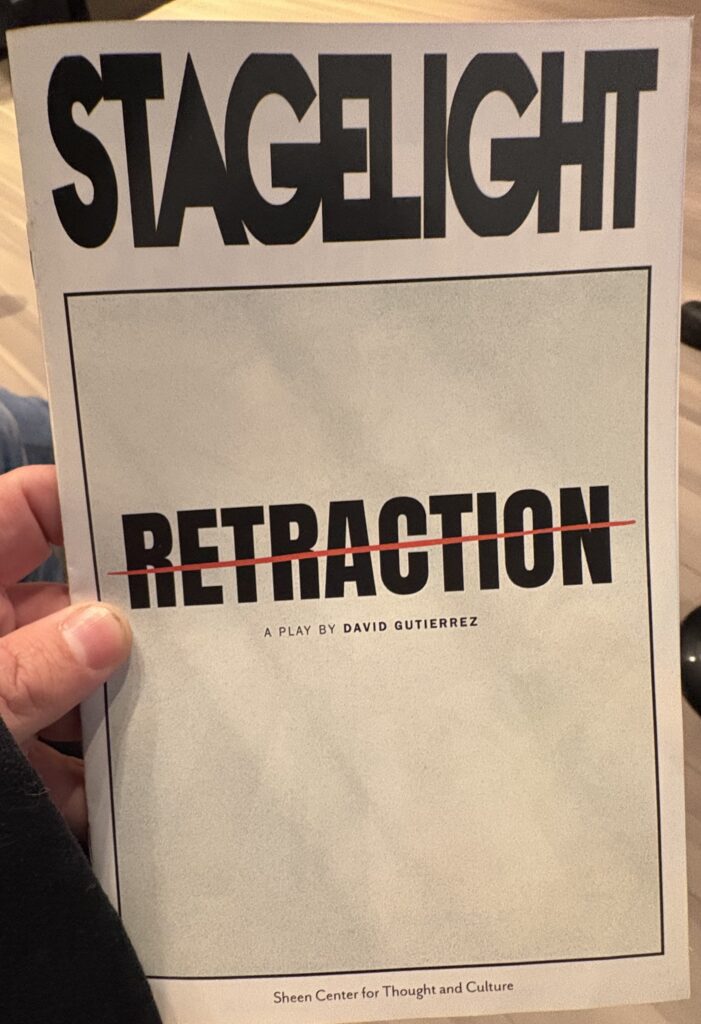
    Written by David Gutierrez, Retraction is based off a true story. This play warns of the dangers caused by inaccurate journalism and does not shy away from the ramifications faced by the journalist, those mentioned in the article, and even the entire movement it intended to help.

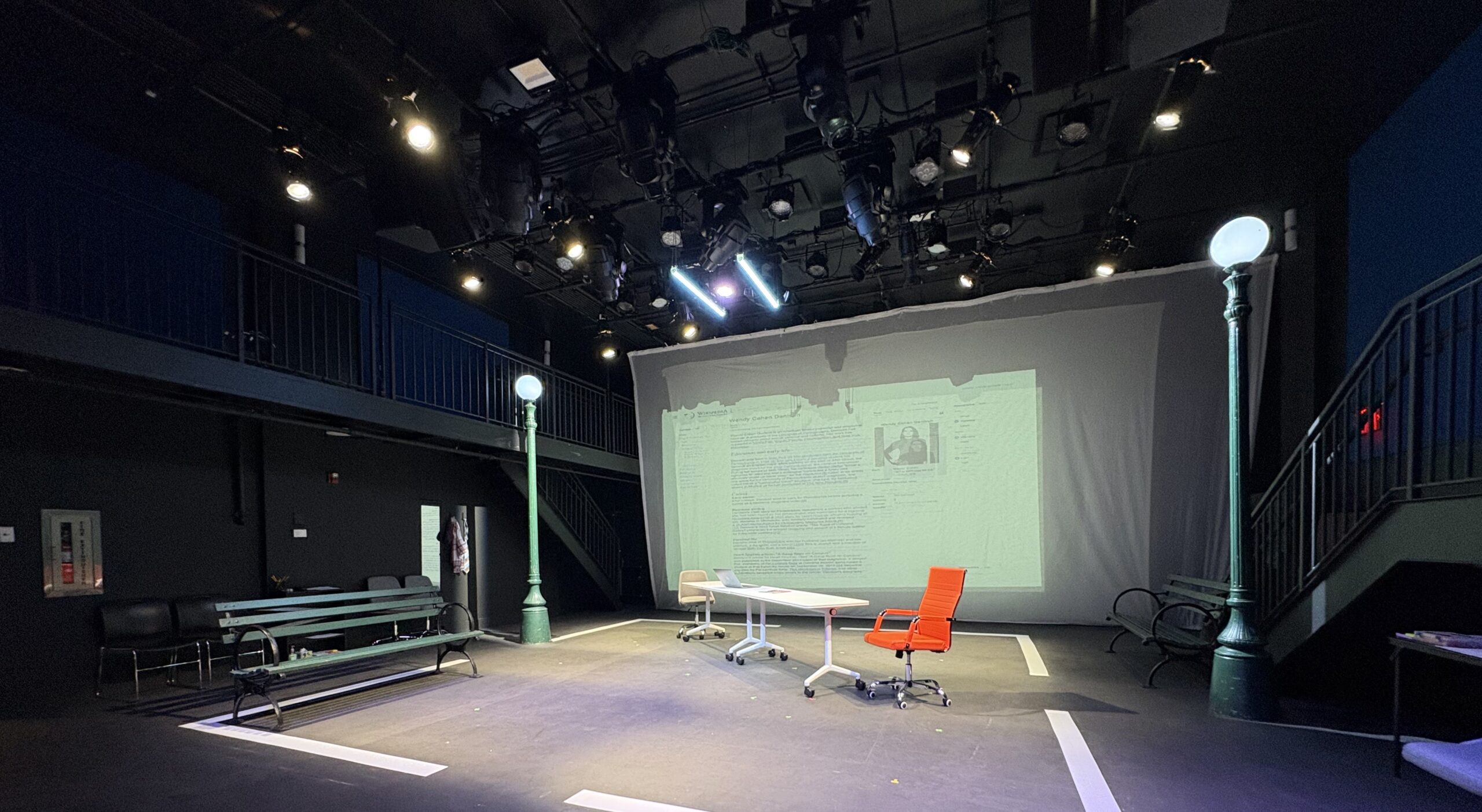
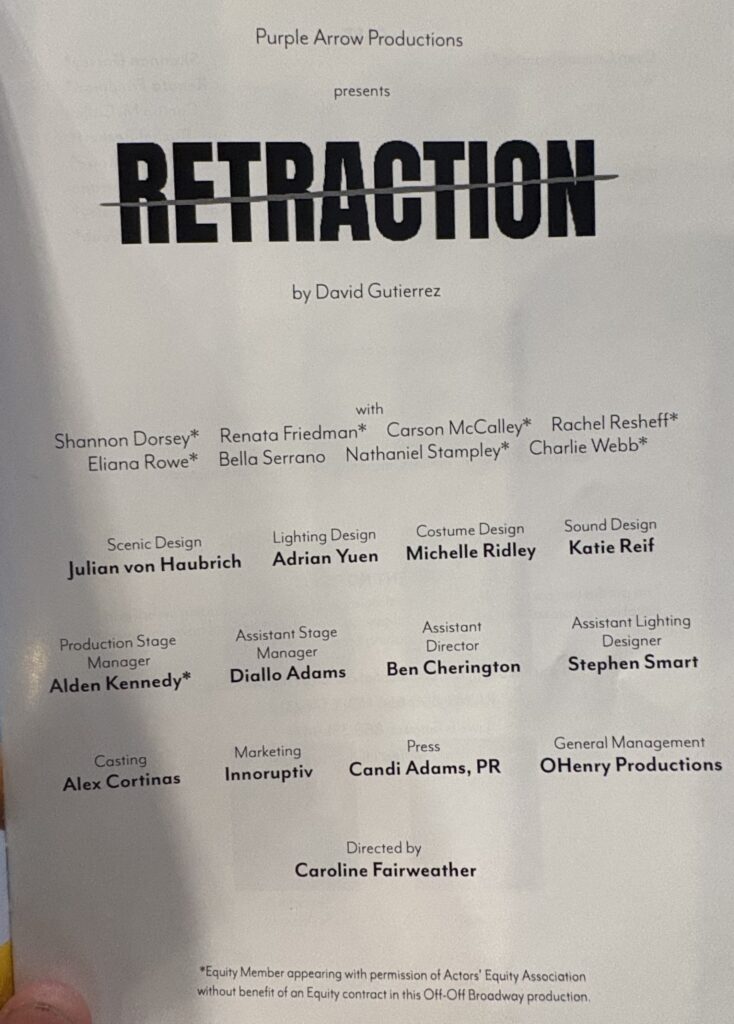
    Directed by Caroline Fairweather, sound designed by Katie Reif, and a clever set designed by Julian von Haubrich this show uses projections to keep the audience informed of the date as well as overlapping spoken quotes to drive home just how overwhelming and devastating this real event was to everyone involved.

    The play follows Wendy (Renata Friedman), an experienced journalist with a focus on sexual assaults occurring on college campuses. She settles on one particular rape case to be the focal point of her article — a violent gang rape, which the play takes great care to admit is far from the typical sexual assault cases reported by colleges and universities. The audience is introduced to Lacey (Rachel Resheff) who is the central figure in Wendy’s article. Her friends Chris (Carson McCalley), Melissa (Eliana Rowe), and Travis (Charlie Webb) all seem to have a different memory of the night in question and convey a multitude of conflicting emotions. Beyond that, Dean Gasso (Shannon Dorsey) the Dean of Carolina Atlantic University is vitally present as well as Zack (Nathaniel Stampley), the editor and person with ultimate approval of what gets published. Additionally there is a sexual assault survivor, Gillian (Bella Serrano) who understands the larger implications a false report may bring and Victor (Carson McCalley), another prominent journalist working to question the accuracy of Wendy’s article.
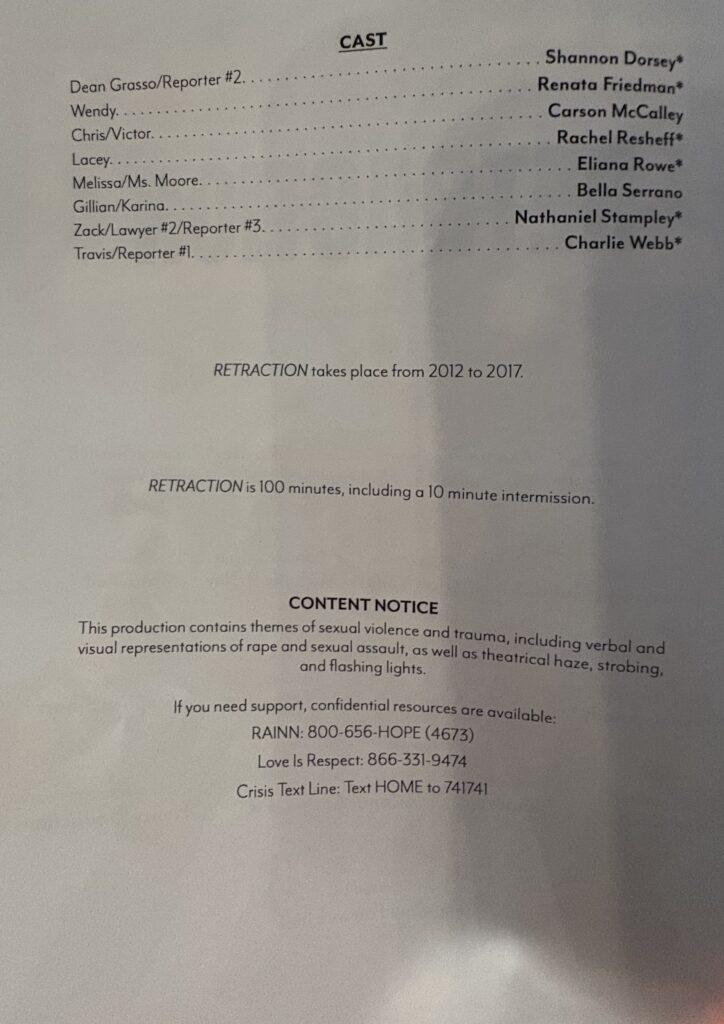
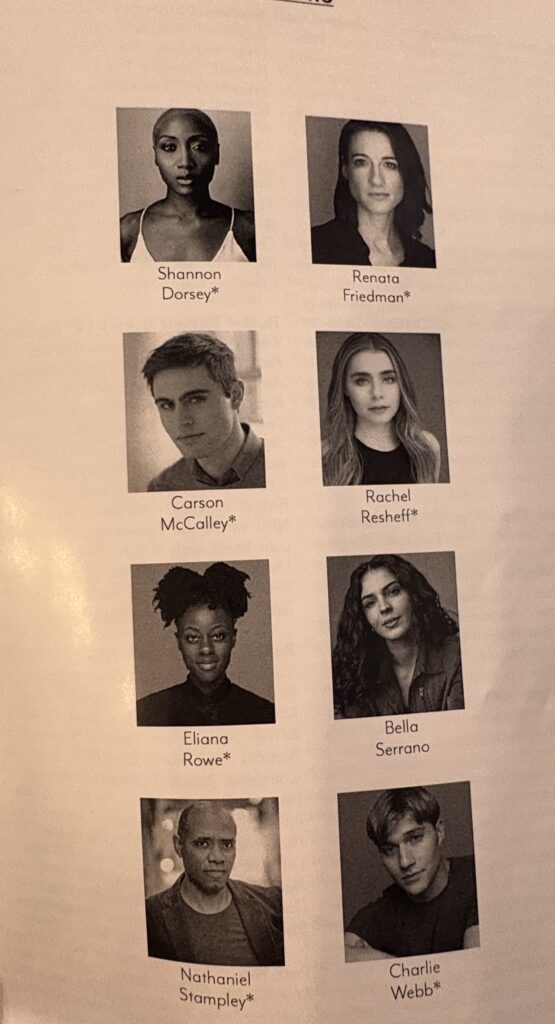
    Dorsey, McCalley, Rowe, Serrano, Stampley, and Webb all take on more than one role. However, I found it difficult to distinguish when some of these role changes occurred. Dorsey also played Reporter #2, McCalley doubled as both Chris and Victor, Rowe portrayed Ms. Moore as well, Serrano also played Karina, Webb doubled as Reporter #1, and Stampley also portrayed Lawyer #2 and Reporter #3.

    Most of the time, the distinction between each character an actor played was clear, but not always. When an actor begins reporting on breaking news, it is clear that is a reporter. When an actor is portraying a lawyer as well as one of the people questioned by another lawyer, that clarity becomes less defined. I found the clarity to halt altogether with the characters of Ms. Moore and Karina — nether of who I remember as distinct characters.

    I thoroughly enjoyed how malleable the set is. Using rolling chairs and two folding tables with wheels, the scenes were able to change quickly, freely, and without disrupting any action on the stage. Combined with the use of projections showing everything from the Wikipedia page of the real life Wendy, to emails, and even the date of every prominent plot point — the play felt smooth and well practiced. Since the plot is told in a nonlinear way, it would have been hard to keep track of when the various things happened. That being said, even with the dates easily seen, I’ll admit at times I was still lost.
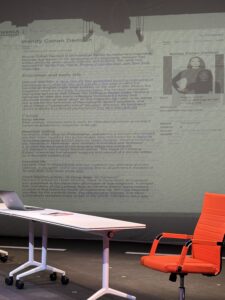
    Retraction recounts the same situation through various perspectives. Beyond the aftermath and everything that encompasses, the audience is left to wonder  who, if any of the characters are truly reliable narrators? The answer is unfortunately one I think many don’t want to admit — none of us are. The truth is, memory is fallible. When humans remember a past event, it is not the actual event being remembered, but rather the memory of the last time the event was thought of.

    Two people can tell the same story, both whole heartedly believing what they say and seeing it as absolute truth, and both accounts being completely different from the other. The same event can be unrecognisable when told by someone else. I appreciate how subtly this is portrayed throughout while also being a core element.

    Retraction is intended as a dire warning against blind belief and a reminder of the consequences — legally, emotionally, and even harming the very thing you were trying to advance. I only hope the audience pays enough attention to it.
  • The Story Of Sal B. And Barbranne (A Mob Fantasia)

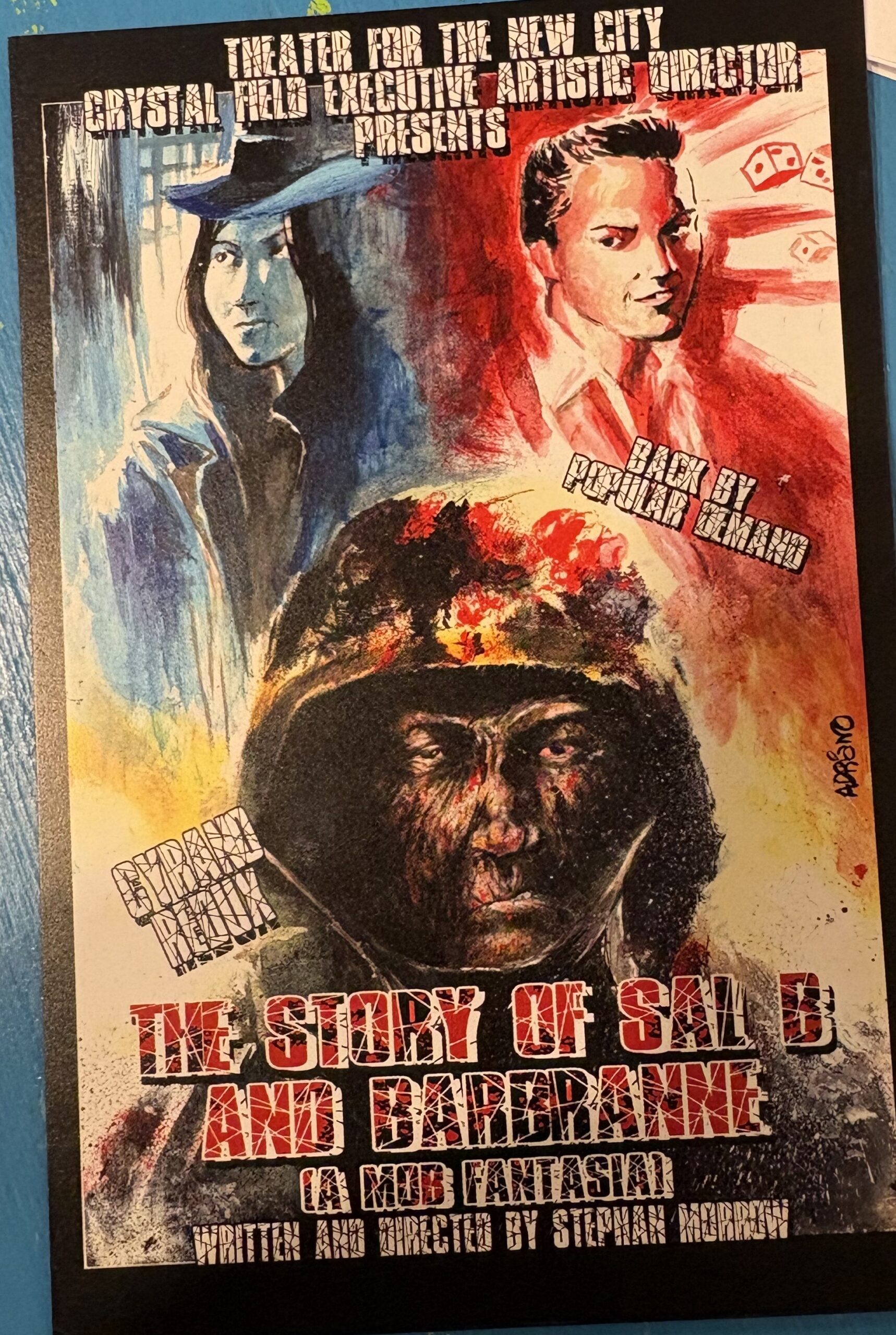
    The Story Of Sal B. And Barbranne (A Mob Fantasia)

    Off-Off-Broadway

    Theater For The New City

    21 December 2025

    Matinee

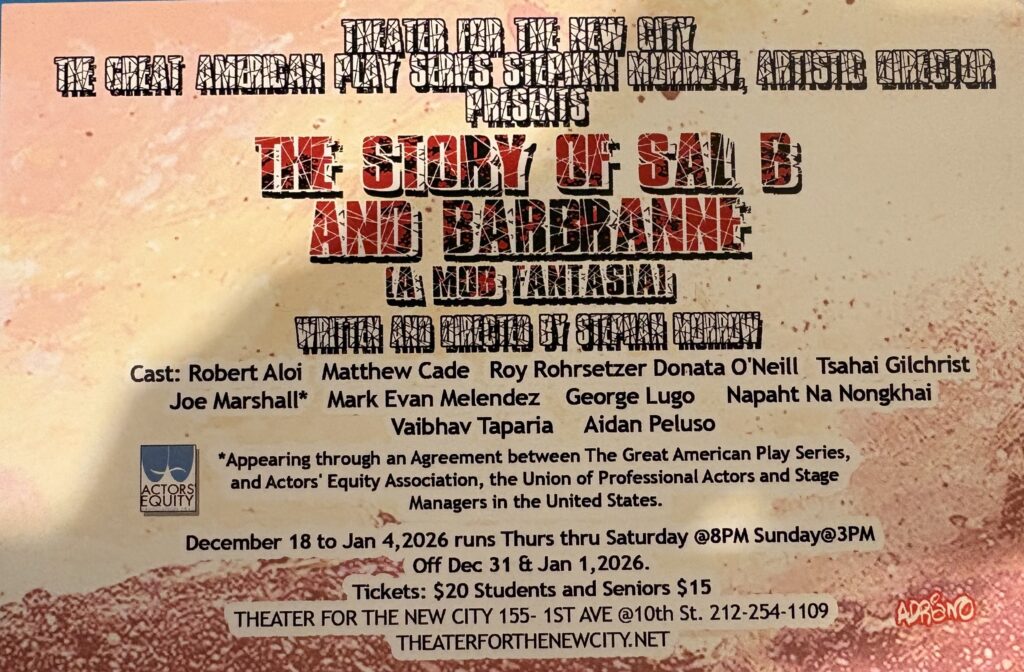
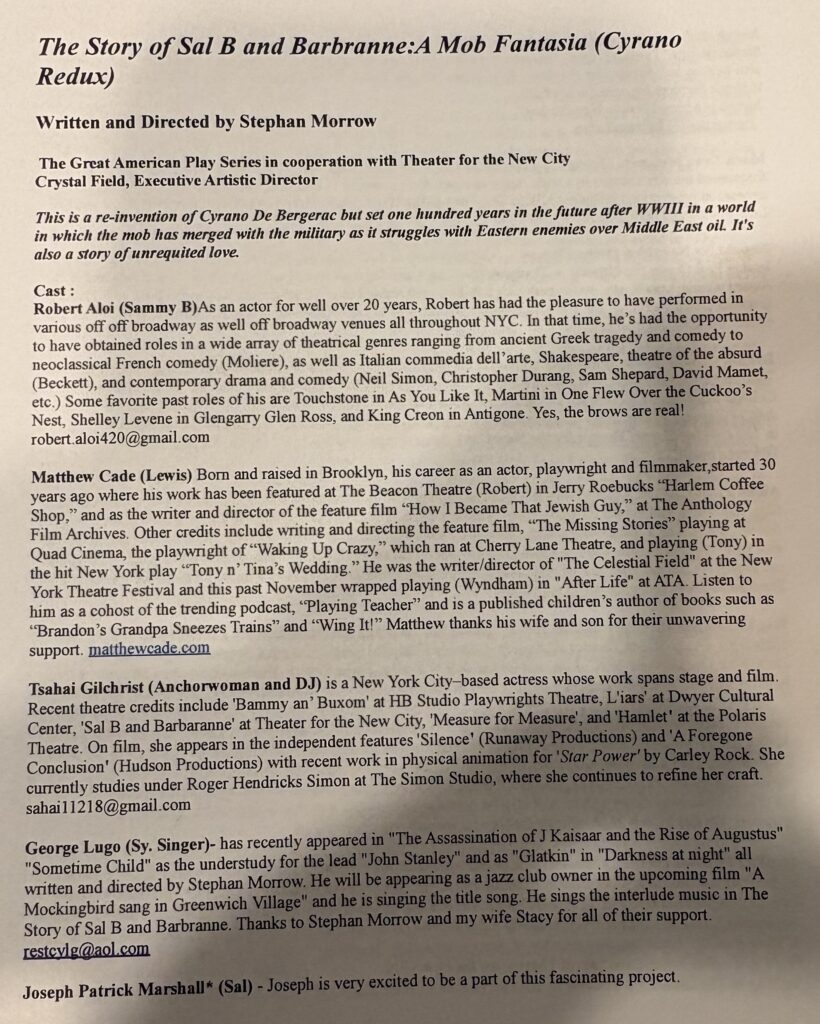
    Written and directed by Stephan Morrow, The Story Of Sal B. And Barbranne (A Mob Fantasia), is a “Cyrano Redux”. It’s a re‑imagining of the classic tale set 100 years in the future and after World War III. The mob has merged itself with the United States Military as the country battles with “Eastern enemies” over oil found in the Middle East. As well as the traditional story of unrequited love.

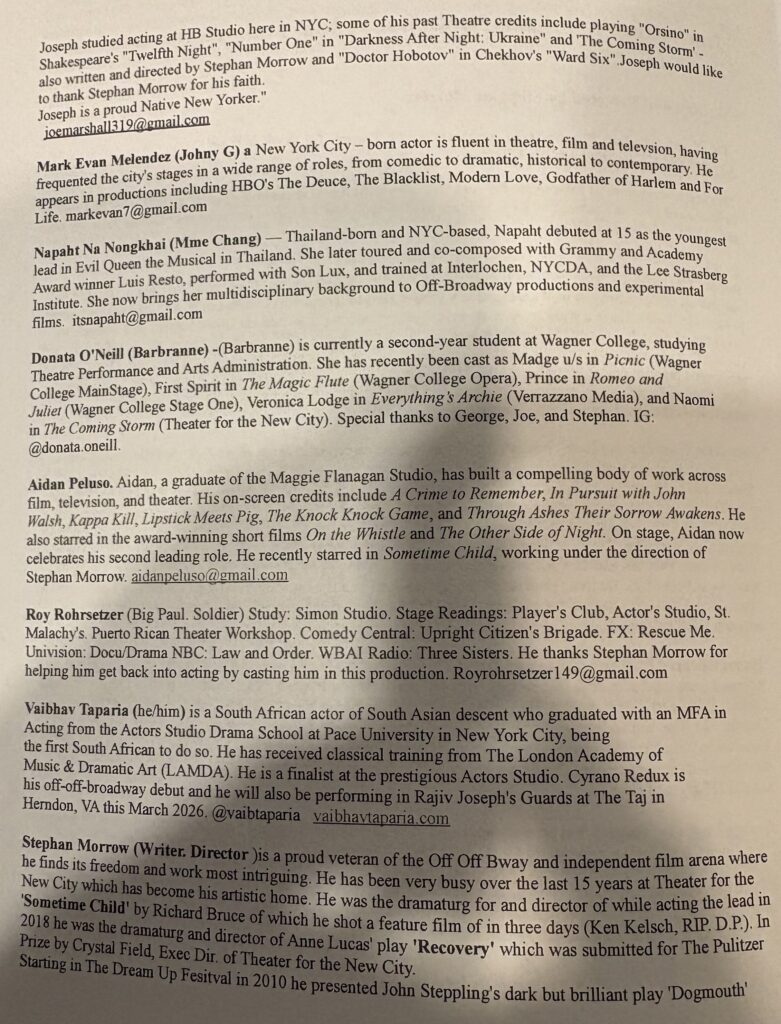
    I had some difficulty applying the word “fantasia” to this show. I relate that more to works that are only music. While music is present at times, the majority of the play is dialogue based with songs often setting the mood as scenes change. Many of the songs chosen were famously sung by members of the Rat Pack. In a directorial choice that I absolutely adored, George Lugo, the actor who plays Sal’s closest friend Sy, sang each and every one of these songs live. His voice is phenomenal and never once did it sound tired or felt overdone. 

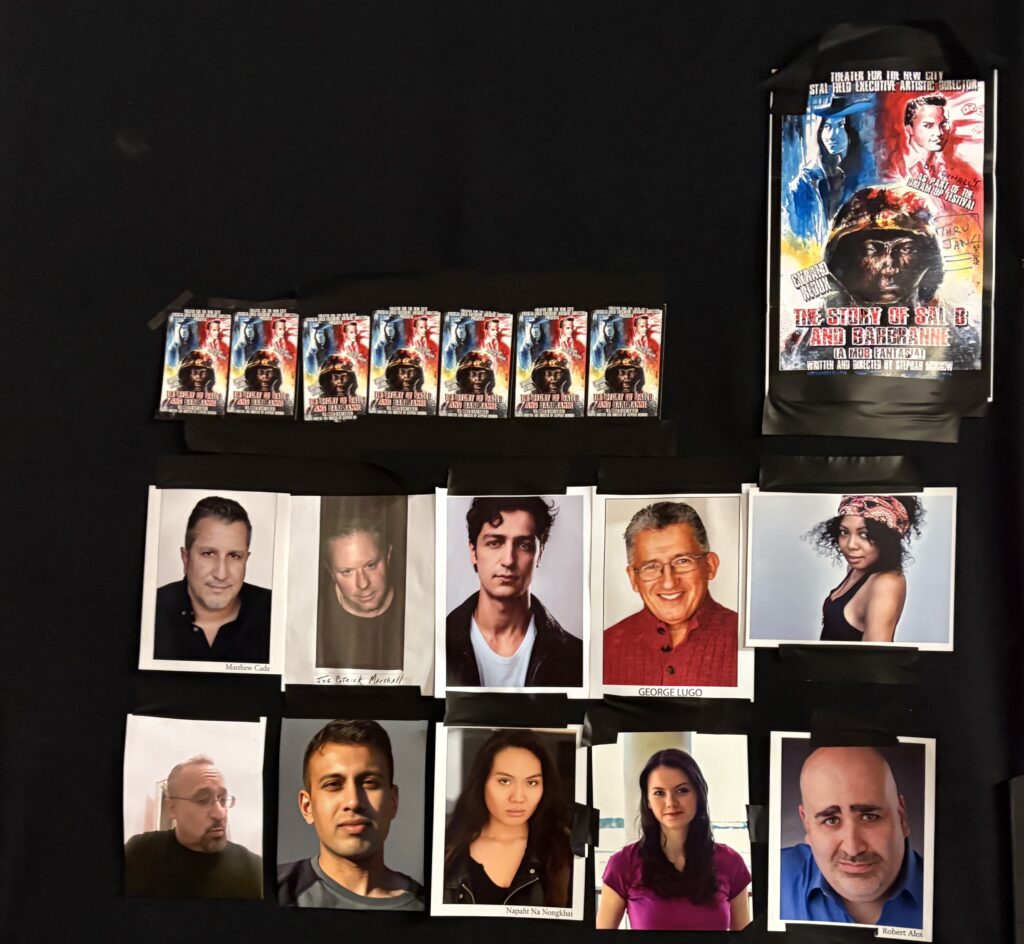
    The play follows the titular character of Sal (Joseph Patrick Marshall), a distinguished soldier who has just returned home from his last deployment and a reporter named Barbranne (Donata O’Niell), who is intent on getting her story, but can’t say no to a potential chance at love. 

    The characters of Sal and Barbranne fill the classic roles of Cyrano and Roxane. Sal’s face has been disfigured in war, which is an effective change from the potentially problematic big nose traditionally associated with Cyrano. I found the choice to make the age gap between the two characters evident from the start to be a tasteful one. While the ages are not as prominent in Edmond Rostand’s original play, it is the main reason that Sal is hesitant to try and pursue Barbranne romantically himself.

    I wish I had understood more clearly why the US Military was in the Middle East. The aspect of oil was lost on me and I thought the fighting was over land and properties that the military wished to keep control of. The main aspect I was able to take away was that women were going to be forced into sex slavery, as a comfort to the soldiers (which, unfortunately, has historical accuracy).

    The show itself almost had a space western/Star Wars vibe. I found the character of Sal reminded me of Han Solo perhaps a bit too much. With this connection being made, the poetry that Sal comes up with and states with such passion, almost felt out of character. I would like to have been shown more of Sal’s backstory so that his layered nature was more apparent throughout.

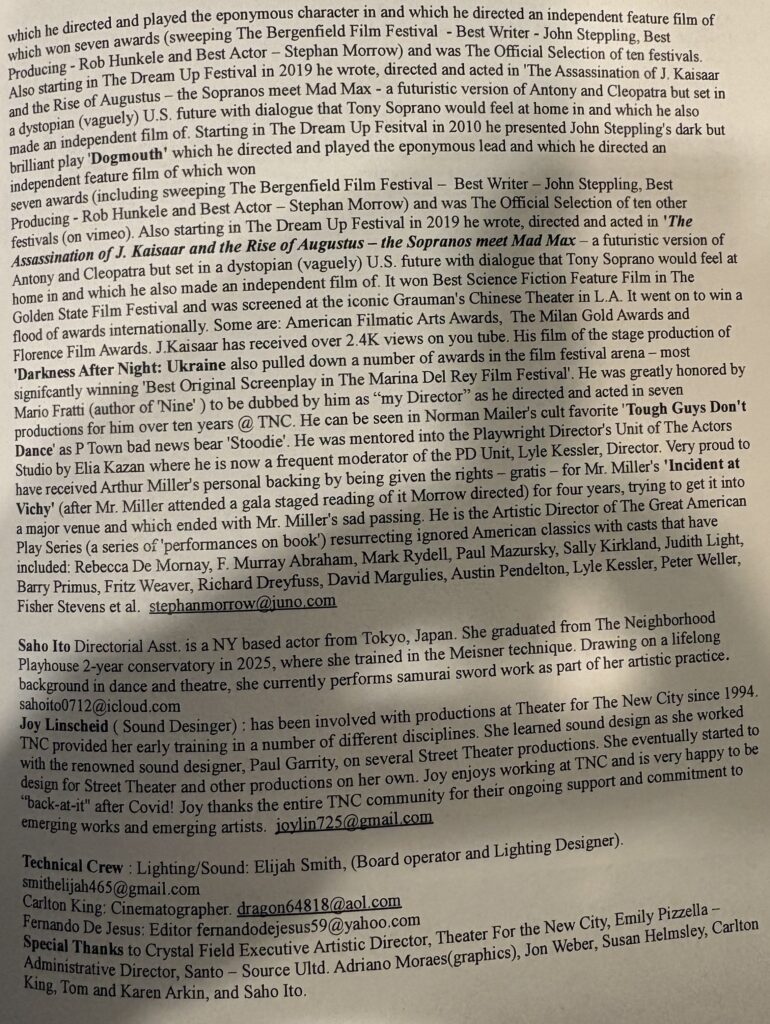
    Unfortunately, I did not catch the names of the majority of the characters and the playbill did not include all of them. For example, the character of Paul Jr. is simply not listed next to any of the actors names. I do generally prefer to have all of the characters and actors names, especially presented in an easily understandable way. I wonder if the size of the cast itself (11 actors) may have played a factor in me not catching the character’s names. 

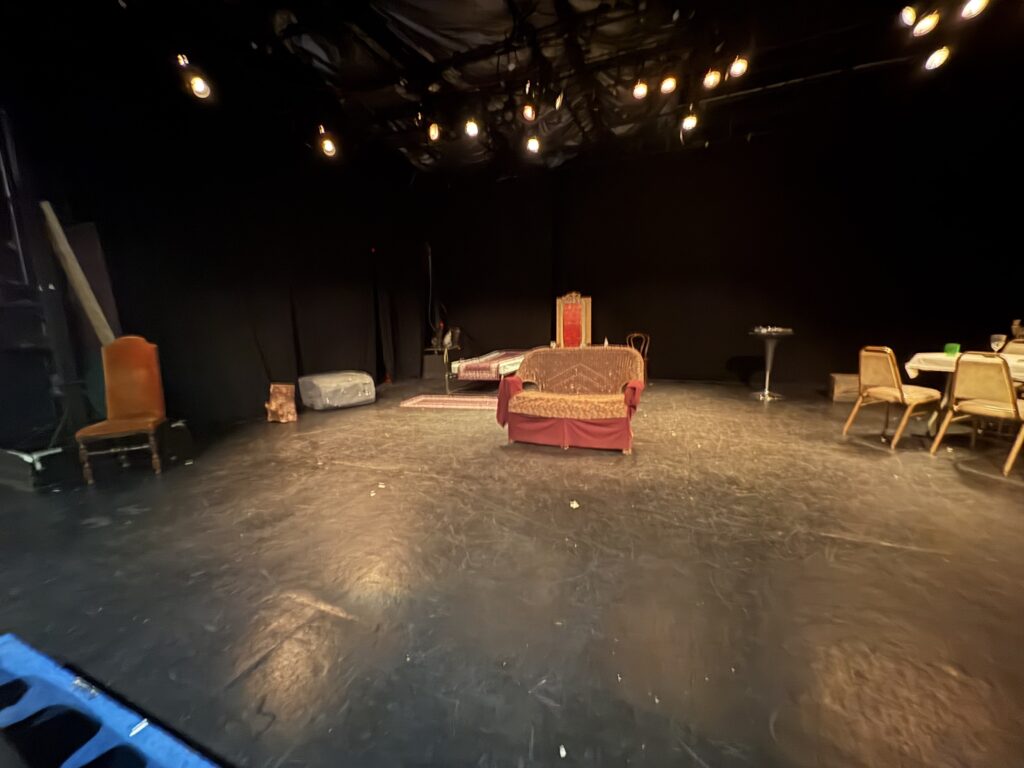
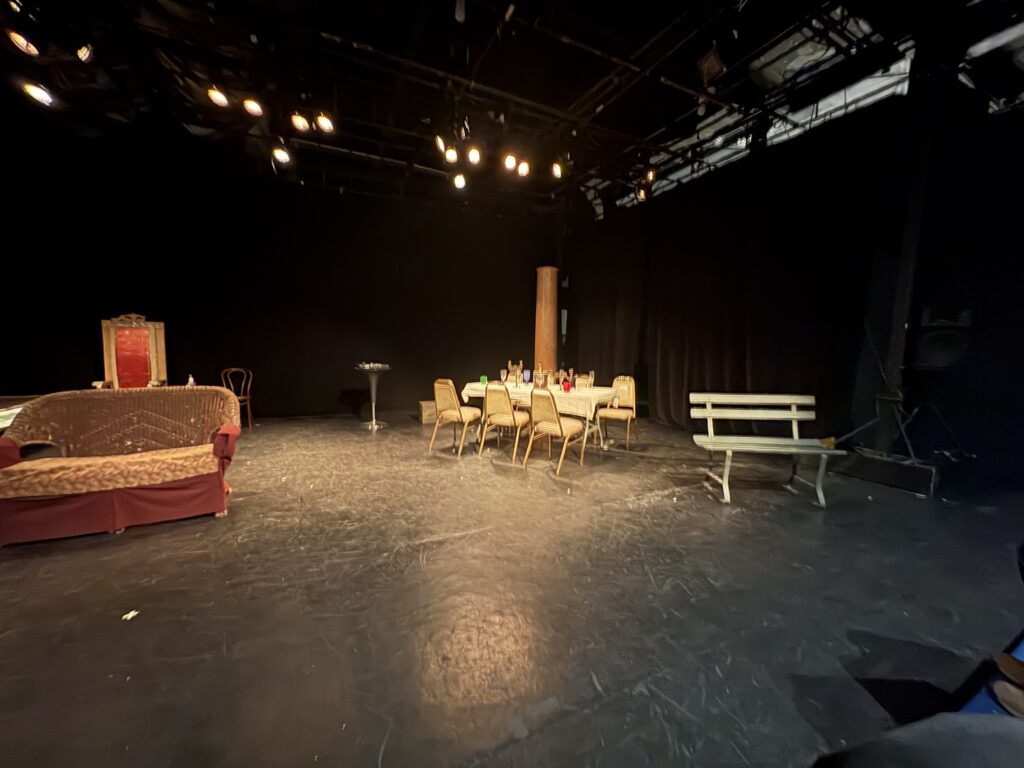
    The set was fairly extensive and utilised the entirety of the stage, allowing for quick scene changes and the ability to show a variety of locations. Across the stage were various set pieces: a chair downstage, a bed upstage, a love seat centre, a large table with at least six chairs, and a bench. While I loved seeing so much, I also found it hard to keep track of where specific characters were at times. Without defined borders for some of the set pieces, I had difficulty distinguishing if characters left the room or even the building they were in or not. At times, I believed a character had gone outside and was caught off guard when they could see, hear, and interact with the people they had just left without “reentering” the building.

    Stephan Morrow, with the collaboration of Saho Ito as the directorial assistant, sound designer Joy Linscheid, and light designer Elijah Smith, brings a new twist to an old classic. The Story Of Sal B. And Barbranne (A Mob Fantasia) does tell the story of Cyrano de Bergerac, but in a futuristic setting. Similar to how West Side Story reimagines Romeo and Juliet, the audience does not need to be familiar with the original play to enjoy this one.