
Off-Broadway
16 January 2026
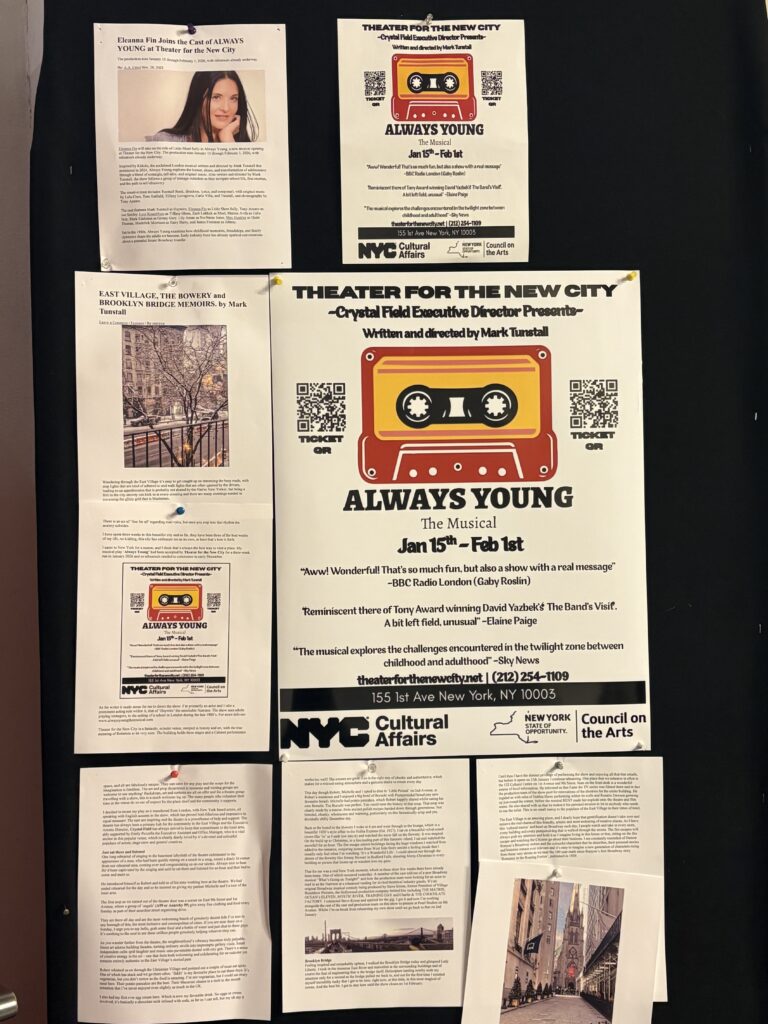
Written and directed by Mark Tunstall, Always Young is about rebellion, memories, desire, what it feels like to be an outcast, and so much more. It takes the concept of the misfit, those who feel alone, lost, unable to fit in with societal cliques and turns it into dark, gritty, sometimes campy, but always brutally honest comedy wrapped in a message of hope.

This musical explores how easily children can slip through the cracks of society, unnoticed, regardless of background or social standing. The audience is left to consider “why” that happens, how to change it, and just what type of impact you have on those you know. Everyone, even those who feel alone, still affect everyone around them …even if they are unaware to doing so.
This show is dark, gritty, funny, but most importantly — it’s real. The emotions expressed are raw, complex, taboo even, but always genuine.
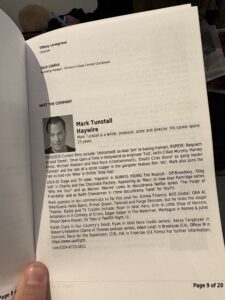
Always Young follows the character of James “Haywire” Hayward (Mark Tunstall) — a self described misfit. Haywire serves multiple purposes throughout. At times he is a self-aware narrator, breaking the fourth wall and exuding a bit of sliminess, but also control. He has charisma and charm with also a hint of danger. Reminiscent of a stereotypical side show circus ringmaster, he is a bit over the top and far from polished. Yet you find yourself unable to look away. He’s a series of contractions — someone who feels distrustful, yet only speaks the blatant truth (and you believe him because in the back of your mind, you know it’s true). He understands manipulation. He understands the connotation of that word. Yet he uses it anyway, unapologetically so, because it’s accurate. Don’t mistake his crudeness though, Haywire is far from a villain. He’s flawed, he knows it. He makes mistakes, he misspeaks, he gets angry, he gets bitter, he can even border on sinister, but ultimately he truly cares. He wants to help. He doesn’t mean to mess up. Just like everyone else, he learns as he goes.
He’s also simply a teenager in school, with his classmates, but not really his friends. He doesn’t know where he belongs. He’s an outcast and he’s angry. He doesn’t have a community — a tribe — who sees the true person behind the hard, rebellious exterior. An exterior he learnt to wear for the comfortability of society, so they never see the depth of his pain.
The show begins at a funeral. The mood is somber, the sound of rain falls, the stage fills with mourners in all black with black umbrellas in hand. The first song begins, soft at first, then rising in intensity as Haywire, the narrator, transforms in front of us, from a simple man into an almost devious, mysterious being. With a knowing look in his eye and a sly grin it’s abundantly clear just how dark he *can* see life, yet mysterious enough to know he’s more layered. Haywire sees life differently than others, or at least differently from how many will admit. For Haywire, life is filled with subjective grey areas.
He understands anger and the need for a rebellious nature. He grasps the power of manipulation and is even a bit of a master it. He learnt how to do this overtime. It began out of anger, a coping mechanism against the bullying and loneliness in his life. Life experience taught him this ability, but also it also taught why it should be used to benefit others.
I felt almost as if I were watching myself on stage. Growing up, it felt like I was the only one who did not see things as purely good or bad. Almost nothing seemed to fit into one category neatly. I saw things as both good and bad, fully dependant on the perspective in which I was approaching the subject or scenario from. I realised how the same person can be called a hero by some and a villain, by others. It became clear if the determining factor of something being good or bad is perspective based, then most things are subjective. Almost everything in life falls into a grey area including the very concept of what is good or bad, what is moral, or even why we live life.
My lived experiences, my personal history tells me the difference between good and bad is how someone chooses to use their power (and we all have some kind of power). Even something with a traditionally negative connotation like manipulation, can be used to help people. It can be used to help facilitate understanding and growth. But, it can also be used to dampen and hinder those around you. Intent, even if not successful, is important. Just be willing to learn from it if you fail (and remember it’s okay to fail, it’s normal to fail, failing is a part of life).
I found, while the entire soundtrack was catchy, fun, and honest — one song in particular stood out for me. “It’s Prob’ly Me” is a number that might as well be my anthem. Sung by Haywire directly to the audience, it exemplifies how it feels to have the best of intentions yet the inability to express them properly for society. The entire song is full of linguistic word play. It applies layers of meaning to the simple act of putting your foot in your mouth — of misspeaking, of using the wrong word choice, and it always being taken differently than expected. Which is something I do often. I choose my words carefully. But I am often lost on the subtext the words may convey because, well, the word doesn’t actually say the subtext. I mean the word as is, no extra subtext. So if something comes off as rude, or crude, maybe even insulting… just know it was probably me. It probably was also not my intention, though.
I am a trans man. I had confidence when I was a child. I was good at sports, I was in shape, I was happy. Then puberty hit. I lost my confidence, my body began to feel like a costume, and eventually I found a stranger looking back at me in the mirror. I grew bitter. I grew angry. Just once in my life did I threaten suicide. My mom understood the grey areas of life, though. She manipulated me out of ever even considering the action. She simply stated, “The dogs will miss you. I may be able to explain to other people why you did it, but it is impossible to explain it to the dogs. They will just know you left and never come back, but they will never understand why.” That broke my heart. I knew it was manipulation, even as a kid. I also knew it was accurate. That’s when I began to understand how manipulation, despite the negative connotation, can be a wonderful tool for helping others.
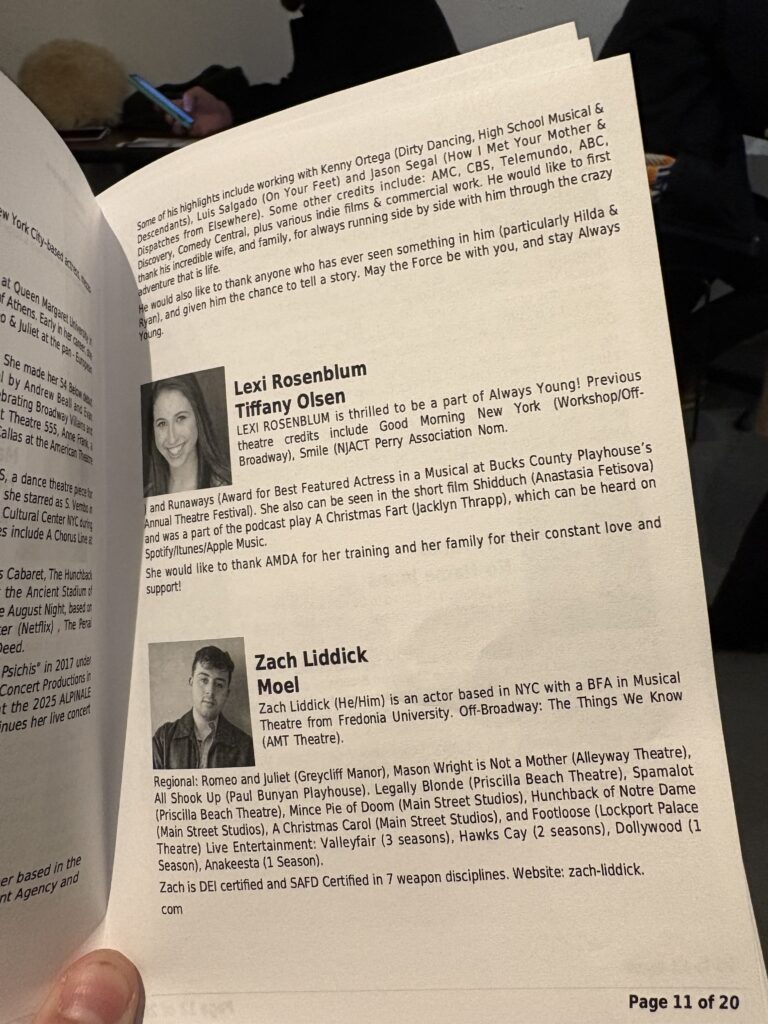
Then the show transforms. Suddenly, the year is 1989, the audience is introduced to the rest of the character — all school students with Haywire. Little Short Sally (Eleanna Fin) is the smallest in the class. Joe Smiley (Tony Azzaro) who doesn’t know how to drop his grin. Tiffany Olsen (Lexi Rosenblum), an American who is desperate to have a new life in England. Moel (Zach Liddick) with a brilliant imagination. Celia Bott (Marion Avila) a foster child. No-Name Jones (Lily Aman) called that because their parents never settled on a name, leaving the character to suffer without an identity. Quiet Thomas (Max Hunkler) who is a traditional, rebellious teen, with an understanding of how powerful silence can be. Hairy Harry (Darren Kenzie) who was given this nickname due to his hair. Greasy Gary (Max Alexander) a child who has a reputation for being smelly, unkempt, even gross. Lastly, there’s Johnny (James Freeman) who lacks a concrete identity, feels he is never good enough, and always aims to be someone else — anyone else — who may be deemed as cool.

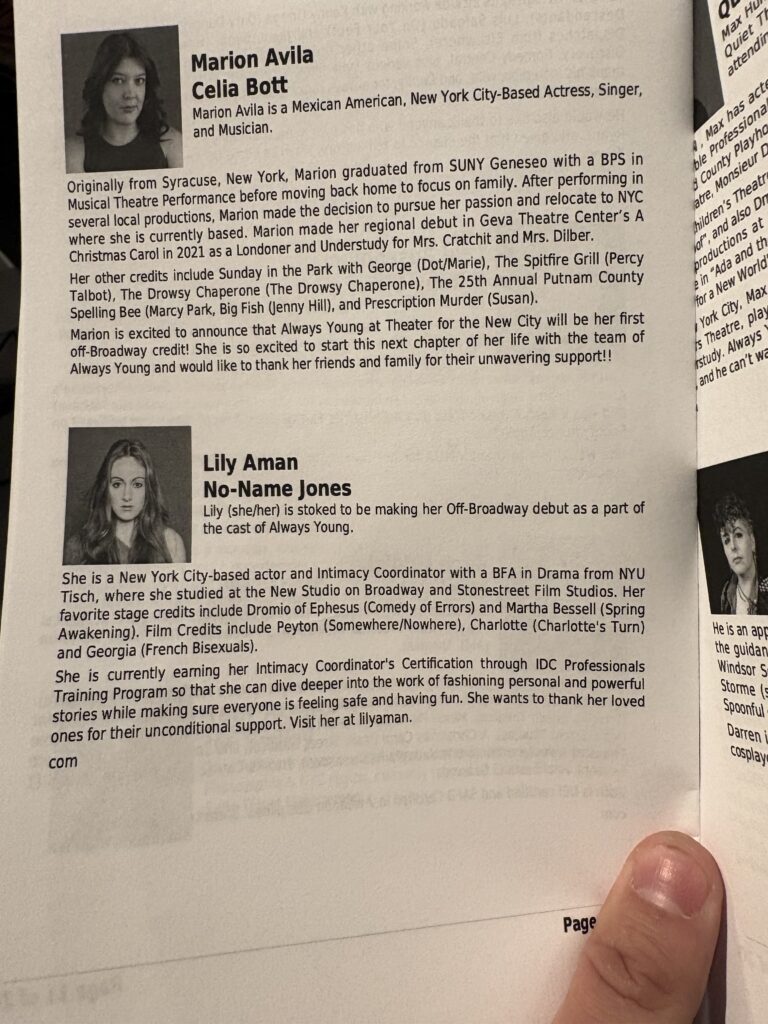
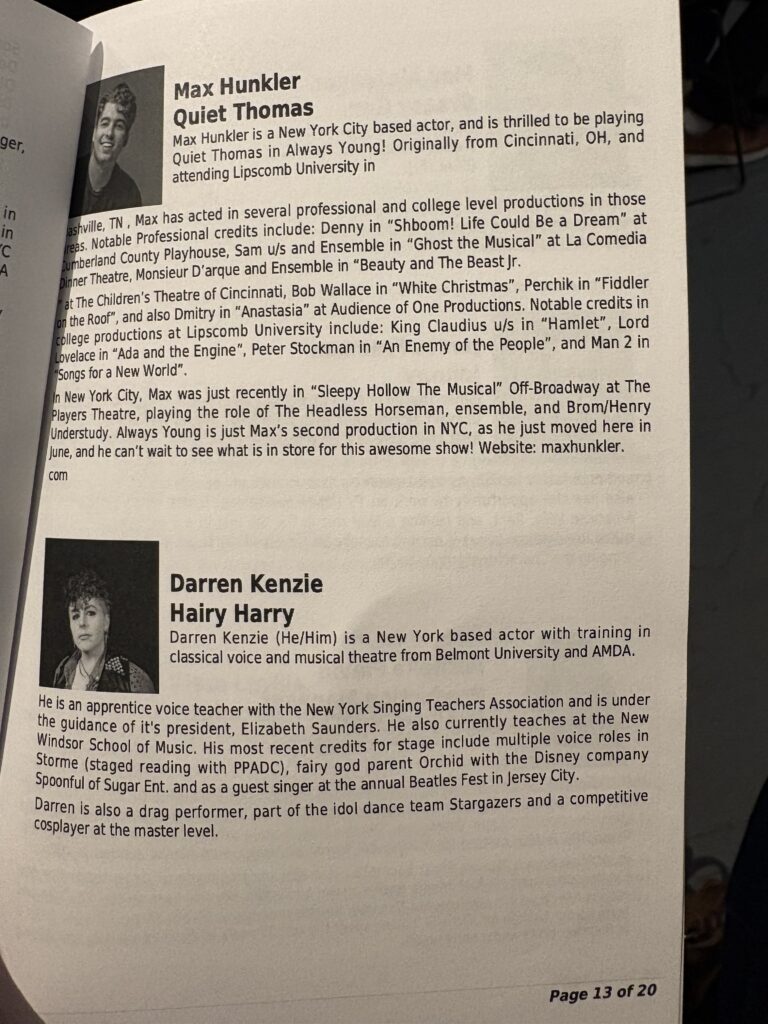
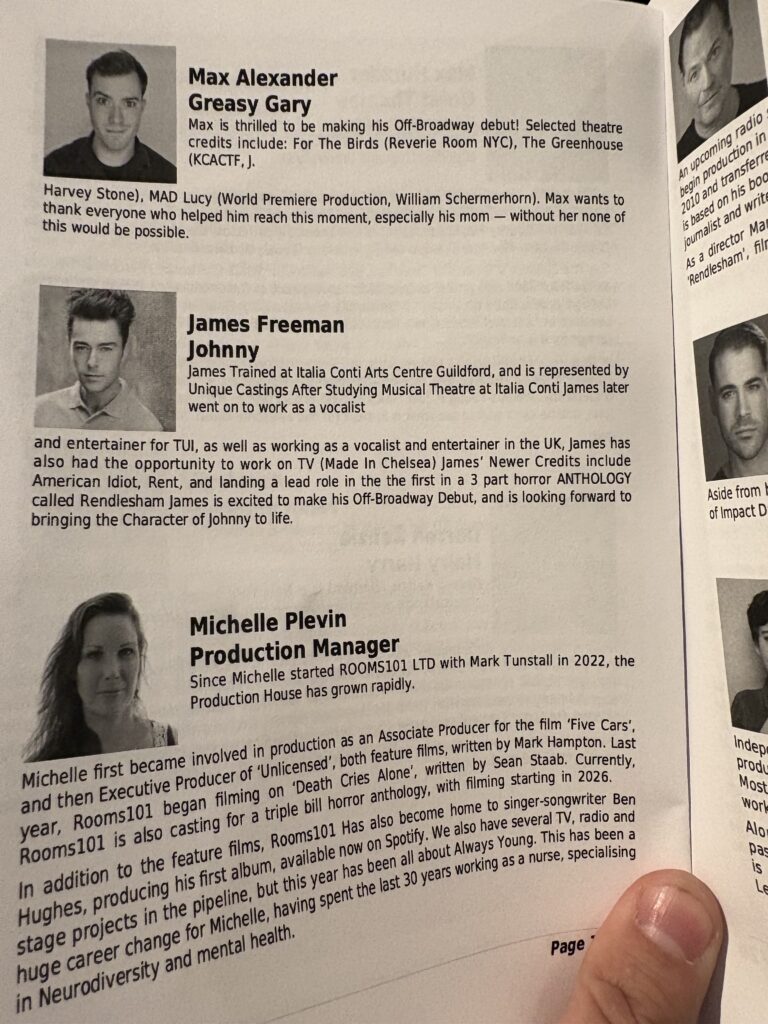
Each student is a bit of a stereotype of an “outsider”, which is perfect for a show as self-aware as this. There is even a brilliant moment where almost, if not all, of the cast break the fourth wall only to over explain the upcoming scene to the audience. This perfectly exemplifies the metaphor of sticking one’s foot in your mouth and digging yourself into a verbal hole/grave.
Despite the dark humour, the grittiness, the questionable morals of the characters, even the use of violence to prove yourself to others (a thing I had to do as a child) — Always Young is ultimately about hope, acceptance, and helping others. It refuses to shy away from the subjective nature of life. It’s unapologetically upfront about the complexity of emotions, the dark part of the human mind, and why you should never lose your rebellious way. It reminds the audience that even after death, your legacy, your memory, still lives on.

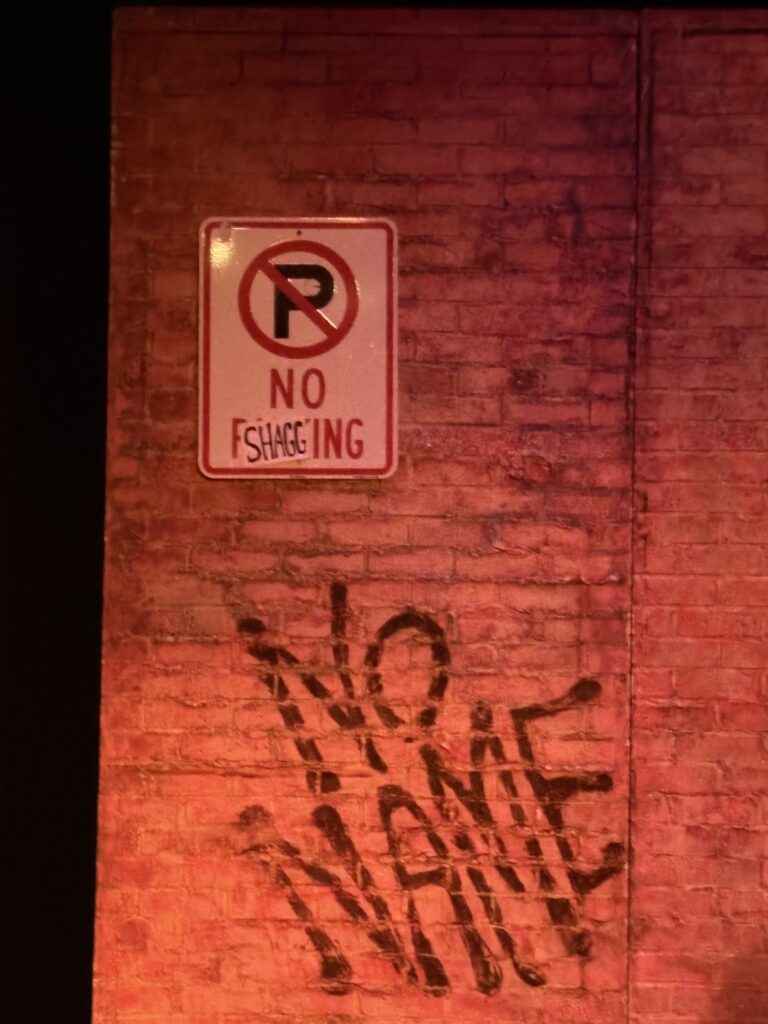
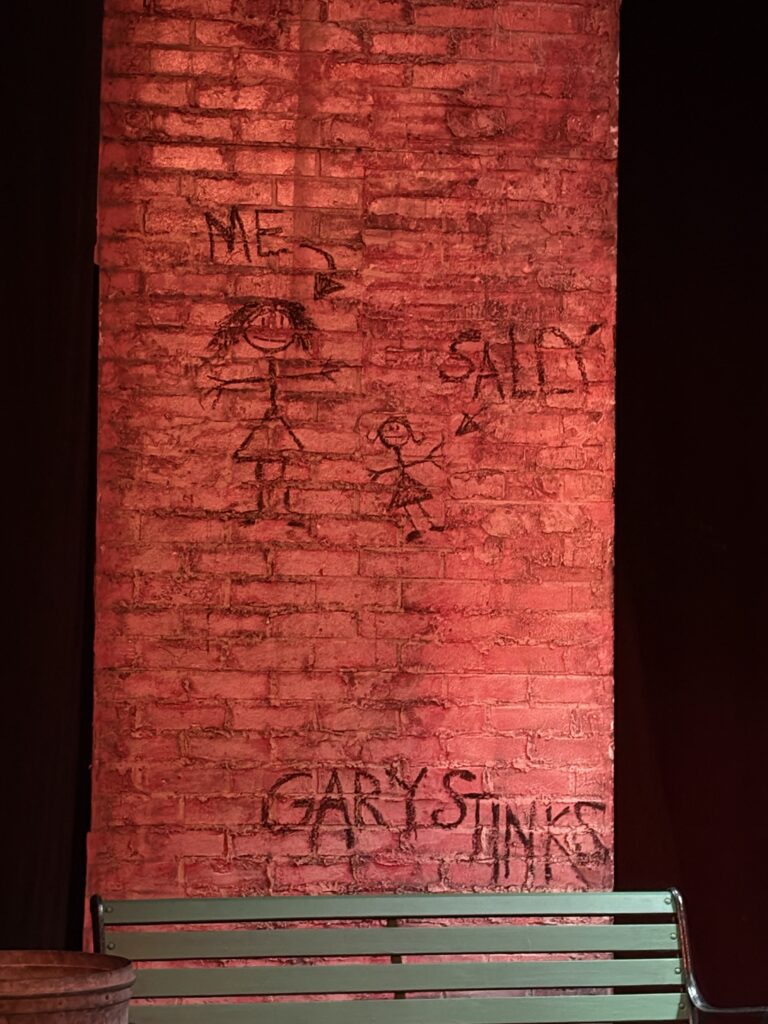


Perhaps it is the final message that is most important — the goal is not perfection. The goal is to try. That’s it. Learn, try, fail, try again. Even if you are unaware of what tribe you belong to, you belong somewhere. So try to help. You may never know if there is a lost soul desperately searching for others like themself and if there is, that person may never realise that you’re also an “outsider”. Sometimes our tribes are a lot closer than we think. It just takes some help from an other to finally figure that out.