Princeton, New Jersey
23 August 2026
Matinee
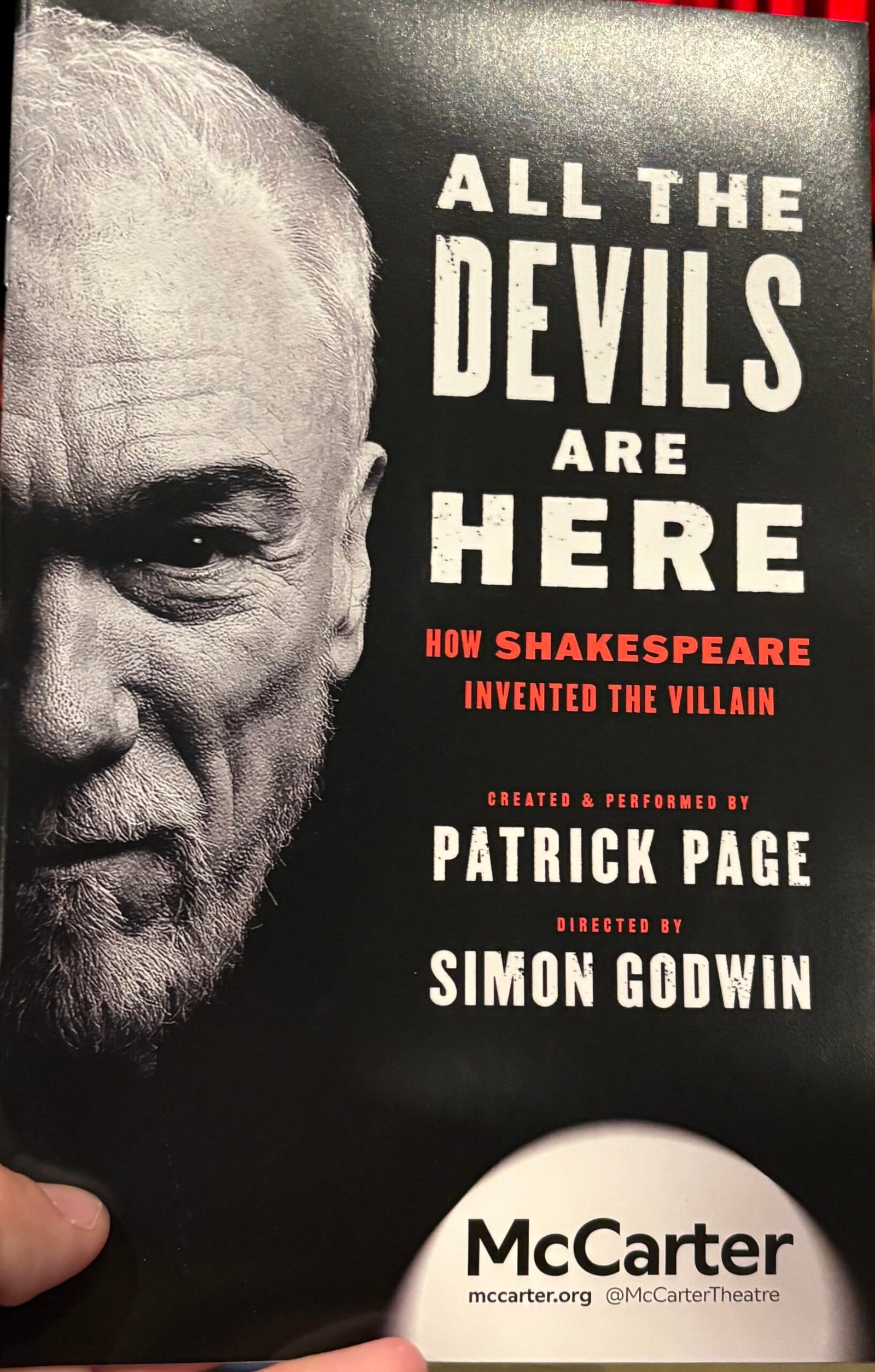
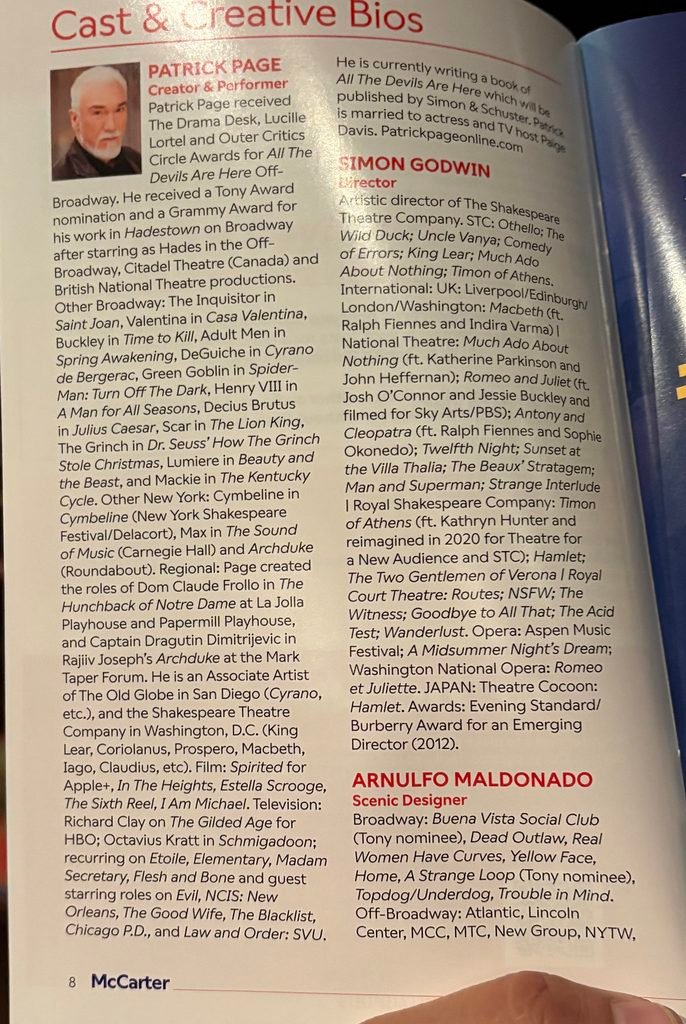
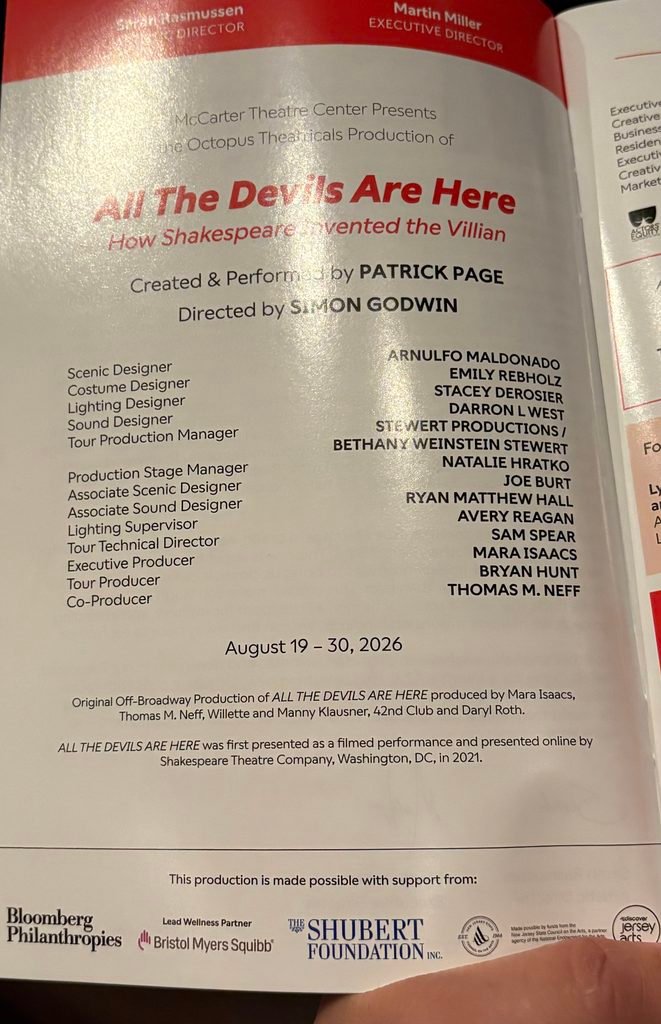
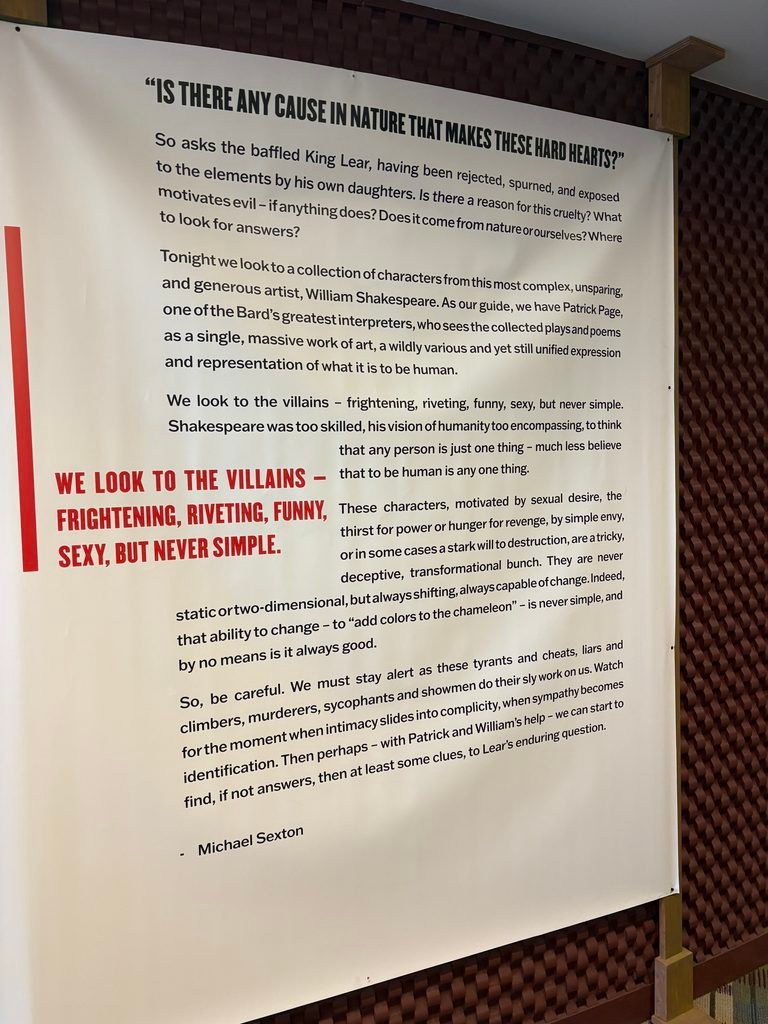
All The Devils Are Here is a brilliant one-man show mixing amazing acting, philosophy, psychology, and lessons in both literature and history to explore William Shakespeare’s heavy influence in the creation of the modern, three-dimensional villain. In a time period where good and evil—hero and villain—were thought to be distinct opposites with no ability to overlap, Shakespeare did just that—leaving behind a legacy of complex villainy that allows the villain to be, above all else, human. Created and performed by Patrick Page and directed by Simon Godwin, the show is both intellectual stimulating and thoroughly enjoyable, as it asks the audience members to sit back, relax, and allow themselves the freedom to succumb to the allure of the villain.
How Shakespeare
Invented The Villain
The play begins as a seance, calling upon the spirits of Shakespeare’s villains to join us tonight, before Page stops and addresses the audience directly. He smiles warmly, apologises for being unable to present all of The Bard’s villains (for the sake of time), tells an anecdote about how Macbeth became known as the cursed play, and ponders an important question: Why do we love the villain?
We learn about the typical villain found in theatre during Shakespeare’s youth—a creature known as The Vice. A common character in morality plays (a genre of medieval and Tudor theatre with an emphasis on Christian values), The Vice is beyond human, purely sinister, and frequently the comic relief. His main objective is the downfall of humanity.
And then we see Page transform into this creature. With a mask, a staff, and a strong air of danger, the nice, funny, smiling man who stood before us is gone in the blink of an eye. And that is but a mere inkling of what is yet to unfold.
Following the progression of society at the time, we learn about physiognomy—a popular pseudoscience believing that a human’s physical exterior is a direct representation of their inner level of morality (i.e. Richard III’s scoliosis being exaggerated into a “hunchback”). And it’s only a matter of time before Page once again changes before our eyes. As he recites Richard’s lines, his body slowly molds itself into the words he says…lowering one shoulder, curling his arm tightly against his chest, and holding his legs in such a precise way that one legitimately appears longer than the other.
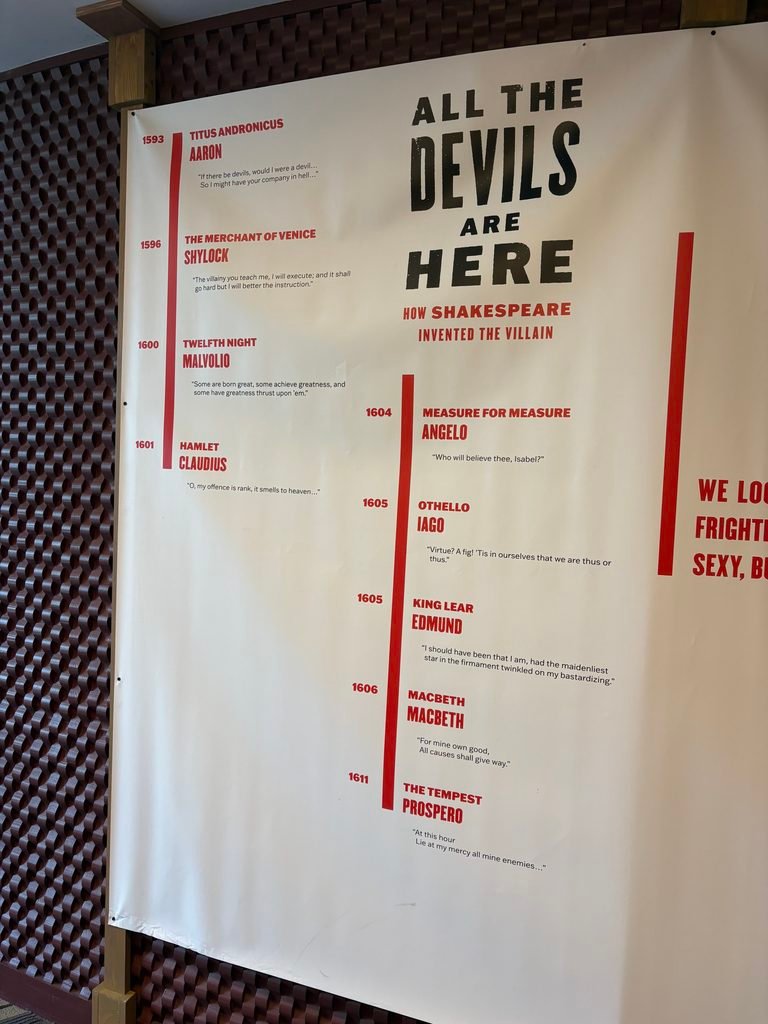
As the show continues, we learn about the vital aspect of humanity that Shakespeare gifts to the role of the villain. By giving characters like Shylock in Merchant Of Venice clear, concise, sympathetic reasons to do bad or even evil things/become evil, Shakespeare allows the audience to relate to the villain and to gently question their own beliefs. It’s a small, but very clever, way to influence a societal shift in attitudes and perceptions. In Shakespeare’s time, the stereotype of the dishonest Jew was well established. The Merchant Of Venice was the first play to show a Jewish person as more than the stereotype, choosing instead to highlight how similar he is to the Christians around him. Shylock remains the villain, but his villainy is understandable, for the first time.
Every aspect of this show highlights Page’s acting ability. The scenic design, by Arnulfo Maldonado, is fairly minimalistic. There’s a table onstage with a few items on top of it, most notably a gold skull. A simple black folding chair sits at the table. A small stool sits centre stage, with a book on top of it. To the sides, there appear to be lighting setups, and a few objects, including a crucifix, on small tables. The costume design, by Emily Rebholz, is equally as simple, mostly consisting of easily adaptable black clothing with small, but poignant, props.
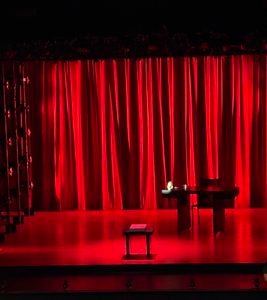
The lighting design, by Stacey Derosier, follows the same minimalistic pattern, most often shifting between deep red lights, bright white ones, and sharp, drastic blackouts. It is one of the best examples I have ever seen of simple being the best choice. The sound design, by Darron L. West, is no exception to the minimalist theme, choosing to use deep, brooding music and perfectly timed moments of silence to accentuate the power of both Shakespeare’s words and Page’s performance.

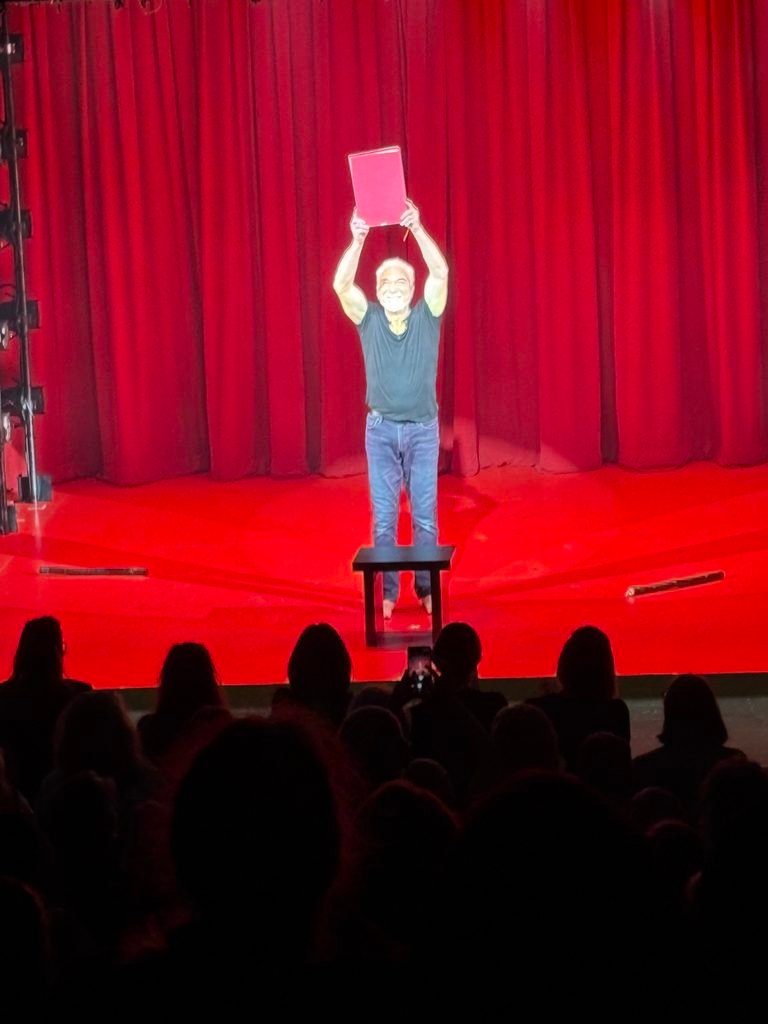
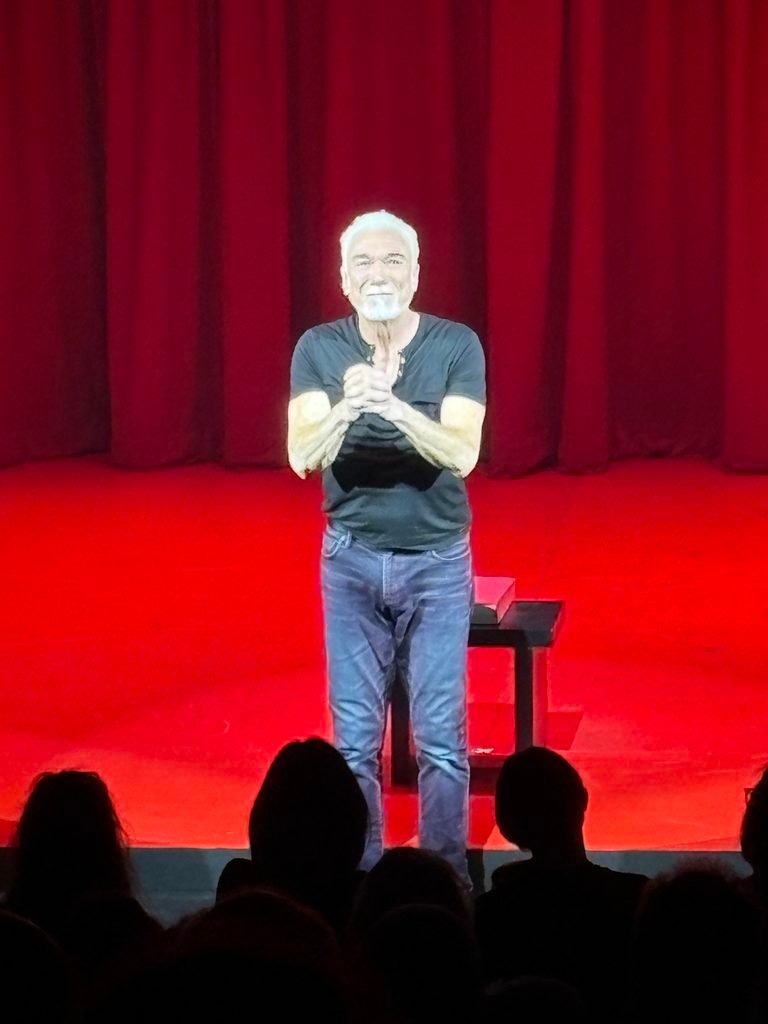
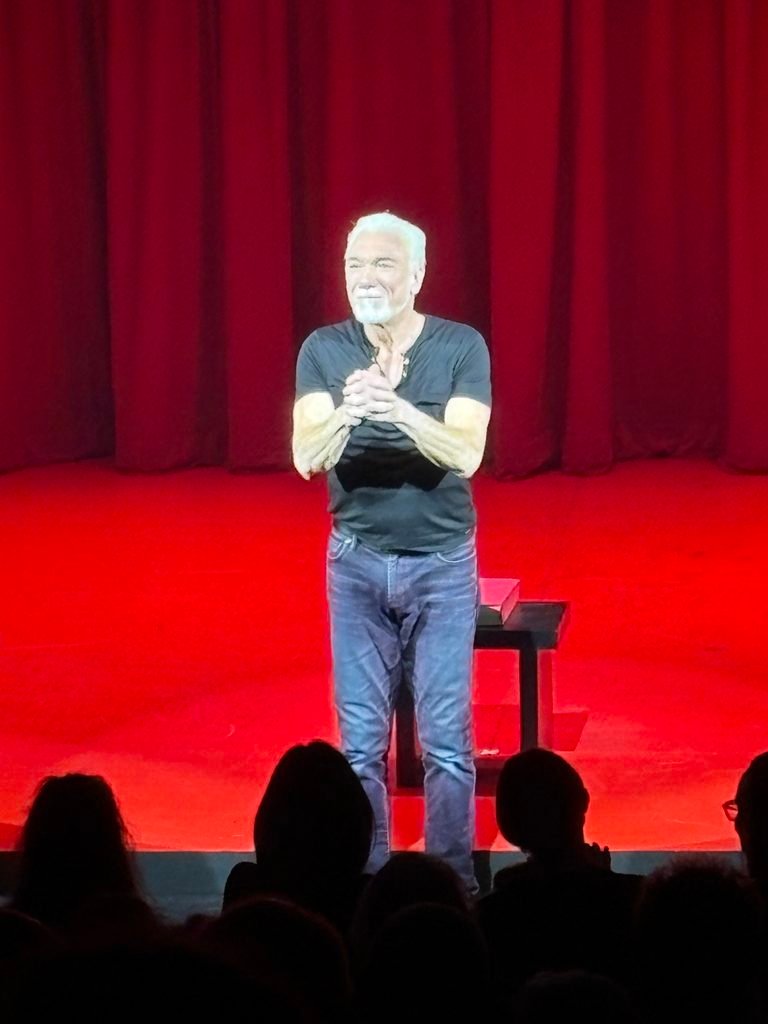
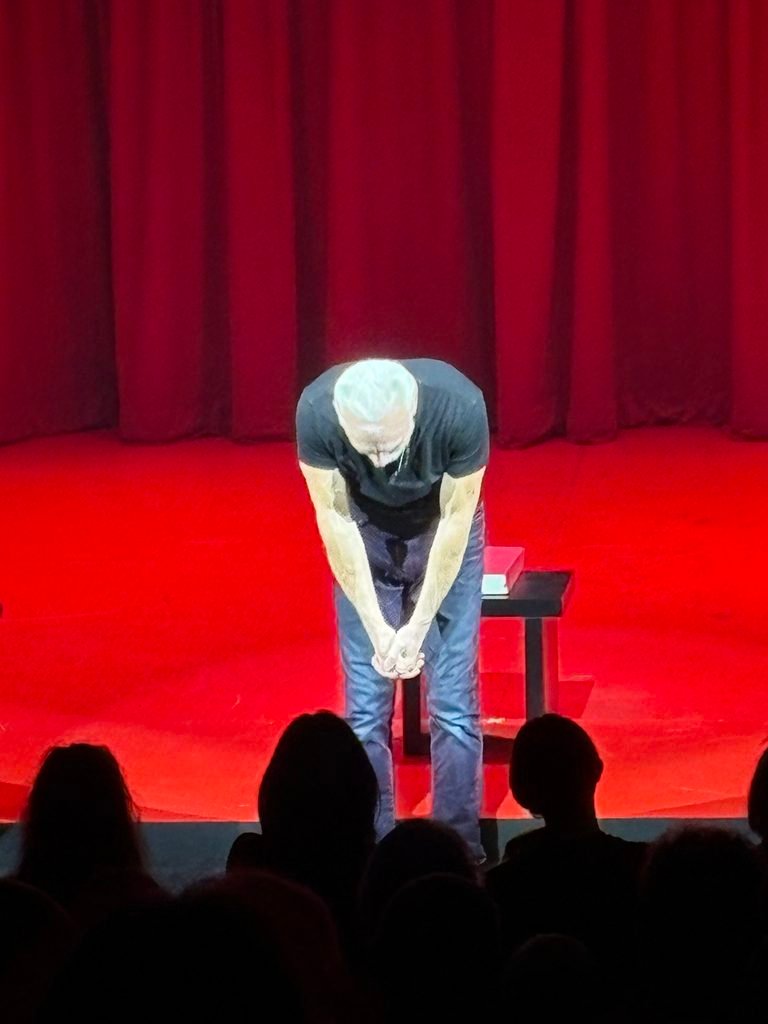
All The Devils Are Here is nothing short of astonishing. Page becomes unrecognisable as he fully embodies each and every character he portrays, all the while providing the historical and literary context in a thought-provoking and intriguing way. Ultimately, his performance proves that almost no one can truly fit cleanly into the box of good or evil, hero or villain, black or white…because most of us fall into the same grey areas as our favourite fictional villains.
I decree 5 out of 5 stars. ★★★★★
Leave a Reply